
Propagation
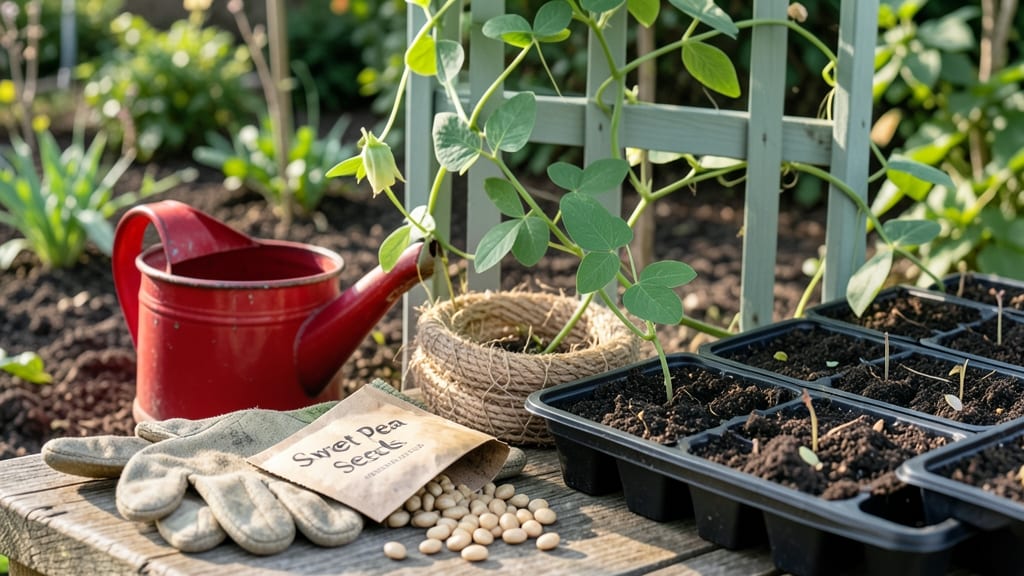
How to grow sweet pea flowers from seed with a simple cold trick cuts waiting time from weeks to days. 🌱 I’ve struggled with slow germination until I discovered this hack—soaking seeds overnight and chilling them for 24 hours before planting. The results? Tiny sprouts popping up in just 5-7 days instead of the usual three weeks.
Start with well-draining soil in a sunny spot—sweet peas love full sun but hate soggy roots. Plant seeds ½ inch deep and 2 inches apart, then water gently to settle the soil without disturbing them.
A trellis or tall stakes nearby is key; these climbers get 6-8 feet tall and need support from day one to avoid flopping.
The first leaves appear delicate, but don’t let that fool you. Keep soil consistently moist (not soggy) and watch for true leaves—the second set that look like tiny ferns.
That’s when you’ll know they’re ready to handle a little more sunlight and wind. Common mistakes? Overwatering (which causes rot) or planting too deep (which delays sprouting).
By late spring, you’ll be rewarded with fragrant, velvety blooms in shades of pink, purple, and white. The secret to long-lasting flowers? Deadheading spent blooms and ensuring they climb steadily. Even in small spaces, sweet peas bring old-fashioned charm—and the scent alone makes the effort worth it.
Troubleshooting Sweet Pea Seed Struggles
Sweet peas are delicate but rewarding, and sometimes their seeds refuse to cooperate. If your sweet pea seeds aren’t germinating—or if seedlings wilt or fail to thrive—understanding the root causes can save your garden.
Below, we break down the most common reasons why sweet peas misbehave, with clear science-backed explanations and actionable fixes.
---
🌱 Why it happens: Sweet pea seeds are notoriously short-lived, losing viability within 1–2 years of harvest. If your seeds are older, their internal enzymes and stored energy (endosperm) degrade, making germination nearly impossible. Even if they sprout, weak seedlings may struggle to develop properly.
The science: - Seeds contain abscisic acid, a growth-inhibiting hormone that breaks down over time. Fresh seeds have balanced hormone levels for germination, while old seeds may produce too little gibberellins (hormones that trigger sprouting). - Moisture and temperature stress during storage (e.g., fluctuating humidity or freezing) can further damage the seed coat or embryo.
What to do: - Test viability: Float seeds in water—sinkers are likely viable (though not guaranteed), while floaters are dead. - Use fresh seeds: Purchase new seeds (within the last year) or harvest your own from healthy plants. - Pre-soak old seeds: Soak in lukewarm water for 12–24 hours to rehydrate and soften the seed coat before planting.
---
🥶 Why it happens: Sweet peas are cold-hardened—they require stratification (a period of cold, moist exposure) to break dormancy. Without this step, seeds may rot, mold, or remain dormant indefinitely.
The science: - Sweet pea seeds produce hydrolytic enzymes (like α-amylase) during cold stratification, which break down starches in the endosperm into sugars for the sprouting embryo. - Without cold exposure, these enzymes don’t activate, leaving the seed starved of energy.
What to do: - Cold-moist stratify: Place seeds in a damp paper towel, seal in a plastic bag, and refrigerate for 2–4 weeks (or up to 8 weeks for older seeds). - Direct sow in fall/winter: Plant seeds outdoors in late autumn (when soil temps drop below 50°F/10°C) for natural stratification. - Avoid heat: Never plant sweet pea seeds in warm soil (>60°F/15°C)—they’ll rot before germinating.
---
🕳️ Why it happens: Sweet pea seeds are tiny and light-sensitive—planting them too deep or in compacted soil suffocates them. Their ideal depth is just beneath the soil surface, where they can sense light (a process called photoblasty).
The science: - Sweet peas exhibit positive photoblasty, meaning they need light to germinate. Burying them too deep (over ½ inch/1.25 cm) blocks light, triggering etiolation (weak, leggy sprouts) or no germination at all. - Poor drainage or clay-heavy soil causes seeds to rot from hypoxia (lack of oxygen), while sandy soil drains too quickly, drying them out.
What to do: - Plant shallow: Press seeds ¼ inch (0.6 cm) deep, barely covering them with soil. - Use well-draining mix: Amend soil with compost or perlite to improve aeration and moisture retention. - Keep soil moist (not soggy): Water gently to avoid displacing seeds or creating anaerobic pockets.
---
🌡️ Why it happens: Sweet peas germinate best in cool, stable temperatures (50–65°F/10–18°C). Heat shocks or rapid temperature swings can halt germination or cause seedling damping-off (a fungal disease that rots stems at the soil line).
The science: - Optimal germination temp: Sweet peas thrive at 55–60°F (13–16°C). Above 70°F (21°C), enzymes slow down, and seeds may overheat and die. - Nighttime chilling: If days are warm but nights drop below 40°F (4°C), seeds may experience thermal stress, disrupting metabolic processes.
What to do: - Time your planting: Sow seeds 4–6 weeks before your last frost (spring) or in late summer for fall blooms. - Use row covers: Protect seedlings from frost or heat waves with frost cloth or shade cloth. - Avoid direct sun during germination: Keep seed trays in partial shade until sprouts emerge.
--- 🍄 Why it happens: Overly wet or stagnant soil creates the perfect breeding ground for Pythium (water mold) or Rhizoctonia (damping-off fungus), which attack seeds and seedlings.
The science: - Fungi thrive in saturated, warm soil (68–86°F/20–30°C), producing toxins that inhibit seedling growth or enzymes that digest cell walls. - Bacterial soft rot (Erwinia spp.) can also infect seeds, causing them to turn mushy before sprouting.
What to do: - Sterilize soil: Mix in compost or coconut coir to improve drainage, or use pasteurized potting mix. - Space seeds properly: Avoid overcrowding—1 inch (2.5 cm) apart reduces humidity and fungal spread. - Use fungicide (if needed): Drench seeds with a mild fungicide (like neem oil or copper spray) before planting.
--- 💧 Why it happens: Sweet pea seeds need consistent moisture but hate soggy conditions. Overwatering or uneven hydration can lead to seed rot, cracked seed coats, or uneven germination.
The science: - Seeds require imbibition (water absorption) to swell and activate enzymes. Too much water drowns the embryo, while too little prevents enzyme activation. - Hard water (high in minerals) can create a salty soil crust, inhibiting water uptake.
What to do: - Bottom-water seeds: Place trays in a shallow dish of water for 10–15 minutes, then drain excess. - Use room-temperature water: Cold water can shock seeds, while hot water may kill beneficial microbes. - Mist lightly: Keep soil evenly moist (like a damp sponge) but never waterlogged.
--- 🧬 Why it happens: Some sweet pea varieties (especially F1 hybrids) have reduced vigor or shorter viability than heirlooms. If your seeds are from a weak hybrid, they may fail to germinate or produce weak plants.
The science: - Hybrid seeds are bred for specific traits (e.g., color, disease resistance) but often have lower genetic diversity, making them less resilient. - Self-pollinated seeds (from heirloom varieties) tend to have higher germination rates due to heterosis (genetic robustness).
What to do: - Choose reliable varieties: Opt for heirloom or open-pollinated seeds (e.g., ‘Cupani’, ‘Perfume’ series). - Buy from reputable sellers: Seed companies like Park Seed or Seed Savers Exchange offer high-quality, tested seeds.
Quick Fixes for Sweet Pea Growing Woes
Sweet peas are resilient, but even the hardiest plants need a helping hand now and then. Whether your seeds aren’t germinating, seedlings are struggling, or your vines aren’t flowering as expected, these practical solutions will get your sweet peas back on track—fast.
We’ve mapped common issues to step-by-step fixes, plus prevention tips to keep your garden thriving.
---
Sweet peas love cold, but they also need patience—and the right conditions. If your seeds are taking forever (or not sprouting at all), here’s how to jumpstart germination:
#### 🔥 Fix: Pre-Chill Your Seeds (The Cold Trick Done Right) Sweet peas require stratification (a cold treatment) to break dormancy. If you skipped this step, don’t worry—you can still salvage your seeds! 1. Wrap seeds in a damp paper towel and place them in a sealed plastic bag.
2. Store in the fridge for 2–4 weeks (check weekly for mold—toss if slimy!). 3. Plant immediately after—they’ll sprout within 7–14 days (vs. weeks without chilling).
✨ Pro Tip: For faster results, use peat pellets—soak them, add seeds, and refrigerate. Plant directly into the wet pellet for zero transplant shock!
#### 🌡️ Fix: Adjust Temperature & Moisture Seeds need consistent warmth (65–75°F) after chilling to germinate.
If your soil is too hot or dry: - Move pots to a sunny windowsill or under grow lights (avoid direct midday sun). - Keep soil damp (not soggy)—mist lightly daily or use a clear plastic dome to trap humidity. - Avoid bottom watering—sweet peas hate "wet feet."
Water at the soil surface instead.
💡 Prevention: Test soil moisture with your finger—if the top inch is dry, it’s time to water. Overwatering = rot.
---
Skinny, stretched-out seedlings are begging for light and support. Here’s how to bulk them up before transplanting:
#### 👨🍳 Fix: Give Them Light (No Shady Spots Allowed!) Leggy seedlings = not enough light. If they’re leaning or pale: 1. Move to a sunnier spot (south-facing window or grow light 12+ inches away).
2. Rotate pots daily so they grow straight (not lopsided). 3. Avoid artificial light at night—sweet peas need 14–16 hours of light/day (use a timer for grow lights).
🔥 Quick Fix: If seedlings are already too tall, bury them deeper when transplanting—they’ll grow roots along the stem!
#### 🌡️ Fix: Harden Off Gradually (No Shock Zone) Transplanting weak seedlings too soon = wilting or death. Harden them off over 7–10 days: 1. Day 1–3: Place outside in partial shade for 1–2 hours.
2. Day 4–7: Increase time to 6+ hours, adding morning sun first. 3. Final 2 days: Let them sit in full sun (if temps are above 50°F).
✨ Pro Tip: Use a cloche or row cover on cooler days to protect tender leaves.
---
Sweet peas are fast growers but need the right care to flower. If your vines are all leaves, try these flower-boosting fixes:
#### 🌿 Fix: Pinch & Prune for More Blooms Overgrown vines = fewer flowers. Prune aggressively to encourage bushier growth: 1. Pinch back the main stem when it reaches 6–8 inches (this forces side shoots).
2. Remove spent blooms regularly (deadheading) to prevent seed pods from draining energy. 3. Cut back leggy growth in early spring to stimulate new flowers.
💡 Prevention: Train vines on a trellis early—crowded plants flower less.
#### 🍽️ Fix: Feed Them Right (No Half-Measures!) Sweet peas are light feeders, but they need phosphorus for blooms: - At planting: Mix in compost or bone meal (high in phosphorus). - When buds form: Use a balanced fertilizer (10-10-10) lightly—too much nitrogen = more leaves, fewer flowers. - Avoid high-nitrogen fertilizers (like lawn food)—they’ll stunt blooming.
🌡️ Warning: Over-fertilizing = weak stems that snap in wind. Less is more!
--- Sweet peas are usually pest-free, but aphids, powdery mildew, or slugs can crash your crop. Here’s how to fight back:
#### 🐜 Fix: Pest Control Without Chemicals - Aphids? Spray with soapy water (1 tsp mild soap + 1 quart water) or introduce ladybugs. - Slugs? Set out beer traps (bury a cup filled with beer) or use copper tape around pots. - Powdery mildew? Improve airflow (space plants 12+ inches apart) and spray with baking soda mix (1 tsp baking soda + 1 quart water + a drop of soap).
💡 Prevention: Rotate crops—don’t plant sweet peas in the same spot yearly to prevent soil-borne diseases.
#### 🌡️ Fix: Prevent Fungal Issues Sweet peas hate wet leaves. To avoid mildew: - Water at the base (never overhead). - Space plants for airflow (they should touch but not crowd). - Remove infected leaves immediately (don’t compost them—burn or trash).
--- Want to avoid problems entirely?
Follow this growing sweet peas survival guide: ✅ Chill seeds for 2–4 weeks before planting. ✅ Use well-draining soil (mix in perlite or sand). ✅ Provide support early (trellis or cages). ✅ Deadhead regularly to encourage more blooms. ✅ Monitor moisture—sweet peas hate soggy roots. ✅ Rotate crops yearly to prevent disease buildup.
--- Your sweet peas will thank you with vibrant blooms in weeks—not months! 🌸💜 With these fixes, you’ll go from frustrated gardener to sweet pea whisperer in no time.
Frequently asked questions
Can I grow sweet peas in containers?
Yes! Sweet peas thrive in containers as long as the pots are at least 12 inches deep and have drainage holes. Use a lightweight potting mix with perlite for better aeration. Place containers in full sun and provide a small trellis or cage for support. Just ensure the pot stays consistently moist but not waterlogged.
How long does it take for sweet peas to flower?
With proper care, sweet peas typically flower 8-12 weeks after sowing. The cold trick (pre-chilling seeds) speeds up germination, which means faster blooms! For continuous flowers, plant seeds in succession every 2-3 weeks during spring and early summer.
Why aren't my sweet pea seedlings growing straight?
Leggy seedlings usually mean they're not getting enough light. Move them to a brighter spot (like a south-facing window) or use grow lights for 14-16 hours/day. Rotate pots daily so they grow evenly. If they're already too tall, bury them deeper when transplanting—they'll grow roots along the stem!
Do sweet peas need full sun?
Sweet peas prefer full sun (6+ hours/day), but they can tolerate partial shade in hot climates. Morning sun with afternoon shade works well. If growing in containers, move them to a shadier spot during peak afternoon heat to prevent wilting. Just ensure they still get plenty of light for strong growth.
Can I save seeds from my sweet peas?
Yes, but only from heirloom varieties—hybrid seeds won't produce true-to-type plants. Allow some flowers to fully mature into pods, then dry them completely before storing in a cool, dark place. Seeds stay viable for 1-2 years if kept dry. For best results, harvest seeds from the first flowers of the season.