
Companion Plants
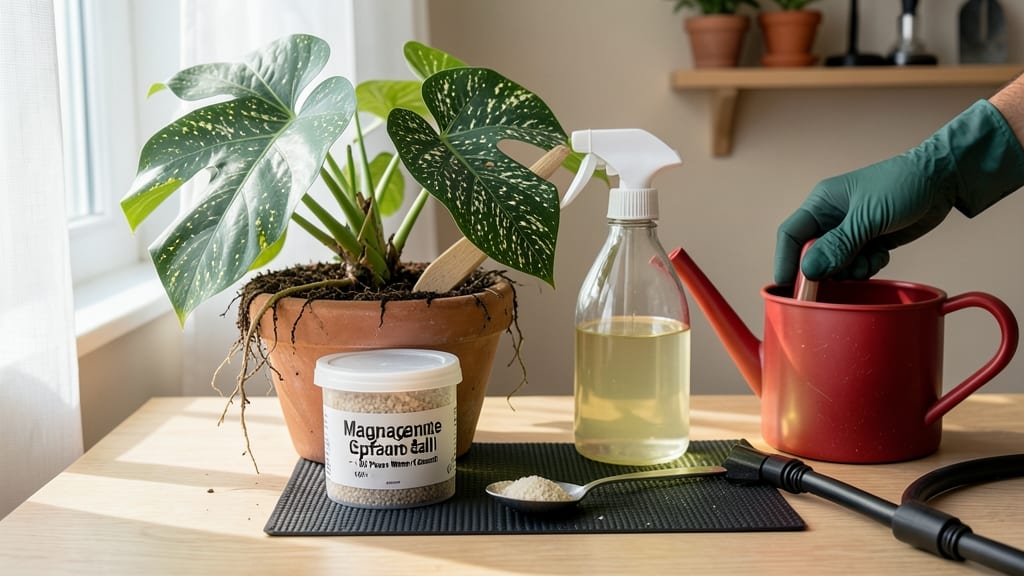
How to add magnesium to plants when leaves turn yellow? That’s your plants whispering for magnesium. 🌿 This essential mineral fuels chlorophyll production—the green lifeblood of your garden—and without it, even healthy soil can’t support vibrant growth. The good news? Fixing it is simpler than you think, and I’ll show you exactly how to revive your plants without breaking the bank or harming your soil.
Most gardeners reach for Epsom salt first, and for good reason—it’s the fastest way to deliver magnesium directly to roots. A teaspoon per gallon of water, applied every 2-4 weeks, works wonders for container plants and houseplants alike.
But for larger gardens, organic amendments like wood ash or dolomitic lime provide long-term benefits while improving soil structure. The key is matching the solution to your plant’s needs: leafy greens crave magnesium, while fruiting plants need it to prevent blossom-end rot.
Within 2-4 weeks of proper treatment, you’ll see the difference: deep, rich green leaves that stay crisp even in heat waves. The yellowing edges fade, new growth emerges stronger, and your plants finally look like the thriving specimens you planted them to be.
No more guessing—just science-backed results that work for tomatoes, roses, and even finicky houseplants.
Before you grab that bag of Epsom salt, though, check your soil’s pH—magnesium works best in slightly acidic to neutral conditions. Too alkaline? The plant can’t absorb it, no matter how much you add.
And here’s the pro tip: stop treating once leaves return to their normal color—overdoing it can cause its own set of problems, like salt buildup in soil. Think of magnesium as a vitamin boost, not a daily supplement.
📚 In This Guide
- What you need
- Instructions
- Tips and common mistakes
- Wrapping up and next steps
What you need
- ● Magnesium source: Choose one of these (pick based on plant type and convenience): Epsom salt (magnesium sulfate) – 1–2 tablespoons per gallon of water (organic, affordable, and easy to find).
- ● Magnesium sulfate flakes – ½–1 teaspoon per gallon of water (more concentrated, dissolves faster).
- ● Dolomitic lime – 1–2 pounds per 100 sq. ft. (best for soil amendments, slow-release).
- ● Watering can or spray bottle – A 1–3 gallon capacity (with a fine rose nozzle for even distribution).
- ○ pH testing kit (optional but helpful) – To check soil pH (6.0–7.0 is ideal for magnesium absorption).
- ○ Gloves (optional) – Protects hands from Epsom salt residue.
- ● Trowel or garden fork (for soil amendments like dolomitic lime).
- ● Measuring spoons/scale – For precise magnesium dosage (avoid overapplication!).
- ● Label maker or markers – To tag treated plants (especially if testing different methods).
- ● Sunny day or grow lights – Magnesium works best when plants are actively photosynthesizing!
- ● Keep magnesium sources away from children and pets (Epsom salt is non-toxic but can cause stomach upset if ingested in large amounts).
- ● Avoid applying magnesium to drought-stressed plants—hydrate them first!
- ● For container plants, flush soil with water after 1–2 weeks to prevent salt buildup.
Step-by-Step guide to adding magnesium for healthier plants
Here's how I boost plant vitality using magnesium—no guesswork, just science-backed methods.
🌱 Step 1: Identify Magnesium-Deficient Plants
Start by checking for classic magnesium deficiency symptoms: yellowing between leaf veins (interveinal chlorosis), weak stems, or stunted growth. Affected leaves often appear crispy at the edges while veins stay green. I test the soil pH first—magnesium uptake drops below 6.0 or above 7.5. If your soil is acidic, adjust with dolomitic lime before adding magnesium.
For container plants, remove one leaf from each affected plant and examine the underside. Brown spots or purplish hues confirm magnesium starvation. This is especially common in heavy feeders like tomatoes, peppers, and citrus. Don't confuse magnesium deficiency with nitrogen deficiency—yellowing from nitrogen appears uniformly across the leaf, not just between veins.
💧 Step 2: Choose the Right Magnesium Source
For quick results, I use Epsom salt (magnesium sulfate)—it dissolves instantly in water. Mix 1 tablespoon per gallon of water for foliar sprays or 2 tablespoons per gallon for soil drenches. Organic gardeners prefer dolomitic lime (calcium-magnesium carbonate) for long-term soil amendments. Apply 5 pounds per 100 square feet of garden bed, working it into the top 6 inches of soil.
For hydroponic systems, use magnesium sulfate crystals—add 1 gram per 10 gallons of nutrient solution. Always follow label instructions for concentrations, as excess magnesium can disrupt calcium uptake. I avoid magnesium oxide powder because it's highly alkaline and can burn roots if not dissolved properly. Test water pH after application—it should remain between 6.0-7.0 for optimal uptake.
☀️ Step 3: Apply Magnesium Through Foliar Spray or Soil Drench
For foliar sprays, mix your magnesium solution and apply early morning or late afternoon when temperatures are below 85°F. Use a fine mist sprayer to coat leaves thoroughly on both sides. I add a few drops of honey or dish soap (1/4 teaspoon per gallon) as a surfactant to help the solution stick. Reapply every 7-10 days until symptoms improve.
For soil applications, water the plants deeply first to help magnesium move through the root zone. Then apply the solution directly to the soil at the base of the plant. Avoid wetting foliage during soil drenches to prevent fungal diseases. I find that slow-release magnesium sources like dolomitic lime work best for long-term soil health, while Epsom salt provides immediate results for acute deficiencies.
⏰ Step 4: Monitor and Adjust Application Frequency
Watch for new growth within 2-3 weeks—healthy green leaves between veins signal success. If symptoms persist after two applications, test your soil for magnesium levels using a home test kit. Sandy soils often need more frequent applications (every 4-6 weeks), while clay soils retain magnesium longer. I keep a garden journal to track which methods work best for each plant type.
Overapplication can cause problems—excess magnesium reduces calcium and potassium uptake. If leaves develop brown edges or curled tips after treatment, flush the soil with plain water and reduce future doses. For container plants, I recommend a soil test every 6 months to maintain proper magnesium levels without overdoing it.
Tips & tricks for boosting plant health with magnesium
These simple yet powerful tricks will help you diagnose deficiencies faster, apply magnesium more effectively, and maintain vibrant plants long after the initial treatment.
Diagnosis Precision: When checking for magnesium deficiency in Step 1, examine the undersides of leaves first—they often show symptoms before the tops do. I've found that using a magnifying glass helps spot early signs of interveinal chlorosis, especially on broadleaf plants like tomatoes and peppers. This early detection is key to preventing permanent damage.
Application Timing: The 85°F temperature limit in Step 3 isn't arbitrary—it's when magnesium absorption through leaves becomes inefficient. I've learned to check my local weather forecast before spraying, and if temperatures are forecasted to rise above 85°F within 24 hours, I'll adjust my schedule. Early morning applications between 6-8 AM work best in my experience, giving leaves time to absorb before the heat of day.
Soil Preparation: Before applying magnesium to soil in Step 3, I always test soil moisture by squeezing a handful—it should hold together but not be dripping wet. This moisture level ensures proper nutrient uptake. For container plants, I've found that mixing the solution directly into the top inch of soil works better than pouring it on top, as it prevents runoff and ensures roots encounter the magnesium immediately.
Maintenance Strategy: The monthly maintenance dose of 1/4 teaspoon per gallon in Step 4 is perfect for containers, but I've discovered that larger in-ground plants benefit from a slightly stronger solution every 6 weeks. This prevents magnesium buildup while maintaining consistent levels. I keep a small notebook to track applications, noting which plants respond best to which methods.
Pro Tips for Add Magnesium To Plants
- These simple yet powerful tricks will help you diagnose deficiencies faster, apply magnesium more effectively, and ma...
- Diagnosis Precision: When checking for magnesium deficiency in Step 1, examine the undersides of leaves first—they of...
- Application Timing: The 85°F temperature limit in Step 3 isn't arbitrary—it's when magnesium absorption through leave...
Frequently asked questions
Got questions about boosting your plants with magnesium? You’re not alone!
Here are some of the most common concerns—plus straightforward answers to keep your garden thriving.
How often should I add magnesium to my plants?
For most plants, apply magnesium every 4–6 weeks during the growing season (spring and summer). Overuse can harm roots, so stick to the recommended dosage on your magnesium product. If your soil is already rich in magnesium, you might only need it once or twice a year.
When is the best time of day to apply magnesium?
Apply magnesium in the early morning or late afternoon to avoid evaporation and leaf burn from sunlight. Watering it in right after application ensures it reaches the roots efficiently. Avoid applying it on hot, sunny days—plants are more vulnerable to stress.
What’s a cheaper alternative to Epsom salt for magnesium?
If Epsom salt (magnesium sulfate) isn’t available, try magnesium sulfate flakes or langbeinite (a mineral fertilizer). For organic options, composted leaves or wood ash (in moderation) can add trace magnesium. Just test your soil first—too much can disrupt pH levels.
My plant leaves are yellowing—could it be a magnesium deficiency?
Yellowing leaves (especially between veins) are a classic sign of magnesium deficiency, but not always. Check for other issues first: overwatering, nutrient imbalances, or pests can cause similar symptoms. If you confirm it’s magnesium, apply a diluted solution (1 tbsp Epsom salt per gallon of water) and monitor for improvement in 2–3 weeks.
Can I use magnesium for all types of plants, or are some sensitive?
Most plants benefit from magnesium, but acid-loving plants (like blueberries or azaleas) need it in lower doses—too much can raise soil pH. Avoid overapplying to cacti and succulents, which prefer minimal fertilization. Always research your specific plant’s needs before treating!
Wrapping up and next steps
Adding magnesium to your plants is a simple yet powerful way to unlock their full potential—think richer greens, stronger stems, and bountiful blooms! Whether you’re using Epsom salt, magnesium-rich compost, or foliar sprays, the key is consistency and balance.
Start small, monitor your plants’ response, and adjust as needed.
You’ve got this! 🌱 Now’s the perfect time to grab your supplies and give your garden the boost it deserves. Ready to see the difference? Try one method today and watch your plants thrive!