
Tools
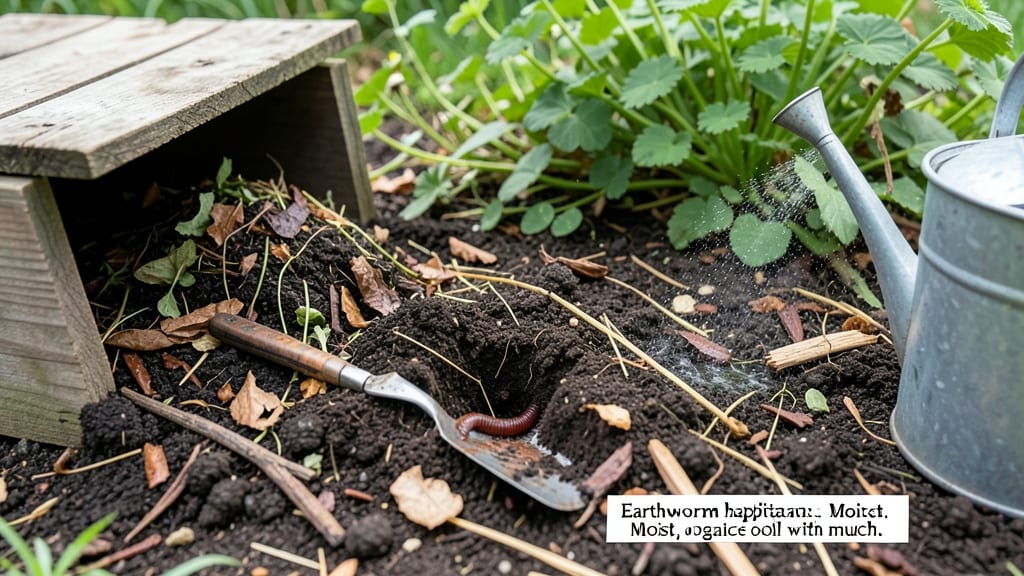
To attract earthworms to your garden, create loose, moist soil rich in organic matter by adding compost and mulching with leaf litter. Avoid chemical pesticides, provide shade, and plant cover crops like clover or alfalfa to establish their ideal natural habitat.
Earthworms are nature's garden helpers, and they'll move into your yard when you mimic their natural environment. 🌱 The key is balancing moisture with aeration—think of their home as a cozy, damp sponge.
I've seen dramatic results by layering compost (about 2-3 inches) over garden beds in early spring, which not only feeds the worms but also improves soil structure. Avoid tilling, as it disrupts their tunnels, and skip synthetic fertilizers, which can harm them.
Instead, try scattering coffee grounds or crushed eggshells—they love the calcium and nitrogen boost!
Seasonal timing matters too: worms are most active when soil temps are between 50-70°F. That's why spring and fall are prime times to implement these changes. Pro tip: water your garden in the morning so moisture lingers without creating soggy conditions.
Within a few weeks, you'll start seeing their castings—nature's free fertilizer—on the surface, signaling success!
💡 In This Article
- Optimal Soil Conditions for Earthworm Habitats
- Best Organic Feeds and Garden Practices to Lure Earthworms
Optimal soil conditions for earthworm habitats
Earthworms prefer soil with a pH between 6.0 and 7.0, which is slightly acidic to neutral. This range allows them to efficiently digest organic matter while avoiding toxic conditions. Think of their ideal environment like a well-aerated sponge—moist but not waterlogged, with plenty of tiny air pockets for breathing.
Poor soil, like compacted clay or sandy loam without organic matter, lacks these microenvironments, forcing worms to seek better conditions elsewhere.
The texture matters too: worms thrive in soil that's 40-60% organic matter by volume, which improves water retention and provides food. Decomposed leaves or grass clippings break down into humus, creating a crumbly structure perfect for burrowing.
For comparison, garden soil with less than 5% organic matter (common in urban areas) feels dense and repels worms. 🌱 The key is balance—too much moisture suffocates them, while dry soil lacks the nutrients they need to survive.
Temperature plays a critical role: worms become sluggish below 50°F and die above 85°F. That's why mulching with straw or wood chips (about 2-3 inches thick) helps regulate soil temperature while retaining moisture.
Shade from plants or structures prevents overheating, especially in summer. I've noticed that garden beds with mulch stay 5-10°F cooler than exposed soil, creating a stable habitat.
One common mistake is assuming worms need "wet" soil—actually, they prefer 60% moisture content, similar to a wrung-out sponge. Overwatering creates anaerobic pockets that kill them, while drought-stressed soil lacks the microbial activity they rely on.
Test your soil by squeezing a handful: if it crumbles when dry but holds shape when damp, it's perfect for worms. 💫
To improve aeration, avoid tilling—it destroys their tunnels and exposes them to predators. Instead, use a broadfork to gently loosen soil without disrupting the ecosystem. Over time, their burrowing will naturally aerate the soil, creating a self-sustaining cycle.
This approach mirrors how forests maintain healthy soil: fallen leaves and roots decompose slowly, inviting worms to thrive.