
Tools
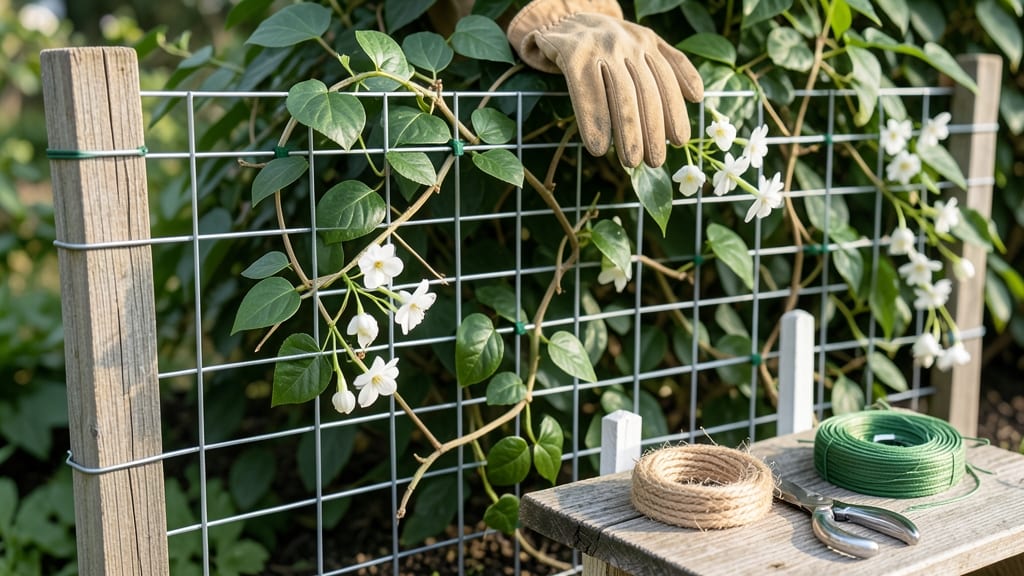
Jasmine vines need support to climb—and this wire trellis is the perfect solution. 🌿 I've built several over the years, and this method keeps costs low while giving your fragrant climber the structure it craves.
The right trellis transforms jasmine from a sprawling ground cover into a fragrant vertical masterpiece that draws the eye upward.
You'll need just four simple supplies: heavy-duty wire (16-gauge works best), sturdy wooden stakes (4-6 feet tall), zip ties or garden wire for securing, and a pair of wire cutters.
The key is spacing the vertical wires 6-8 inches apart—this gives the vines plenty of grip points while allowing airflow to prevent fungal issues. My first attempt had wires too far apart, and the jasmine struggled to latch on properly.
Once assembled, watch your jasmine explode vertically in just a few weeks. The flowers will cascade down in fragrant waves, and you'll avoid the tangled mess that comes from letting vines sprawl.
The trellis also makes pruning and harvesting easier—just reach up instead of crawling around on your hands and knees. This design works for any climbing jasmine variety, from star jasmine to Confederate jasmine. For larger gardens, you can even create a multi-panel trellis by connecting several units. The best part?
You can build one in under an hour with basic tools and materials you likely already have.
📚 In This Guide
- What you need
- Instructions
- Tips and common mistakes
- Wrapping up and next steps
What you need
- ● Galvanized or coated wire: 16- or 18-gauge (100–200 ft, depending on trellis size). Choose flexible but sturdy wire to prevent rust and ensure durability.
- ● Wooden stakes or posts: 4–6 stakes, 4–6 ft long (pressure-treated or cedar for longevity).
- ● Wire cutters: Heavy-duty, sharp blades for clean cuts.
- ● Measuring tape: 25+ ft for precise spacing.
- ● Hammer or mallet: For driving stakes into the ground.
- ● Pliers: Needle-nose or locking for twisting and securing wire.
- ○ Post hole digger or auger: (Optional but helpful for deeper, sturdier stakes.)
- ● Decorative wire: Copper, gold, or colored wire for a garden-art flair.
- ● Wire twisters or twine: To secure knots neatly.
- ● Spray paint: For weatherproofing wooden stakes.
- ● Garden gloves: To protect your hands while working with wire.
Step-by-Step instructions for building a wire trellis for jasmine
Here's how I build sturdy, flexible trellises that let jasmine vines climb beautifully while supporting their weight.
🪴 Step 1: Gather Materials and Measure Your Space
For a 4-foot tall trellis that accommodates 4 jasmine plants, you'll need 12-gauge galvanized wire (the most durable choice for outdoor use), 4 wooden stakes (4 feet long, 2x2 inches), and zip ties for securing connections. Measure where you want the trellis—jasmine thrives with 6-8 feet of climbing space, so plan accordingly. I like placing mine near a fence or patio where vines can cascade naturally.
Mark the top and bottom positions on your stakes with a pencil. The bottom should sit 6 inches deep in the ground for stability, while the top will support the wire lattice. Use a level to ensure stakes stay perfectly vertical—crooked stakes make wobbly trellises that won’t hold vines properly.
✂️ Step 2: Assemble the Wire Frame
Cut 4 pieces of wire, each 5 feet long (longer than your trellis height to allow for bending). Bend each wire into a U-shape, creating a 3-foot-wide base at the bottom and a 2-foot-wide top. The wider base gives vines more surface area to cling to. Use wire cutters to trim any jagged edges—sharp ends can damage delicate jasmine stems.
Attach the bottom of each U-shaped wire to the wooden stakes using zip ties, spacing them 12 inches apart along the stake. For the top, loop the wire around the top of the stakes and secure with another zip tie. Test the frame by gently pushing the center—it should hold firm without bending. If it sags, add a horizontal wire support halfway up for extra stability.
🌿 Step 3: Create the Lattice Structure
Cut 8 additional pieces of wire, each 3 feet long. These will form the horizontal lattice that jasmine vines will twine through. Space them 4 inches apart vertically, starting 6 inches from the base. Bend each wire slightly inward at the ends to create a loop, then secure it to the vertical wires with zip ties. The loops give vines something to grip as they grow.
For a classic diamond pattern, alternate the horizontal wires so they cross at different heights. This creates a 3D climbing surface that encourages vines to spread evenly. I like adding a diagonal wire from one corner to the opposite for extra support—jasmine can get heavy once established!
☀️ Step 4: Plant and Train Jasmine Vines
Once your trellis is built, plant jasmine 6 inches away from the base of the trellis. The vines will naturally seek the wire as they grow, but you can gently weave young shoots through the lattice to guide them. Avoid forcing stems—jasmine climbs best when encouraged, not forced. Water deeply after planting to help roots establish before they start climbing.
Watch for new growth in 4-6 weeks. When vines reach 12 inches tall, they’ll start curling around the wire. Prune any leggy stems to encourage bushier growth near the trellis. In 2-3 months, your jasmine will cover the entire structure, creating a fragrant living screen!
🔧 Step 5: Maintain and Reinforce Over Time
Check the trellis seasonally for loose zip ties or sagging wires. Replace any that come undone—jasmine’s weight can stress weak connections. If vines grow too heavy, add extra horizontal supports to prevent bending. I also like lightly spraying the wires with a mix of water and vinegar (1:1 ratio) to prevent rust and keep them looking fresh.
In late winter, trim back any dead or overgrown vines but leave 3-4 healthy stems to climb the trellis again. This keeps the plant strong and productive while maintaining the trellis’s structural integrity. With proper care, your wire trellis will support jasmine for years—and the intoxicating scent is worth every zip tie!
Tips & tricks for building a sturdy wire trellis for jasmine
A few simple tricks will help you create a trellis that lasts for years and gives your jasmine vines the perfect climbing structure.
Material Prep: Before bending your 12-gauge galvanized wire, I recommend soaking the ends in warm water for 10 seconds—this makes them much easier to work with and prevents sharp edges that could harm delicate jasmine stems. The 5-foot lengths you'll need for the U-shaped frame should be cut with heavy-duty wire cutters for clean, precise ends. Trust me, this small step prevents frustration later when you're trying to attach the wires to your stakes.
Stability Secret: In Step 1, when marking your 4 wooden stakes, add a third mark 2 feet up from the bottom. This creates a reference point for adding that crucial horizontal wire support halfway up (mentioned in Step 2). I've seen too many trellises sag under jasmine's weight—this simple mark ensures you'll add support exactly where needed. Use a level to verify all stakes are perfectly vertical before securing them in the ground.
Lattice Design: For the horizontal lattice structure in Step 3, I suggest creating two different wire thicknesses in your diamond pattern. Use three 3-foot wires spaced 4 inches apart at the standard height, then add two additional wires spaced 2 inches apart between them. This creates a more complex climbing surface that encourages vines to spread evenly and prevents them from getting stuck in one area. The extra wires also add structural integrity for when your jasmine gets heavy!
Maintenance Hack: In Step 5, when you're checking for loose zip ties seasonally, I've found that replacing them with stainless steel zip ties (instead of the standard plastic ones) makes a huge difference. They resist UV degradation and won't crack under jasmine's weight. Also, keep a small container of white vinegar nearby—just dip a cloth in it and wipe down any rust spots immediately. This simple maintenance keeps your trellis looking fresh for years.
Pro Tips for Make A Wire Trellis For Jasmine
- A few simple tricks will help you create a trellis that lasts for years and gives your jasmine vines the perfect climbing structure.
- The 5-foot lengths you'll need for the U-shaped frame should be cut with heavy-duty wire cutters for clean, precise ends.
- Stability Secret: In Step 1, when marking your 4 wooden stakes, add a third mark 2 feet up from the bottom.
Frequently asked questions
about building a wire trellis for jasmine—because even DIY pros need a little help sometimes!How soon can I plant jasmine after setting up the trellis?
You can plant jasmine immediately after assembling your trellis, but wait until spring or early summer for best results. Jasmine thrives in warm soil and needs time to establish roots before climbing. If planting in cooler months, use a temporary support (like stakes) until the trellis is sturdy.
What’s the best wire gauge for a jasmine trellis?
Use 14- to 16-gauge galvanized steel wire for durability without being too heavy. Thinner wire (like 18-gauge) may bend under jasmine’s weight, while thicker wire (12-gauge) can be overkill and harder to work with. For extra strength, opt for twisted or braided wire.
Can I use chicken wire instead of a DIY wire trellis?
Yes! Chicken wire is a budget-friendly alternative, but it’s less durable and may rust faster. If using it, secure it tightly to a wooden frame or post to prevent sagging. For long-term use, reinforce weak spots with zip ties or additional wire. Jasmine’s vines can still climb, but expect to replace it sooner.
How do I keep pests away from my jasmine trellis?
Pests like aphids or spider mites love jasmine vines. Spray neem oil monthly as a preventive, and prune crowded areas for airflow. Avoid over-fertilizing, which attracts pests. If you see chewed leaves, inspect for caterpillars and handpick them. A light copper tape around the base can deter slugs too!
What if my trellis sags or collapses after planting?
Sagging usually means the wire isn’t taut enough or the supports aren’t sturdy. Re-tighten the wire and add stakes or wooden posts every 3–4 feet for extra support. For heavy jasmine varieties (like Confederate jasmine), use a ladder-style trellis with cross braces. If the wire bends, replace it—don’t force it!
Wrapping up and next steps
Creating a wire trellis for your jasmine is a rewarding project that’ll give your climbing vines the perfect structure to thrive! With just a few basic materials and a little patience, you’ve got everything you need to build a sturdy, functional trellis that’ll support fragrant blooms for years. 🌿✨
Now that you’re equipped with the know-how, it’s time to roll up your sleeves and get crafting. Start by sketching a simple design—whether it’s a classic arch, a decorative lattice, or a vertical panel—and let your creativity shine.
Once your trellis is in place, watch as your jasmine climbs, spreads, and fills your space with intoxicating fragrance. Happy gardening!