
Container Gardens
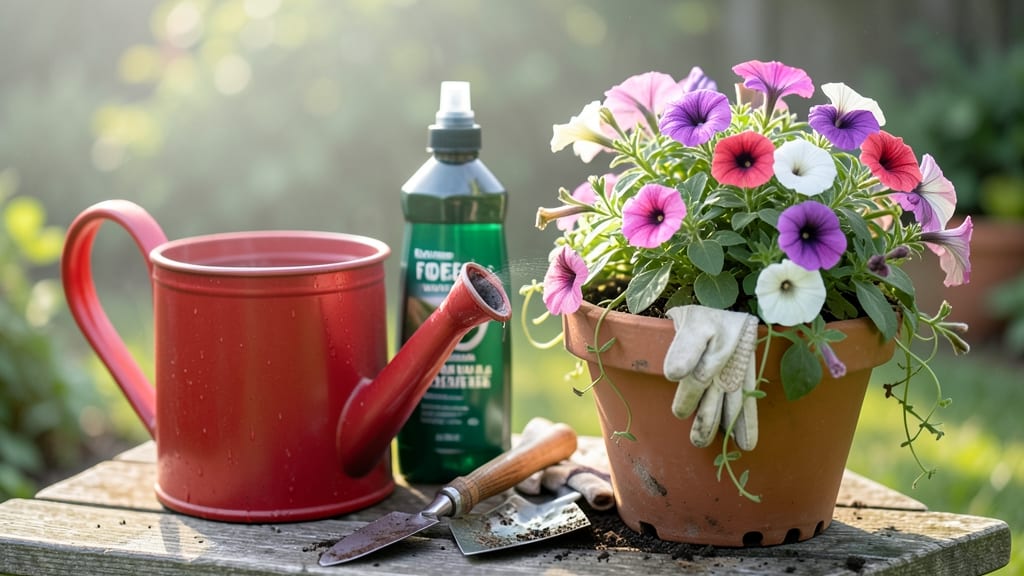
Caring for potted petunias means nonstop summer color with almost no fuss. 🌸 These cheerful bloomers thrive in containers when you nail just three things: water, light, and a little occasional pruning. My first petunia pot lasted all season with just 10 minutes of weekly attention—no green thumb required.
The secret starts with the right setup: a container with drainage holes, well-draining potting mix, and a sunny spot (at least 6 hours of direct sunlight daily). Overwatering kills petunias faster than anything else—stick your finger in the soil first.
When the top inch feels dry, water thoroughly until it drains from the bottom. You’ll see bold, continuous blooms all season if you deadhead spent flowers weekly and feed with balanced fertilizer every 4-6 weeks. Prune leggy stems back by half to encourage bushier growth.
Even in winter, these tough plants reward you with color if you move them indoors near a bright window. For container gardeners, petunias are the ultimate easy-care star.
They forgive mistakes better than most annuals, and with these simple steps, your pots will look like a professional display—without the professional-level effort. Let’s get those blooms going!
📚 In This Guide
- What you need
- Instructions
- Tips and common mistakes
- Wrapping up and next steps
What you need
- ● Potted Petunias: 1–5 plants (depending on pot size), preferably healthy with vibrant leaves and buds.
- ● Well-Draining Potting Mix: 1–2 gallons (for small pots) or 3–5 gallons (for larger containers). Look for a mix labeled for annuals or container gardens.
- ● Container: A pot with drainage holes (5–12 inches in diameter, depending on plant quantity). Terracotta or plastic works!
- ● Watering Can or Hose: With a gentle spray nozzle for even hydration.
- ● Fertilizer: A balanced, water-soluble fertilizer (10-10-10 or 20-20-20) or slow-release granules.
- ● Pruning Shears: Small, sharp scissors for deadheading and shaping.
- ○ Gloves (Optional): To protect hands from soil or thorns (if using trailing varieties).
- ● Sunlight Spot: A location with 6+ hours of direct sunlight daily (morning sun is ideal).
- ● Temperature: Petunias thrive in 60–75°F (15–24°C)—avoid frost or extreme heat.
- ● Water Access: A nearby water source for consistent hydration.
Step-by-step instructions for caring for potted petunias
Here's how I keep my petunias blooming nonstop—with just a few simple habits.
💧 Step 1: Water Deeply When the Top Inch Feels Dry
Petunias love moisture but hate soggy roots, so I water until water runs freely from the drainage holes. You'll know it's time when the top inch of soil feels dry to the touch. Watering in the morning gives roots time to absorb moisture before evening heat evaporates it.
Use room-temperature water to avoid shocking the roots. I like to water at the base rather than overhead—this prevents fungal diseases that love damp petunia leaves. If the soil stays wet for more than 24 hours, your pot may need better drainage or less frequent watering.
☀️ Step 2: Provide Bright, Indirect Light for Peak Blooms
Petunias thrive in 6-8 hours of morning sun followed by afternoon shade, especially in hot climates. A south-facing window with sheer curtains works well. If your petunias start looking leggy with sparse blooms, they need more light—move them closer to the window or supplement with a grow light.
Watch for leaves turning yellow or crispy edges—this means too much direct sun. Rotate the pot a quarter turn weekly so all sides get even light exposure. This prevents the plant from leaning toward the light and keeps the blooms uniform and abundant.
✂️ Step 3: Deadhead Regularly to Encourage Nonstop Blooms
I pinch off spent blooms with my fingers every morning—it takes less than a minute per pot. Removing faded flowers redirects the plant's energy into producing new buds instead of setting seed. You'll see a noticeable increase in blooms within a week of consistent deadheading.
Use clean, sharp scissors if you prefer cutting stems back to just above a leaf node. Avoid tearing leaves when deadheading—petunias are delicate and heal slowly. This simple habit keeps my petunias blooming all season long with minimal effort.
🪴 Step 4: Feed Weekly During the Growing Season
Petunias are heavy feeders, so I use a balanced liquid fertilizer (10-10-10) diluted to half-strength every 7-10 days during spring and summer. Mix the fertilizer in a watering can and apply it while watering to ensure even distribution.
Stop fertilizing in late summer as the plant prepares for dormancy. Over-fertilizing leads to lush foliage but fewer blooms—petunias prioritize flowers, not leaves. If you notice yellowing leaves after feeding, flush the soil with plain water to remove excess salts.
🌿 Step 5: Prune and Shape for Bushier Growth
Pinch back leggy stems by cutting just above a leaf node to encourage branching. This creates a fuller, more compact plant with more blooms. I do this every 3-4 weeks during the growing season. Avoid cutting into woody stems—petunias don't regrow well from hardwood.
If your petunia looks too leggy or sparse, a light trim with clean scissors can rejuvenate it. This is especially helpful after a heatwave or when blooms slow down. Pruning also improves airflow, reducing the risk of fungal diseases that thrive in dense, humid foliage.
Tips & tricks for perfect potted petunias
These simple habits will help your petunias stay vibrant and blooming all season long.
Watering Wisdom: I've learned the hard way that petunias hate soggy roots—water only when the top inch of soil feels dry to the touch. The 24-hour rule is key: if soil stays wet longer than that, your pot might need better drainage or larger drainage holes. I always water in the morning so roots have time to absorb moisture before evening evaporation.
Lighting Strategy: The 6-8 hours of morning sun is non-negotiable for peak blooms, but afternoon shade is equally important. If your petunias start looking leggy, they're probably not getting enough light—move them closer to the window or add a grow light. I rotate my pots weekly to prevent leaning, which keeps the blooms uniform and abundant.
Deadheading Done Right: Pinching off spent blooms every morning takes less than a minute but makes a huge difference. The secret is to remove the entire faded flower stem down to a leaf node—this redirects energy to new buds. I use clean scissors for stubborn stems, but my fingers work perfectly for most flowers. This simple habit keeps my petunias blooming nonstop.
Fertilizing Fine-Tuning: The 7-10 day feeding schedule during growing season is crucial, but timing matters just as much. Always dilute that 10-10-10 fertilizer to half-strength—petunias prioritize flowers over leaves, so overfeeding leads to lush foliage but fewer blooms. I stop fertilizing in late summer when plants prepare for dormancy, and always flush the soil with plain water if I see yellowing leaves.
Pro Tips for Care For Potted Petunias
- These simple habits will help your petunias stay vibrant and blooming all season long.
- Watering Wisdom: I've learned the hard way that petunias hate soggy roots—water only when the top inch of soil feels ...
- Lighting Strategy: The 6-8 hours of morning sun is non-negotiable for peak blooms, but afternoon shade is equally imp...
Frequently asked questions
Got questions about keeping your potted petunias happy and blooming? Here are some of the most common ones—plus quick, no-fuss answers to keep your garden thriving!
How often should I water my potted petunias?
Petunias love moisture but hate soggy roots. Water when the top inch of soil feels dry—usually every 2–3 days in hot weather, but adjust for your climate. Empty the saucer after watering to prevent root rot. Pro tip: Water in the morning to reduce evaporation and fungal risks.
Why aren’t my petunias blooming as much as they should?
Overly lush foliage at the expense of flowers? It’s likely due to too much nitrogen (from fertilizer) or not enough sunlight. Switch to a balanced bloom booster (10-10-10 or 5-10-5) and ensure they get 6+ hours of direct sun daily. Deadhead spent blooms to encourage more flowers!
What pests should I watch for, and how do I treat them?
Petunias attract aphids, spider mites, and whiteflies. Spot them early: Check undersides of leaves for tiny bugs or webbing. Treat with neem oil or insecticidal soap (follow label instructions). For severe infestations, hose off pests with water in the morning to avoid shocking the plant.
Can petunias survive winter in pots?
Most petunias are annuals and won’t survive freezing temps, but you can try overwintering tender perennials like Petunia × atkinsiana indoors. Move pots to a cool (40–50°F), bright spot and water sparingly. Trim back dead growth and resume care in spring.
What’s the best pot size for petunias?
Petunias thrive in containers with drainage holes and at least 6–8 inches in diameter for one plant. For clusters, allow 1 plant per 6–8 inches of pot space. Larger pots retain moisture longer but may need extra fertilizer to feed sprawling roots.
Wrapping up and next steps
Caring for potted petunias is simpler than you think—just a little sunlight, water, and love will keep those vibrant blooms shining bright! 🌸 With the right balance of soil health, pruning, and seasonal adjustments, your petunias will reward you with nonstop color all season long.
Ready to see your garden flourish?
Take the next step: grab your shears, watering can, and a sunny spot, then put these tips into action. Before you know it, your potted petunias will be the star of your outdoor space—effortlessly! 🌞