
Pruning
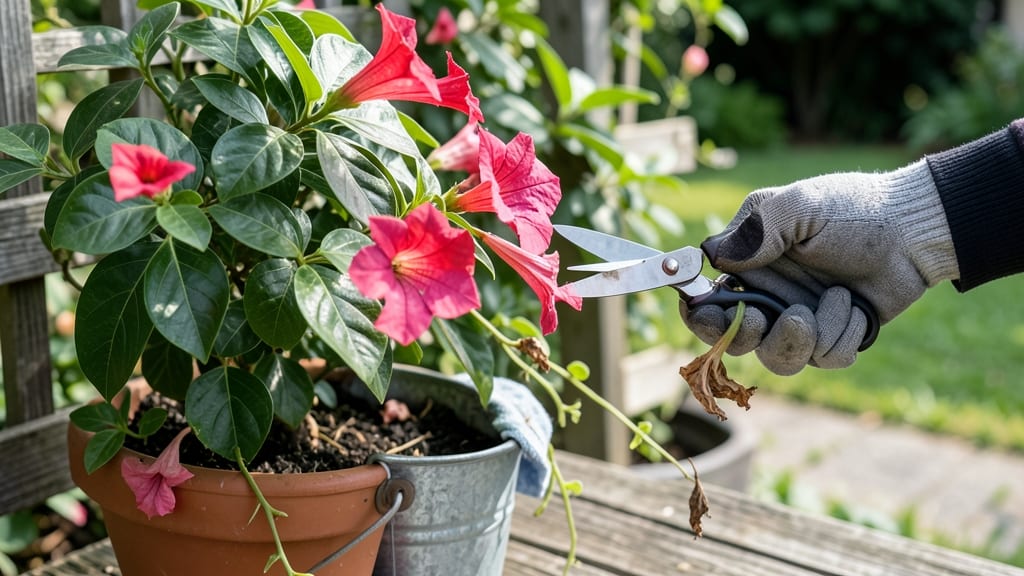
Deadheading Mandevilla isn't just pruning—it's the secret to turning one summer bloom into a nonstop floral parade. 🌸 I've watched my own vines go from sporadic blooms to bursting with flowers just by following this simple technique after my first frustrating season of wilting petals.
The key is timing and precision: snip spent blooms at the right spot, and your plant redirects energy to new buds instead of seed production. You'll need sharp pruners, a steady hand, and about 10 minutes every week during peak bloom season.
The transformation is shocking—what once looked like a lazy vine becomes a lush, flowering powerhouse. By mid-summer, you'll have stems packed with fresh buds opening daily, and the plant stays compact instead of growing leggy.
The fragrance alone makes it worth the effort—each bloom releases a sweet, intoxicating scent that lingers in the evening air. For those with leggy stems, this is where the real magic happens.
Pinch back new growth occasionally to encourage bushier growth, and you'll end up with a plant that looks like it belongs in a tropical conservatory, not your backyard. Let's get those blooms lasting all season!
📚 In This Guide
- What you need
- Instructions
- Tips and common mistakes
- Wrapping up and next steps
What you need
- ● Pruning shears or sharp bypass pruners – Choose sterilized, sharp tools (avoid dull blades that crush stems). A 4-6 inch blade works best for precision.
- ● Rubbing alcohol (70% isopropyl) or bleach solution – For sterilizing tools between cuts (mix 1 part bleach + 9 parts water).
- ○ Gloves (optional but recommended) – Wear gardening gloves to protect against thorns or sap irritation.
- ● Garden twine or plant ties (if staking) – Only needed if your Mandevilla is top-heavy after pruning (1-2 yards per plant).
- ● Trash bag or bucket – For disposing of spent blooms and pruned stems (1-2 gallon size).
- ● Hand lens or magnifying glass – Helps spot hidden buds or pests in dense foliage.
- ○ Pruning sealant (optional) – For large cuts (e.g., 1/4 inch diameter), use a tree wound pruning paste to prevent disease.
- ● Spray bottle with water – Keeps tools clean and stems hydrated during pruning.
- ● Notebook & pen – Track pruning dates and plant responses for future reference!
Step-by-Step instructions for deadheading Mandevilla
Here's how I keep my mandevilla blooming all summer—no fancy tools, just a few simple cuts.
✂️ Step 1: Identify and Remove Spent Blooms
Start by scanning your mandevilla for flowers that have faded or are wilting. These are the ones to remove—they're called "spent blooms," and they signal to the plant that it's time to stop putting energy into that particular flower. Use clean, sharp pruners or even your fingers to pinch off the faded bloom just above the next set of leaves or leaf nodes.
I like to work in the morning when blooms are still fresh. This gives the plant the rest of the day to recover and redirect its energy to new buds. If you wait until afternoon, you might accidentally remove some healthy buds that haven't opened yet. Look for blooms that have lost their vibrant color or have drooping petals—those are your targets.
✂️ Step 2: Prune the Stem Properly for New Growth
After removing the spent bloom, locate the next set of leaves or leaf nodes on the stem. This is where new growth will emerge. Cut the stem just above this point at a 45-degree angle. This angled cut helps water run off instead of pooling on the stem, which can cause rot.
Don't cut too close to the leaf node—leave about ¼ inch of stem above it. This ensures the plant has enough energy to produce new shoots from that node. If you cut too far down, you might remove the growth point entirely, which will stunt the plant's ability to bloom in that area. Think of it like giving the plant a fresh start at that spot.
✂️ Step 3: Encourage Bushier Growth with Strategic Pruning
While you're deadheading, take a moment to check the overall shape of your mandevilla. If some stems are getting too leggy or sparse, you can give them a little trim to encourage bushier growth. Look for stems that are growing outward rather than upward—these are the ones that will help create a fuller plant.
Cut back leggy stems by about ⅓ of their length, again just above a leaf node. This will stimulate the plant to branch out and produce more flowers. Avoid cutting into old wood or stems that are already woody—these won't regrow as easily. Focus on the younger, green growth where the plant is still active and responsive.
💧 Step 4: Water and Fertilize After Pruning
Once you've finished deadheading and pruning, give your mandevilla a good drink of water. This helps the plant recover from the pruning and keeps it hydrated as it focuses on producing new blooms. Water deeply until you see water running out of the drainage holes in the pot or out of the soil in the ground.
After watering, apply a balanced, water-soluble fertilizer to encourage new growth. I use a 10-10-10 or 20-20-20 fertilizer diluted to half strength. This gives the plant the nutrients it needs to bounce back quickly and start forming new buds. Fertilize every 2-4 weeks during the growing season to keep the blooms coming.
☀️ Step 5: Monitor and Repeat for Continuous Blooms
Keep an eye on your mandevilla over the next few days. You should start to see new buds forming at the leaf nodes where you made your cuts. These buds will eventually open into fresh, vibrant flowers. Regular deadheading keeps the plant focused on producing new blooms instead of wasting energy on spent flowers.
Repeat this process every 1-2 weeks throughout the growing season. The more consistently you deadhead, the more your mandevilla will reward you with nonstop blooms. And remember, the key is to stay on top of it—don't let too many spent blooms pile up, or the plant will slow down its flowering.
Tips & tricks for deadheading Mandevilla
Here's what nobody tells you about keeping your mandevilla blooming like crazy all season.
Timing is Everything: I can't stress this enough—morning is the absolute best time to deadhead. The plant has the entire day to recover and redirect energy to new buds. If you wait until afternoon, you risk removing buds that are still developing but haven't opened yet. I've seen plants go from vibrant to sparse in just two weeks when deadheading was done inconsistently. Trust me on this.
The Angle Matters: That 45-degree cut in Step 2 isn't just decorative—it's functional. The angled cut prevents water from pooling on the stem, which drastically reduces the risk of rot. I used to make straight cuts and noticed more stem issues, especially after heavy rains. Pro tip: Use a sharp pair of pruners to make clean cuts without crushing the stem.
Don't Over-Prune: When encouraging bushier growth in Step 3, remember that mandevillas are delicate. Cutting back more than ⅓ of a leggy stem at once can shock the plant. I learned this the hard way after accidentally pruning too aggressively and seeing new growth stall. Focus on making incremental cuts and always leave at least one set of healthy leaves at the base of each cut.
Fertilizer Timing: The 2-4 week fertilization schedule in Step 4 is perfect, but there's a trick: always fertilize after watering. This gives the plant time to absorb the nutrients before the next watering cycle. I also like to use a seaweed-based fertilizer occasionally—it's gentler on the plant and helps with stress recovery after pruning.
Pro Tips for Deadhead Mandevilla
- Here's what nobody tells you about keeping your mandevilla blooming like crazy all season.
- Timing is Everything: I can't stress this enough—morning is the absolute best time to deadhead. The plant has the ent...
- The Angle Matters: That 45-degree cut in Step 2 isn't just decorative—it's functional. The angled cut prevents water ...
Frequently asked questions
Got questions about deadheading your Mandevilla? You’re not alone!
Here are answers to the most common queries to keep your vine blooming beautifully all season long.
When is the best time to deadhead Mandevilla?
Deadhead your Mandevilla right after the flowers fade—usually within 1–2 days. This prevents seed pods from forming and redirects energy into new blooms. For container plants, aim for morning sessions when the flowers are fresh and dew-free. Pro tip: Regular deadheading (every 2–3 weeks) encourages continuous flowering!
Do I need special tools to deadhead Mandevilla?
Not at all! A pair of clean, sharp pruners or even your fingers work great. Avoid dull tools—they can crush stems and invite disease. For large vines, sterilize your pruners with rubbing alcohol between cuts to keep your plant healthy. Bonus: Wearing gloves protects your hands from the vine’s mild sap.
What if my Mandevilla stops blooming after deadheading?
If blooms taper off, check these fixes:
- Light: Ensure it gets 6+ hours of bright, indirect sunlight daily.
- Water: Keep soil consistently moist (not soggy) but avoid overwatering.
- Food: Feed with a balanced fertilizer (20-20-20) every 4–6 weeks.
- Pruning: Trim leggy growth to encourage bushier, bloom-heavy vines.
If the issue persists, your Mandevilla might need a winter rest period (for indoor plants).
Can I deadhead Mandevilla in winter?
In colder climates (zones 9–11), Mandevilla is typically dormant in winter. Skip deadheading until spring when new growth appears. For potted Mandevilla indoors, you can deadhead lightly to maintain shape, but reduce watering and fertilizer until warmer months return.
What should I do with the spent flowers after deadheading?
Toss them in your compost bin! Spent Mandevilla blooms break down easily and add nutrients to your garden. Skip this step only if your flowers show signs of pests (like aphids)—in that case, dispose of them in the trash to prevent spreading.
Wrapping up and next steps
Deadheading your Mandevilla isn’t just a chore—it’s the secret to vibrant, long-lasting blooms that’ll make your summer garden the envy of the neighborhood! 🌸 By following these simple steps—using clean tools, timing cuts right, and promoting new growth—you’ll keep your vines thriving with minimal effort.
Now that you’re armed with the know-how, grab those shears and get pruning!
Your Next Step: Watch & Repeat
Ready to see the magic unfold? Monitor your plant weekly—new buds will form in no time, and your Mandevilla will reward you with nonstop color. Pro tip: Snap a photo of your progress to track how your pruning skills (and blooms!) improve over time. Happy gardening! 🌿✨