
Pruning
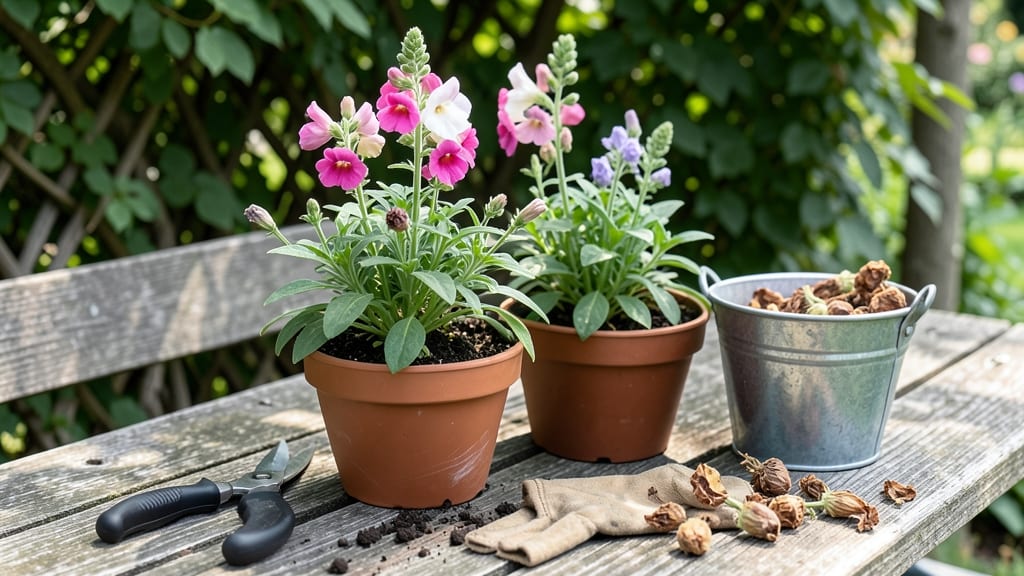
Your snapdragons could bloom for weeks longer with just two minutes of work. ✂️ Deadheading snapdragons in pots isn’t just about looks—it’s the secret to those towering spikes of color that keep coming back.
I’ve learned the hard way that skipping this step means fewer blooms and leggy plants by summer’s end.
You’ll need clean pruners (sharp ones prevent jagged cuts that invite disease) and a sunny afternoon when flowers have faded but stems are still firm. The goal? Remove spent blooms at the first set of leaves below the flower head—this redirects energy to new growth, not seed production.
Container-grown snapdragons respond especially well because they’re already growing in limited space, so every cut counts.
After pruning, you’ll notice fresh side shoots emerging within 7-10 days, and those turn into new flower spikes. The plants stay compact, resist flopping, and produce blooms all season if you keep up with it.
Just watch for over-pruning—if you cut too much, you’ll stunt growth instead of encouraging it.
This works for both dwarf and tall varieties, and the same technique applies whether your pots are on a patio or balcony. The key is consistency: check your snapdragons every 3-5 days during peak bloom. Once you see the difference, you’ll wonder how you ever skipped this step.
📚 In This Guide
- What you need
- Instructions
- Tips and common mistakes
- Wrapping up and next steps
What you need
- ● Sharp pruning shears or clean scissors: A pair with sterilized blades (rubbing alcohol works!) to prevent disease. Size: Small-handled, 4-6 inches, for precision.
- ○ Gloves (optional but recommended): Lightweight gardening gloves to protect hands from thorns or sap.
- ● Compost or mulch: A small bag (5-10 lbs) to refresh soil after pruning.
- ● Watering can or hose with a gentle nozzle: For post-pruning hydration.
- ● Disinfectant (e.g., hydrogen peroxide or bleach solution): 1 part bleach to 9 parts water for cleaning tools between cuts.
- ● Hand lens or magnifying glass: For spotting tiny buds or pests up close.
- ● Pruning sealant: A small tube to coat cuts and prevent infection (great for larger stems).
- ● Garden twine or stakes: If your snapdragons need support after pruning.
- ● Notebook or app: To track blooming cycles and pruning dates for future reference.
Step-by-step instructions for deadheading snapdragons in pots
Here's the simple method I use to keep my snapdragons blooming all season long—no fancy tools required.
✂️ Step 1: Wait for the Right Time to Deadhead
Deadhead snapdragons when the flower buds open fully but before the seed pods form. Look for blooms that have lost their vibrant color or are wilting at the edges—these are ready to go. I always check in the morning when flowers are at their freshest, so I don't accidentally remove buds that are still opening.
Skip the deadheading if you see seed pods forming—those mean the plant is saving energy for next year's seeds. Cutting them off too early can stress the plant and reduce future blooms. Instead, focus on fully open flowers that are past their prime.
✂️ Step 2: Use Clean Pruners or Fingers for Precision
Snapdragons grow on tall, sturdy stems, so I use either clean pruning shears or just my fingers to pinch off spent blooms. Hold the stem just above the first set of leaves below the flower head—this encourages new side shoots to form. If you cut too close to the base, you risk damaging the main stem.
For larger pots with multiple stems, I work from the bottom up. This keeps the plant balanced and prevents it from toppling over. A quick wipe of your shears with rubbing alcohol between cuts keeps bacteria from spreading and keeps your snapdragons healthy.
✂️ Step 3: Encourage Bushier Growth with Strategic Pinching
After removing spent blooms, pinch the growing tips of healthy stems to promote branching. This is where the magic happens—when you pinch off the top few inches of new growth, the plant redirects its energy to producing side shoots. I do this every 2-3 weeks during the growing season to keep my snapdragons full and bushy.
Don't pinch too aggressively, though. Just a light trim of the top set of leaves is enough to trigger new growth. Over-pruning can shock the plant and slow down flowering. Watch for new side shoots forming within a week or two—those are your signal that the pinching worked!
💧 Step 4: Water and Fertilize After Deadheading
After deadheading, give your snapdragons a good drink of water to help them recover. Water at the base of the plant rather than from above to keep the foliage dry and prevent fungal diseases. I always check the soil first—if it's dry to the touch about an inch down, it's time to water.
Follow up with a light application of balanced, water-soluble fertilizer to replenish nutrients lost during flowering. I use a half-strength solution every 4-6 weeks to avoid over-fertilizing, which can burn roots. Snapdragons are heavy feeders, so they appreciate the extra boost after you've encouraged all that new growth.
☀️ Step 5: Monitor for New Blooms and Repeat
Within a week or two, you should see new buds forming along the sides of the stems. This is your reward for deadheading—fresh blooms that will keep your snapdragons looking vibrant all season. Keep an eye out for any leggy stems that aren't producing new growth, as these may need a little extra attention or pruning.
Repeat the deadheading process every 1-2 weeks as flowers fade. Consistency is key—if you let too many blooms go to seed, the plant will shift its energy away from producing more flowers. With regular deadheading, your snapdragons will keep blooming until the first frost, giving you a stunning vertical display all summer long.
Tips & tricks for perfect snapdragon pruning
These simple techniques will transform your snapdragons from occasional bloomers to nonstop flowering stars.
Timing is Everything: I've found that deadheading in the morning gives you the best results. The flowers are fully open and easier to assess, plus you avoid the afternoon heat that can stress the plants. If you must deadhead later in the day, wait until the flowers are completely dry—this prevents moisture from lingering on the cut stems, which can invite fungal infections.
Tool Selection Matters: While fingers work in a pinch, I always reach for clean, sharp pruners for the job. Dull tools crush stems and create jagged cuts that heal poorly. After each use, I wipe the blades with rubbing alcohol to prevent spreading disease between plants. For large batches, consider using small, handheld shears designed for garden tasks—they make quick work of multiple stems.
Visual Cues for Perfect Cuts: When pinching in Step 3, look for the point where the stem starts to thicken just above a set of leaves. This is your target spot—cutting here encourages strong new growth. I like to make my pinches at a slight angle to increase surface area for water uptake. If you're unsure where to cut, imagine drawing an invisible line between the topmost leaves and the next set down—pinch just above that line.
Seasonal Adjustments: Early spring pinching (when plants are about 6-8 inches tall) sets the foundation for bushy growth. In mid-summer, I adjust my approach—if I notice plants getting leggy, I'll pinch slightly lower on the stem to encourage more robust branching. This second pinch often results in a second flush of blooms before fall, extending your season by weeks.
Pro Tips for Deadhead Snapdragons In Pots
- These simple techniques will transform your snapdragons from occasional bloomers to nonstop flowering stars.
- Timing is Everything: I've found that deadheading in the morning gives you the best results. The flowers are fully op...
- Tool Selection Matters: While fingers work in a pinch, I always reach for clean, sharp pruners for the job. Dull tool...
Frequently asked questions
Got questions about deadheading snapdragons in pots? You’re not alone! Here are some of the most common queries—and straightforward answers to keep your plants thriving.
When is the best time to deadhead snapdragons?
Deadhead snapdragons after the flowers fade but before seed pods form. Aim for late morning to early afternoon when the blooms are dry but still fresh. This timing prevents energy waste on seed production, redirecting it to new growth. Pro tip: Check daily during peak bloom seasons (spring to fall) for the best results!
Do I need special tools to deadhead snapdragons in pots?
Nope! While clean pruning shears or sharp scissors make the job easier, your fingers work in a pinch. Just sanitize your tools with rubbing alcohol first to avoid spreading disease. For large pots or crowded plants, shears save time and reduce accidental damage to stems.
What if I skip deadheading? Will my snapdragons still bloom?
Yes, but expect fewer and shorter blooms. Without deadheading, snapdragons divert energy to seed production, often leading to leggy stems and sparse flowers. Regular deadheading encourages continuous blooming and keeps your plants compact and bushier—worth the 2-minute effort per flower!
Can I reuse the cut flowers after deadheading?
Snapdragon blooms make stunning cut flowers. Snip stems at an angle, strip lower leaves, and place them in water immediately. They’ll last 5–7 days in a vase—perfect for adding height to bouquets. Just avoid overcrowding in the vase to extend their life.
My snapdragons look sad after deadheading. Did I do it wrong?
Not necessarily! Snapdragons may look wilted for 24–48 hours post-pruning as they adjust. If stems are still green and firm, they’re fine—just give them time. Over-pruning (cutting too close to the base) or using dull tools can stress plants, so always leave 1/4 inch of stem above a leaf node.
| Quick Troubleshooting Guide |
|---|
| Problem: No new blooms after deadheading |
| Fix: Check sunlight (6+ hours/day), water consistently, and fertilize lightly with a balanced formula. |
| Problem: Stems turning yellow or mushy |
| Fix: Reduce watering (snapdragons hate soggy roots) and ensure pots have drainage holes. |
Wrapping up and next steps
Deadheading snapdragons in pots is a simple yet powerful way to keep your plants thriving and blooming beautifully all season long! 🌸 By removing spent flowers and pinching back leggy growth, you’re encouraging stronger stems, more vibrant blooms, and a bushier plant.
With just a few minutes of care every few weeks, you’ll be rewarded with towering, healthy snapdragons that steal the show in your garden or containers.
Now that you’re armed with the know-how, grab those pruners and get pruning! 🌱 Try experimenting with different deadheading techniques to see what works best for your snapdragons, and don’t forget to enjoy the process—your green thumb is growing stronger with every cut!
For even more blooming tips, check out our guide on extending the snapdragon season in pots.