
Vegetables
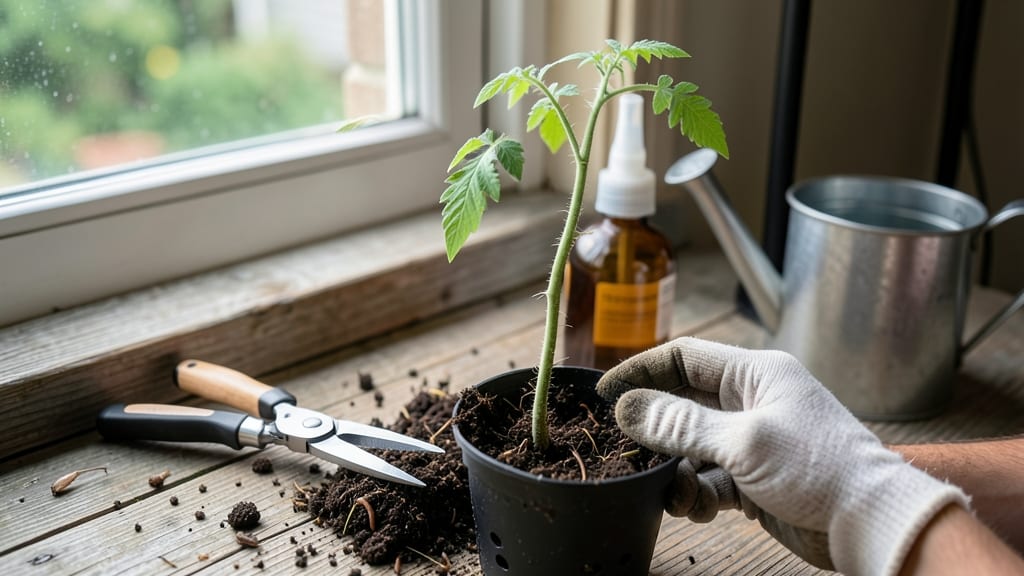
Leggy tomato seedlings scream for help—long, weak stems and tiny leaves mean they're struggling to stand up. 🌱 I've nursed dozens back to health, and the fixes are simpler than you'd think, starting with a quick assessment of what went wrong. The usual culprits?
Too little light, overcrowding, or inconsistent watering. Seedlings stretch toward any available light, which weakens their stems. Even with good intentions, a sunny windowsill isn't enough—you need bright, direct light or a grow light within 6 inches of the seedlings.
Overcrowding blocks light and air circulation, while uneven watering stresses them further. Here's the good news: you can often save them with a few quick adjustments. Prune the leggy stems just above a leaf node, then transplant deeper into soil to stabilize them.
Within days, you'll see new growth that's shorter and stronger, ready to thrive in your garden. This works for any tomato variety, whether you're growing heirlooms or hybrids. The key is acting fast—once they're this far gone, they won't recover on their own. Let's get them back on track!
Root Causes Of Weak Growth
Leggy tomato seedlings—those tall, spindly sprouts reaching for the light like overcaffeinated toddlers—aren’t just a cosmetic issue. They’re a cry for help from your plants, signaling underlying problems in their environment or care.
Understanding these causes is the first step to growing strong, productive tomato plants. Let’s break down the science behind why your seedlings stretch out of control.
Tomato seedlings are light-hungry—they crave 12–16 hours of bright light daily to grow sturdy stems. When they don’t get enough, they stretch (a process called etiolation) to reach toward the nearest light source, often becoming weak and prone to falling over.
- Why it happens: Seedlings prioritize stem elongation over leaf development when light is limited.
This creates a high leaf-to-stem ratio, making them top-heavy and unstable. - Key triggers: - Placing seedlings too far from grow lights (or natural sunlight). - Using low-wattage or inefficient bulbs (e.g., incandescent instead of LED or fluorescent). - Cloudy weather or short winter days reducing sunlight.
Tomatoes thrive in warm but not scorching conditions (ideal daytime temps: 70–85°F / 21–29°C). If seedlings experience cool nights or drafts, their growth slows, leading to leggy stems as they stretch to escape discomfort.
- Why it happens: Cooler temps reduce photosynthesis efficiency, forcing seedlings to allocate energy to stretching rather than thickening their stems.
- Common culprits:
- Placing trays near windows with drafts or air conditioning vents.
- Nighttime temps dropping below 55°F (13°C), which stunts root and stem development.
- Overcrowding in seedling trays, where competing plants create micro-climates with uneven warmth.
While seedlings need moisture, excess water (or waterlogged soil) can drown roots and prevent them from anchoring properly. Weak roots = weak stems = leggy growth.
- Why it happens: Poor drainage or overwatering stresses seedlings, causing them to divert energy to survival rather than sturdy growth.
Additionally, soggy soil can lead to fungal diseases (like damping-off), which further weaken stems. - Red flags: - Soil that stays muddy or clumps together when squeezed. - Seedlings with yellow lower leaves (a sign of root suffocation). - Trays sitting in standing water after watering.
Tomatoes need a balanced diet of nitrogen (N), phosphorus (P), and potassium (K) to grow strong. Too much nitrogen (common in cheap fertilizers) promotes leafy but weak growth, while deficiencies in other nutrients stunt root and stem development.
- Why it happens:
- Excess nitrogen (from over-fertilizing) leads to soft, elongated stems with fewer support structures.
- Low phosphorus (critical for root development) weakens the plant’s ability to anchor itself.
- Compacted or nutrient-poor soil limits root growth, forcing seedlings to stretch upward for stability.
When seedlings are too close together, they compete for light, water, and nutrients. This competition triggers etiolation as they race to outgrow their neighbors.
- Why it happens:
- Thin roots struggle to access resources, leading to weak, stretched stems.
- Shading from neighboring plants reduces light penetration, forcing seedlings to lean.
- Tell-tale signs:
- Seedlings touching each other or growing at odd angles.
- Smaller leaves on lower stems (a sign of light deprivation).
Fix Leggy Seedlings Fast
Now that you know why your tomato seedlings are stretching too tall and weak, it’s time to turn things around! The good news? Most fixes are simple, quick, and require minimal tools.
Below, we’ll tackle the most common causes—light deprivation, overcrowding, improper watering, and temperature stress—with step-by-step solutions to get your seedlings strong and ready for transplanting.
If your seedlings are reaching for the sky like they’re auditioning for a ballet, they’re begging for more light. Leggy stems = not enough sunlight or artificial grow lights.
🔥 Step 1: Move Them Closer to Light
- Natural light: Place seedlings within 6–12 inches of a south-facing window (or the brightest window you have).
If they’re still stretching, rotate the tray quarter-turn daily so all sides get even light. - Grow lights: If using LEDs or fluorescents, position them 2–4 inches above the tallest seedlings. Adjust height as they grow—too far = legginess, too close = burnt leaves.
🍳 Step 2: Supplement with Grow Lights (If Needed)
- 12–16 hours of light/day is ideal.
Use a timer to automate this—consistency is key! - Best light types: Full-spectrum LED grow lights (cheaper than you think!) or T5 fluorescent bulbs. - Pro tip: 💡 If using household bulbs (like incandescent), they won’t cut it—seedlings need cool white or daylight spectrum lights.
👨🍳 Step 3: Harden Off Gradually (Outdoor Prep)
Once seedlings are sturdy (after 1–2 weeks of proper light), acclimate them to outdoor conditions before transplanting: 1. Day 1–3: Place outside in partial shade for 1–2 hours, then bring back in.
- Day 4–7: Increase time to 4–6 hours, then full sun by Day 7. 3. Final day: Leave them out overnight to toughen up.
Too many seedlings competing for space = weak, leggy plants. Thin or transplant them now to avoid root stress later.
✂️ Step 1: Thin or Transplant
- If in trays: Snip the weakest seedlings at the soil line (leave the strongest 1–2 per cell).
- If in a flat: Space remaining seedlings 2–3 inches apart (or transplant to individual pots).
- Pro tip: 🌡️ Do this on a cloudy day or in the evening to reduce transplant shock.
📊 Step 2: Upgrade to Larger Pots (If Needed)
- Small cells (under 2")? Move seedlings to 3–4" pots with well-draining potting mix.
- Avoid garden soil—it compacts and holds too much moisture, leading to disease.
Overwatering or underwatering can both cause legginess—roots need balance, not soggy or dry stress!
🔥 Step 1: Check Soil Moisture
- Stick your finger 1 inch deep—if it’s dry, water; if soggy, wait 1–2 days.
- Signs of overwatering: Yellow leaves, moldy soil, or seedlings leaning (roots suffocating).
- Signs of underwatering: Wilting, crispy edges, or stunted growth.
🥗 Step 2: Water Smartly
- Bottom-watering method (best for seedlings): 1. Place the tray in 1 inch of water for 10–15 minutes. 2.
Let excess drain completely—no sitting in water! - Avoid overhead watering (keeps leaves damp = fungus risk). - Pro tip: ✨ Use a spray bottle for gentle watering if seedlings are tiny—avoids disturbing soil.
Tomato seedlings hate extremes—too hot or too cold makes them stretch or wilt.
🔥 Step 1: Ideal Growing Conditions
- Daytime temp: 70–75°F (21–24°C) – use a heat mat (70°F) if below 60°F.
- Nighttime temp: 60–65°F (15–18°C) – drafts from windows/doors can chill them.
- Humidity: 40–60% – too humid = mold; too dry = weak stems.
🎯 Step 2: Protect from Drafts & Heat
- Avoid cold windowsills (use a thermostat-controlled heat mat if needed).
- Keep away from vents/AC—fluctuations stress seedlings.
- Use a humidity dome (remove once true leaves appear) to retain moisture.
Once you’ve revived your leggy seedlings, keep them stocky with these habits:
- Start with the right light: Use grow lights from day one if natural light is weak.
- Use the right soil: Seed-starting mix (lightweight, sterile) > garden soil.
- Fertilize lightly: Wait until true leaves appear, then use a balanced fertilizer (5-5-5 or 10-10-10) at half strength.
- Rotate trays daily to prevent uneven growth toward light.
- Transplant early: Move to larger pots before roots get root-bound (usually when they hit the bottom of the cell).
Remember: Leggy seedlings aren’t a death sentence—they just need a little TLC (and maybe a grow light upgrade)! With these fixes, your tomatoes will be short, sturdy, and ready for the garden in no time. 🍅✨
Frequently asked questions
Can I still save my leggy tomato seedlings if they're already 8+ inches tall?
Yes! Even tall seedlings can recover with the right care. Start by pruning the stems just above a leaf node (about 1/3 of the way down), then transplant deeper into soil to stabilize them. Within 5-7 days, new growth will sprout from the cut and be much stockier.
What's the best way to prune leggy tomato seedlings without killing them?
Use clean scissors or pruning shears to snip the stem just above a leaf node (where leaves grow out). Aim to cut 1/3 to 1/2 of the height—this encourages bushier growth. Avoid cutting too close to the base, or you risk damaging the main stem.
How close should grow lights be to my seedlings?
Start with lights 2-4 inches above the tallest seedlings, then adjust as they grow. Too close causes leaf burn, while too far leads to more legginess. Use a timer for 14-16 hours of light daily—consistency matters more than intensity.
Will transplanting leggy seedlings into larger pots help them recover?
Deeper pots give roots more room to anchor and grow stronger. Bury the stem up to 1/3 of its height—this encourages new root growth along the buried portion. Use well-draining potting mix to prevent waterlogged soil.
Can I fix leggy seedlings without pruning?
Yes, but results may take longer. Move seedlings to bright light (or grow lights) and ensure proper spacing. Transplant into larger pots with fresh soil to encourage root growth. While pruning speeds recovery, these steps alone can still produce sturdy plants over 2-3 weeks.