
Plants
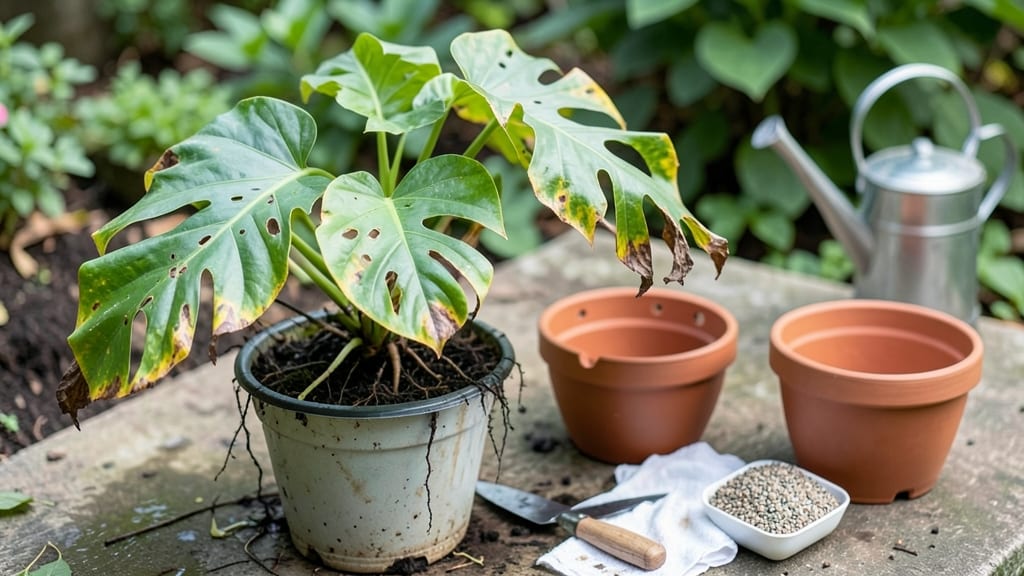
Your Monstera’s droopy leaves scream "help!"—but we’ve fixed this before with how to fix an overwatered Monstera. 🌿 That sad, limp look usually means roots drowning in soggy soil, and the good news?
You can turn things around fast with the right moves. I’ve nursed back more than a few "almost lost" Monsteras, and the key is acting quickly before root rot sets in.
Start by checking the soil—if it smells sour or feels squishy, that’s your first clue. Gently remove the plant from its pot and inspect the roots: healthy ones are firm and white, while mushy brown roots need trimming.
Repot in fresh, well-draining soil (think chunky mix with perlite or orchid bark) and pick a container with drainage holes—no exceptions.
Within 3 days, you’ll see a difference if you adjust watering too. Let the top 2 inches of soil dry out completely before watering again, and avoid letting it sit in saucers.
Your Monstera will start perking up as roots recover, and those signature splits in the leaves will return—stronger than ever.
Long-term, keep a finger-test habit: stick your finger in the soil before watering. If it’s damp, wait. Monsteras are tough once they’re happy, and with this fix, yours will bounce back like a pro. Trust the process—your plant’s comeback story starts now.
📚 In This Guide
- What you need
- Instructions
- Tips and common mistakes
- Wrapping up and next steps
What you need
- ● Well-draining potting mix: A blend designed for Monstera deliciosa (e.g., 50% peat or coconut coir + 30% perlite/pumice + 20% orchid bark). Quantity: Enough to repot your plant (typically 1–2 gallons for mature plants).
- ● Clean, room-temperature water: Avoid tap water if it’s heavily chlorinated or hard. Quantity: ~1–2 cups per watering session (adjust based on pot size).
- ● Spray bottle (8–16 oz): For misting leaves and humidity control.
- ● Pruning shears (sterilized): Sharp, clean scissors or small pruners to trim damaged leaves/stems.
- ○ New pot (optional but recommended): 1–2 inches larger in diameter than the current pot, with drainage holes. Material: Terracotta or ceramic (preferred for airflow).
- ● Drainage tray or saucer: To catch excess water and prevent root rot.
- ○ Rooting hormone (optional but helpful): For repotting damaged roots (e.g., Mycorrhiza or willow water).
- ● Humidity tray or pebble tray: Elevates moisture levels around the plant (fill with water + pebbles).
- ● Fungicide (e.g., neem oil or hydrogen peroxide 3%): 1 tsp neem oil + 1 quart water to treat fungal issues.
- ● Grow lights (LED, 10,000–20,000 lux): If your Monstera lacks bright, indirect light.
- ● Moisture meter: To check soil moisture accurately (insert into the root zone).
- ● Compost or worm castings: 1–2 tbsp mixed into soil to boost microbial activity post-recovery.
Step-by-Step instructions for reviving an overwatered Monstera
Here’s how I’ve saved multiple monsteras from soggy soil—just follow these steps closely.
💧 Step 1: Stop Watering and Check the Soil
First, let the plant rest. Watering again will only worsen root rot. Instead, gently squeeze the top 2 inches of soil—if it feels damp or sticky, it’s still too wet. Monstera roots need time to dry out and recover, so resist the urge to water for at least 3-5 days. If the soil smells sour or moldy, that’s a red flag for root rot.
Use a clean, sterilized knife or stick to probe deeper. If the soil below 2 inches is also soggy, you’ll need to act faster. Yellowing leaves or mushy stems confirm overwatering, but don’t panic—this step is about giving the roots a chance to breathe.
✂️ Step 2: Trim Damaged Foliage and Roots
Snip off any leaves that are completely yellow, brown, or mushy at the base. Healthy leaves will stay green and firm, while damaged ones won’t recover. Use clean pruning shears or scissors to avoid spreading disease. If the stems feel soft or hollow when pressed, trim those back to 1 inch above the next healthy node.
For roots, if you’re repotting, gently remove the plant from its pot and rinse away the soil. Inspect the roots—healthy ones are white or light tan, while rotten roots are black, mushy, and smell foul. Trim away all blackened or slimy roots with sterilized shears. This might seem harsh, but it’s the only way to stop the rot from spreading.
🪴 Step 3: Repot in Fresh, Well-Draining Soil
Choose a pot 1-2 inches larger than the current one—monsteras hate being root-bound but also dislike too much extra space. Fill the bottom 1-2 inches with a mix of orchid bark or perlite for drainage. This layer prevents water from pooling at the roots. Use a well-draining potting mix designed for aroids or add 20% perlite or pumice to regular mix to improve aeration.
Place the plant in the pot and fill around the roots with the new mix, pressing lightly to secure it. Leave ½ inch of space at the top to avoid overfilling. Water lightly only if the soil feels bone-dry—you’re aiming for slightly moist, not soggy. Overwatering again is the fastest way to undo your progress.
☀️ Step 4: Adjust Light and Humidity for Recovery
Move your monstera to bright, indirect light—a north or east-facing window is ideal. Avoid direct sun, which can stress a weakened plant. If your home is dry, place a pebble tray with water nearby or use a humidifier. Monsteras thrive in 50-70% humidity, and low humidity slows recovery. You’ll notice new growth in 2-4 weeks if conditions are right.
Keep the soil lightly moist but never soggy. Stick your finger 1 inch deep—if it’s dry, water gently until it’s evenly moist. If it’s still damp, wait another day. Consistency is key here. Avoid fertilizing for at least 4-6 weeks—the plant needs to focus on regrowing roots, not feeding.
⏰ Step 5: Monitor and Gradually Resume Care
After 7-10 days, check the roots again if possible. If they’re firm and white, you’re on the right track. If new leaves appear small and pale, it’s a sign of stress—but it’s normal as the plant recovers. Avoid moving the plant frequently, as it adds unnecessary stress. Once the plant shows 2-3 new healthy leaves, you can resume normal watering and fertilizing routines.
Real talk: Some monsteras bounce back in 3 days, while others take 2-3 weeks. Patience is everything. If the plant still looks terrible after 3 weeks, it might be too far gone—but don’t give up until you’ve ruled out other issues like pests or disease. Most of the time, though, this method works like a charm.
Tips & tricks for perfect Monstera recovery
Here's what nobody tells you—your monstera can bounce back faster than you think.
Soil Test Trick: In Step 1, when checking soil moisture, press your finger 1 inch deep—not just the top 2 inches. If it feels damp at this depth, hold off on watering for another 2-3 days. The key is letting the roots dry out completely, not just the surface. I’ve seen plants recover faster when we address the deeper moisture issue first.
Root Inspection Shortcut: If you’re unsure about root health, gently tug on the plant—healthy roots will hold the soil together, while rotten ones will let the plant slide right out. This quick test saves you from digging everything up unnecessarily. In Step 2, if you see any black or mushy roots, don’t hesitate to trim them—they’re the main culprits holding back your plant’s recovery.
Drainage Layer Hack: For Step 3, instead of just orchid bark or perlite, I mix in ½ inch of coarse sand at the bottom of the pot. This creates even better drainage than just one layer. The sand helps break up water flow, preventing future pooling. Plus, it’s cheap and easy to find at any garden center.
Light Position Tip: In Step 4, if your home lacks natural light, place the plant near a bright LED grow light for 12-14 hours daily. Monsteras need consistent light to recover, and artificial light can make all the difference in low-light spaces. I’ve revived plants this way that were otherwise struggling in dim corners.
Pro Tips for Fix Overwatered Monstera
- Here's what nobody tells you—your monstera can bounce back faster than you think.
- Soil Test Trick: In Step 1, when checking soil moisture, press your finger 1 inch deep—not just the top 2 inches. If ...
- Root Inspection Shortcut: If you’re unsure about root health, gently tug on the plant—healthy roots will hold the soi...
Frequently asked questions
Got questions about saving your soggy Monstera? You’re not alone! Here are some of the most common concerns—and how to tackle them like a pro.
How often should I water my Monstera after fixing overwatering?
Let the top 2–3 inches of soil dry out completely before watering again. Stick your finger in the soil—if it feels dry, it’s time! Overwatering is sneaky, so err on the side of underwatering until you see new growth. A moisture meter can help if you’re unsure.
Will my Monstera recover if the leaves are already yellow and mushy?
Don’t panic! Prune the mushy leaves (they won’t bounce back) and focus on saving the plant. With proper care—like adjusting watering and improving drainage—your Monstera can sprout fresh, healthy leaves in 3–4 weeks. Yellow leaves may linger, but new growth will shine!
Can I use hydrogen peroxide or vinegar to fix overwatered roots?
Yes! Mix 1 part 3% hydrogen peroxide with 4 parts water to disinfect roots and encourage regrowth. For vinegar, dilute 1 tbsp white vinegar per gallon of water to lower pH and deter fungus. Soak roots for 10–15 minutes, then repot in fresh, dry soil.
How long does it take to see improvement after fixing overwatering?
You’ll notice changes in 3 days (less drooping, firmer stems) and new growth in 2–4 weeks. Patience is key—overwatered Monsteras often take time to bounce back. Keep conditions stable (bright, indirect light; warm temps) to speed up recovery.
What’s the best soil mix to prevent overwatering in the future?
Use a well-draining mix like 50% potting soil, 30% perlite, and 20% orchid bark. Add a handful of charcoal or coco coir to boost aeration. Avoid heavy soils—your Monstera’s roots need air to breathe! Repot every 1–2 years to refresh the mix.
My Monstera’s stems are soft and black—is it too late?
If stems are black and squishy, root rot may have spread. Trim affected areas with sterilized scissors, treat remaining roots with hydrogen peroxide, and repot in fresh soil. If the plant is mostly mushy, it might not survive—but propagate healthy cuttings to grow new plants!
Wrapping up and next steps
Reviving an overwatered Monstera is totally doable—just follow the steps we’ve shared! 🌱 With patience and the right care, you’ll see those droopy leaves perk up in no time. Remember: consistency is key—adjust your watering routine and monitor your plant’s progress.
Now that you’re equipped with the know-how, take action today! Start by giving your Monstera the TLC it deserves, and soon, you’ll be back to admiring its lush, thriving foliage. Happy planting! 🌿