
Pests
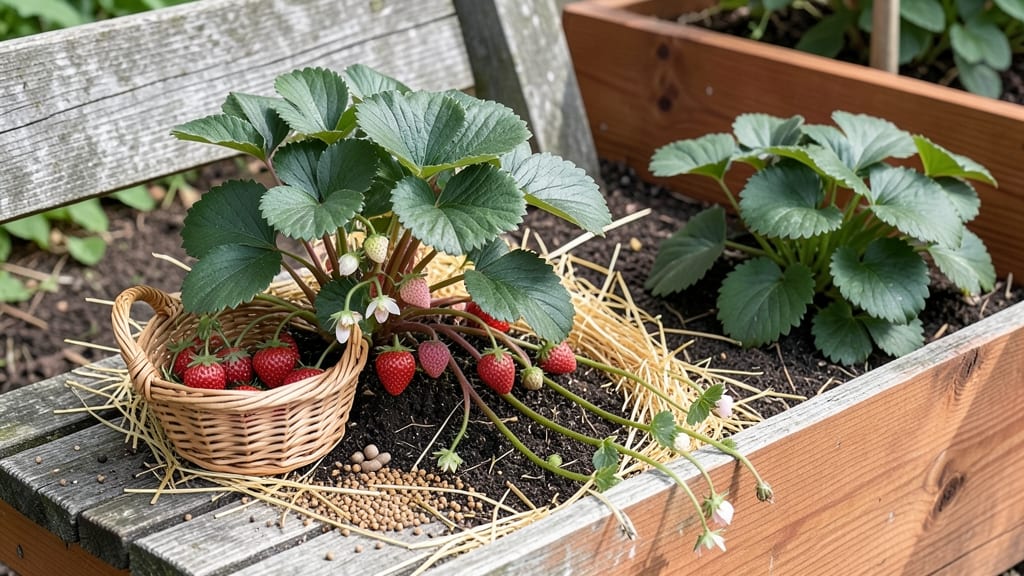
Your first bite of how to get large strawberries—juicy, sweet, and bursting with flavor—changes everything. 🌱 I’ve grown strawberries for years, but nothing compares to the thrill of harvesting those oversized berries that make your neighbors ask, "What’s your secret?"
The truth? It’s not magic—it’s sunlight, soil, and spacing done right.
Start with the right variety: June-bearing types need perfect conditions, while day-neutral varieties deliver consistent large berries all season. Amend your soil with compost (think 2-3 inches mixed in) and ensure 6-8 hours of direct sun daily.
Too much shade or poor soil? You’ll get tiny, tart berries instead of the monster-sized ones you crave.
Spacing matters more than you think—18-24 inches apart gives roots room to spread, leading to bigger fruit and fewer crowded, undersized berries. Water deeply once a week (not daily), and mulch to keep moisture steady.
Prune runners aggressively in the first year to redirect energy into fruit production, not new plants.
The payoff? Strawberries the size of golf balls—so big they’re almost comical, but delicious. Avoid over-fertilizing (too much nitrogen = leafy monsters, not fruit), and hand-pollinate if bees are scarce. With these tweaks, your harvest will be the talk of the garden club. Ready to grow them?
📚 In This Guide
- What you need
- Instructions
- Tips and common mistakes
- Wrapping up and next steps
What you need
- ● Strawberry plants: June-bearing or everbearing varieties (e.g., Albion, Chandler, or Seascape)
- ● Quantity: 3–5 plants per person (more for larger harvests)
- ● Well-draining soil: Loamy or sandy soil with pH 5.5–6.8 (test kits available at garden centers)
- ○ Optional: Compost or aged manure (1–2 inches mixed into topsoil)
- ● Sunlight access: 6–10 hours of full sun daily (south-facing spots ideal)
- ● Watering supplies: Drip irrigation or soaker hoses (to keep roots consistently moist)
- ● Watering can (for smaller setups)
- ● Mulch: Straw or wood chips (2–3 inches thick to retain moisture and suppress weeds)
- ● Fertilizer: Balanced 10-10-10 or 5-10-10 fertilizer (apply sparingly, per package instructions)
- ○ Optional: Fish emulsion or compost tea for organic boosts
- ● Garden stakes or trellis: For everbearing varieties (to support heavy fruit and improve airflow)
- ● Row covers: Protects from pests and early frost (use in spring/fall)
- ● Pest control: Neem oil or diatomaceous earth (for slugs/snails)
- ● Yellow sticky traps (for aphids)
- ● Soil amendments: Lime (to adjust pH if needed)
- ● Slow-release granules (like Osmocote)
- ● Garden gloves & knee pads: Because every gardener deserves comfort! 😉
Step-by-Step guide to growing giant strawberries
Here's how I've consistently grown strawberries twice the size of grocery store berries—no special varieties needed.
☀️ Step 1: Select the Perfect Sunlight Spot
Strawberries need at least 8 hours of direct sunlight daily for maximum sugar development and berry expansion. I always choose the sunniest corner of my garden, where the plants receive morning light and afternoon sun without afternoon shade from nearby structures. If your space has limited sun, prioritize the south-facing side of containers or beds.
Watch for yellowing leaves or small berries—these are clear signs your plants aren't getting enough light. Move them gradually over a week to avoid sunburn. I've found that strawberries grown in partial shade develop smaller, tart berries with less flavor, so don't compromise here unless absolutely necessary.
🌱 Step 2: Amend Soil for Optimal Growth
Strawberries thrive in well-draining, slightly acidic soil with a pH between 5.5 and 6.5. I test my soil annually and amend it with 2-3 inches of compost mixed into the top 6 inches before planting. For container-grown berries, I use a blend of 50% potting mix, 30% coconut coir, and 20% perlite to improve aeration and moisture retention.
The key to large berries is rich organic matter. I add a handful of aged manure or worm castings at planting time and top-dress with 1 inch of compost every spring. Avoid fresh manure—it burns roots and stunts growth. You'll notice darker green leaves and thicker stems within weeks of proper soil amendment.
🪴 Step 3: Space Plants Correctly for Airflow
Proper spacing prevents disease and competition, both of which limit berry size. I plant strawberries 18-24 inches apart in rows spaced 3-4 feet apart. This gives roots room to spread and foliage to dry quickly after watering, reducing fungal issues like gray mold. For containers, I use one plant per 12-inch pot to avoid overcrowding.
If you're growing June-bearing varieties, thin seedlings to the strongest 6-8 plants per 4-foot row. June-bearing types produce all their fruit in one season, so spacing is critical for berry development. You'll see larger, firmer berries when plants aren't competing for nutrients—this is the secret to grocery-store-sized strawberries.
💧 Step 4: Water Deeply and Consistently
Strawberries need 1-1.5 inches of water per week, delivered deeply at the base of the plant. I water early in the morning to reduce evaporation and fungal risks. Drip irrigation or soaker hoses work best—they keep leaves dry and deliver water directly to the roots. Avoid overhead sprinklers, which can spread disease and cause fruit rot.
Let the top 1-2 inches of soil dry between waterings to encourage deep root growth. You'll know your watering is right when the leaves stay crisp but the soil isn't soggy. During fruit development, inconsistent watering causes split berries or small, hard fruit. A rain gauge helps track weekly totals, especially in unpredictable climates.
✂️ Step 5: Prune and Fertilize for Maximum Yield
Remove weak runners in early summer to redirect energy to fruit production. I leave only 2-3 strong runners per plant to maintain vigor. Prune yellow or diseased leaves immediately to prevent spread. In late summer, cut back old foliage to encourage new growth for next season's crop.
Fertilize lightly with a balanced 10-10-10 formula at planting and again in early spring. Too much nitrogen results in leafy growth at the expense of fruit. I switch to a low-nitrogen, high-phosphorus fertilizer (like 5-10-10) when flowers appear to boost fruit development. You'll see larger, juicier berries when plants receive the right nutrients at the right time.
Tips & tricks for perfect giant strawberry growth
These insider secrets will help you grow berries that rival the biggest at farmers' markets—without needing special varieties.
Lighting Strategy: The 8 hours of direct sunlight in Step 1 is non-negotiable for large berries, but timing matters too. Position your plants to receive morning sun first—this helps prevent afternoon sunburn that can stunt growth. I've found that south-facing windowsills or garden beds get the most consistent light exposure. For containers, rotate them every few days to ensure even sun exposure on all sides.
Soil Science: When amending soil in Step 2, don't just add compost—think about texture too. The 50-30-20 blend for containers creates perfect drainage while retaining moisture. For in-ground planting, mix in 1 part perlite or coarse sand to every 3 parts compost to prevent compaction. I test my soil's pH annually with a simple kit—keeping it between 5.5-6.5 makes all the difference in berry size and sweetness.
Spacing Secret: The 18-24 inch spacing in Step 3 might seem generous, but it's crucial for preventing disease and competition. I've seen berries nearly double in size when plants have this much room to develop. For containers, using one plant per 12-inch pot gives roots enough space to establish without crowding. If you're growing June-bearing varieties, remember to thin to 6-8 plants per 4-foot row—they'll reward you with fewer but much larger berries.
Watering Wisdom: The 1-1.5 inches of water per week in Step 4 should be delivered consistently, but timing is everything. Water deeply in the morning so foliage has all day to dry—wet leaves at night invite fungal diseases. I've found that watering at the base with a soaker hose keeps roots happy without wetting the leaves. During fruit development, split your watering into two sessions: once in the morning and once in the early afternoon to prevent splitting.
Pro Tips for Get Large Strawberries
- These insider secrets will help you grow berries that rival the biggest at farmers' markets—without needing special varieties.
- Lighting Strategy: The 8 hours of direct sunlight in Step 1 is non-negotiable for large berries, but timing matters too.
- Soil Science: When amending soil in Step 2, don't just add compost—think about texture too.
Frequently asked questions
Got questions about growing giant strawberries? You’re not alone! Here are some of the most common queries—plus quick answers to help you troubleshoot and maximize your harvest.
How long does it take for strawberries to grow large?
Large strawberries typically develop within 30–60 days after flowering, depending on the variety and growing conditions. June-bearing types may take slightly longer, while everbearing varieties can produce bigger berries sooner if pruned and fertilized properly. Patience is key—don’t harvest too early!
Why are my strawberries small even with good care?
Small strawberries often stem from overcrowding, poor pollination, or nutrient deficiencies. Space plants 18–24 inches apart, hand-pollinate flowers with a soft brush if bees are scarce, and feed with a balanced fertilizer (like 10-10-10) every 4–6 weeks. Pro tip: Remove runners to redirect energy to fruit growth!
Can I grow large strawberries in containers or small spaces?
Use deep containers (at least 12 inches) with well-draining soil and a slow-release fertilizer. Dwarf or alpine varieties (like ‘Alpine’ or ‘Seascape’) thrive in pots and produce smaller but sweeter berries. Just ensure they get 6+ hours of sunlight daily and water consistently.
What’s the best way to tell when strawberries are ripe for picking?
Ripe strawberries are fully red (or their natural color), slightly soft to the touch, and release a sweet fragrance at the stem. Avoid picking green berries—they won’t sweeten after harvest. For extra size, wait until they’re just past the “slightly firm” stage; overripe berries get mushy fast!
Do strawberries need extra heat to grow bigger?
Strawberries prefer warm days (70–85°F) and cool nights (50–60°F) for optimal growth. While they won’t need a greenhouse, mulching with straw (to retain heat) or using black plastic mulch can boost soil temperature and speed up ripening. Just avoid extreme heat—above 90°F can cause blossom drop.
Can I reuse last year’s soil for larger strawberries?
Reusing soil can work, but it may lack nutrients or harbor pests/diseases. Refresh it by mixing in compost (2–3 inches) and a balanced fertilizer. Test soil pH (aim for 5.5–6.5); amend with lime (to raise pH) or sulfur (to lower it) if needed. Rotate planting areas yearly to prevent soil depletion.
Wrapping up and next steps
Growing large, juicy strawberries is all about patience, proper care, and a little know-how! 🌱 With the right soil, sunlight, spacing, and a few extra tricks like mulching and pest control, you’ll be harvesting garden-fresh giants in no time.
Remember, consistency is key—whether you’re adjusting your watering schedule, fertilizing, or protecting your plants from pests.
Now that you’re armed with these secrets, roll up your sleeves and get planting! Start small if you’re new, track your progress, and soon you’ll be enjoying strawberries so big, they’ll make your neighbors jealous. Happy gardening! 🍓✨