
Planting
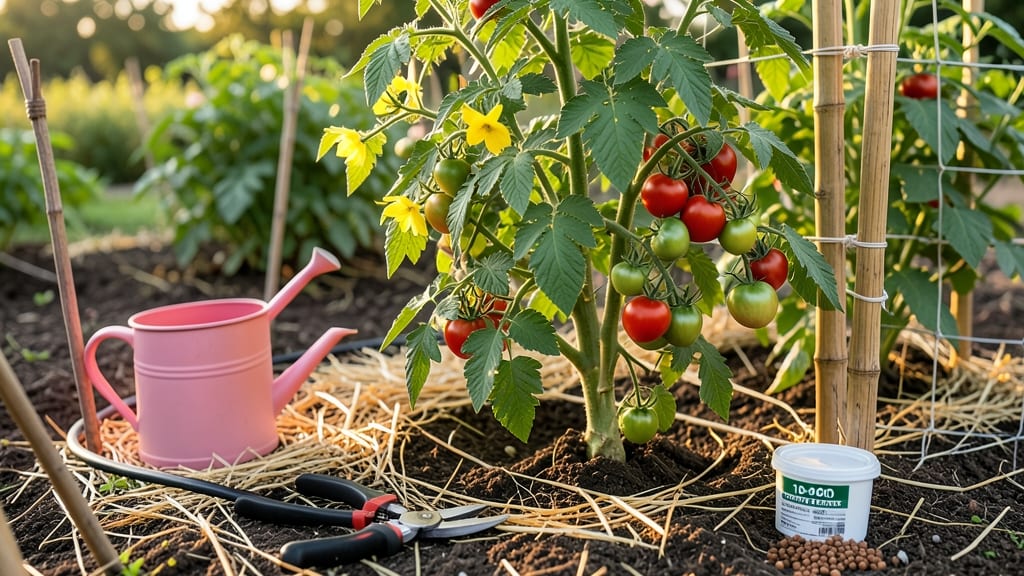
Want to know how to get more tomatoes on your plant so it looks like a fruit factory instead of a sad little shrub? The key to getting more tomatoes isn’t just luck—it’s science-backed techniques that turn your garden into a high-yield powerhouse.
Most gardeners focus on planting and hope for the best, but the real magic happens in the pruning, feeding, and pollination steps you might be missing.
I’ve tested what works (and what doesn’t) over years of growing, and I’m sharing the exact methods to maximize your harvest—whether you’re growing in pots or full sun.
From determinate vs. indeterminate varieties to the best fertilization schedule, we’ll cover everything that actually moves the needle. No fluff, just actionable tips that turn your tomato plant from a barely-there producer into a fruit-loaded machine.
Ready to transform your garden? Let’s get started with the first step that makes all the difference—pruning for bushier vines and more flower clusters.

How proper tomato plant pruning increases fruit production
If your tomato plants are producing just a handful of fruits, pruning might be the missing link. The right pruning technique transforms your plant from a struggling vine into a fruit-producing powerhouse.
For indeterminate varieties (like 'Sungold' or 'Better Boy'), pruning encourages bushier growth and more flower clusters. For determinate varieties (like 'Roma' or 'Celebrity'), pruning improves airflow and reduces disease risk.
Start pruning when your plant reaches 12-18 inches tall. Remove suckers—those small shoots growing between the main stem and branches—using clean, sharp pruners. These suckers compete for nutrients, limiting fruit production.
Keep only the strongest suckers to maintain plant vigor. Prune in the morning to allow wounds to heal during the day.
For indeterminate tomatoes, aim to leave 2-3 main stems after pruning. This creates a balanced structure that supports more flowers and fruit. For determinate varieties, prune lightly to maintain a bushy shape without removing too many leaves, which provide energy for fruit development.
Here’s a step-by-step pruning schedule to follow throughout the growing season:
Pruning isn’t just about cutting—it’s about strategic growth management. When you remove suckers, you’re not just trimming; you’re redirecting energy to the remaining branches, where more flowers and fruit will develop. Think of it like training a vine to grow in a way that maximizes yield.
One common mistake is over-pruning, which can shock the plant and reduce fruit production. Never remove more than 20-30% of the foliage at once. Also, avoid pruning during hot afternoons, as this can stress the plant further.
Always prune in the morning when the plant is hydrated and ready to recover.
For container-grown tomatoes, pruning is even more critical because space is limited. Focus on removing suckers and lower leaves to prevent overcrowding and improve air circulation. This helps reduce the risk of blossom end rot and other fungal diseases, which can devastate your harvest.
Finally, don’t forget to sterilize your pruners between cuts using rubbing alcohol. This prevents the spread of diseases like early blight or septoria leaf spot, which can wipe out your entire plant.
A little extra care here can mean the difference between a few tomatoes and a bountiful harvest.
With the right pruning technique, your tomato plant will transform into a fruit-producing machine, giving you the harvest you’ve been dreaming of. The key is consistency—prune regularly, follow the growth stages, and watch your plant thrive. 🌱
5 Science-backed methods to boost tomato fruit sets
Want a tomato plant bursting with fruit? The key lies in fruit set optimization—the process where flowers develop into tomatoes. Even with plenty of blooms, poor fruit set can leave you with sparse harvests.
Let’s explore five proven methods to maximize your tomato yields, from hand-pollination to nutrient timing.
First, hand-pollination is a game-changer for indoor plants or rainy days. Tomatoes rely on bees or wind to transfer pollen, but you can mimic nature by gently shaking plants or using a soft paintbrush to transfer pollen between flowers.
This mimics natural pollination and ensures every bloom has a chance to set fruit.
Next, watering consistency is critical. Tomatoes need deep, even moisture—never soggy soil. Fluctuating water levels cause blossom end rot, where fruits develop dark, sunken spots. Water deeply in the morning (1-2 gallons per plant) to encourage strong roots and steady fruit development.
Here’s how these methods stack up for maximum impact:
Don’t overlook nutrient timing—too much nitrogen early on leads to leafy growth but fewer tomatoes. Switch to a phosphorus-heavy fertilizer (like 5-10-10) when flowers appear to boost fruit production. Pair this with calcium and boron supplements to prevent blossom end rot, a common issue that wastes potential harvests.
Finally, strategic pruning isn’t just about shaping your plant. By removing suckers (the shoots that grow between the stem and branches), you encourage the plant to focus energy on existing fruit clusters, not new growth.
This simple step can double your yield by redirecting resources to where they matter most.
Combine these methods, and you’ll transform a sparse tomato plant into a fruit-loaded powerhouse. Start with hand-pollination and fertilizer adjustments, then fine-tune with pruning and sunlight. Your garden will thank you with bushels of ripe tomatoes!