
Propagation
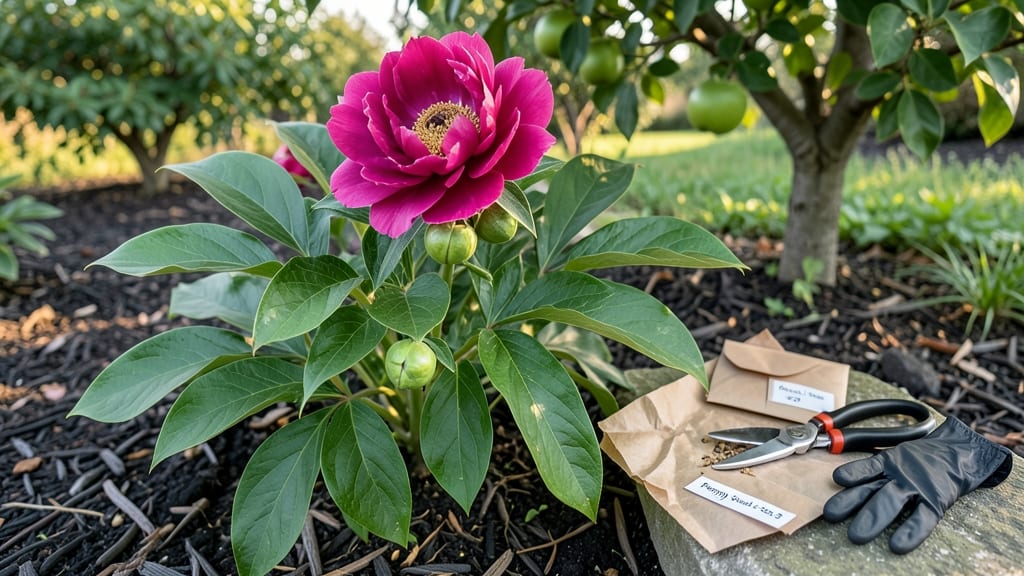
Getting peony seeds from flowers requires three seasons of patience—but the rare blooms you'll grow from them make it worth the wait. 🌱 These heritage plants rarely produce viable seeds naturally, but when they do, you unlock heirloom varieties you won't find anywhere else.
The key is knowing exactly when to collect those tiny black seeds from the dried seed pods, before they scatter or rot.
Only herbaceous peonies (not tree peonies) produce seeds worth collecting, and even then, less than 10% of flowers will develop viable seed pods. I've learned to check my plants in late September to early October when the pods turn brown and papery—this is your narrow window.
Harvest them before they split open, then dry the seeds completely to prevent mold.
Germination is the real challenge: these seeds need cold stratification to break dormancy. Plant them in pots with sterile soil, refrigerate for 6-8 weeks, then move to a sunny windowsill. Most seeds take 2-3 months to sprout, but some may wait until spring.
The payoff? Plants that may bloom in 3-5 years—but with colors and forms you won't find in nurseries.
For best results, collect seeds from healthy, disease-free plants in full sun. Store extra seeds in a cool, dry place if you're not ready to stratify them immediately. This method works best in USDA Zones 3-8, where peonies thrive naturally.
The wait is long, but the reward is a garden heirloom you'll pass down for generations.
📚 In This Guide
- What you need
- Instructions
- Tips and common mistakes
- Wrapping up and next steps
What you need
- ● Mature peony flowers: Choose Paeonia lactiflora or Paeonia officinalis (herbaceous peonies work best for seed propagation). Ensure they’re fully bloomed and healthy.
- ● Scissors or pruning shears: Sharp, clean pair to snip seed pods without damaging the plant.
- ● Paper bags or breathable containers: For drying seed pods (e.g., brown kraft paper lunch bags).
- ● Small mesh bags or paper envelopes: To store dried seeds (1–2 inches in size).
- ● Sterilized seed-starting mix: Well-draining, peat-based or coco coir mix (avoid garden soil—it’s too dense!).
- ● Seed trays or small pots: 4–6 inches deep with drainage holes (1–2 trays or pots per batch).
- ○ Plastic wrap or humidity dome: To create a mini greenhouse effect (optional but helpful for germination).
- ● Spray bottle with water: For gentle misting (avoid soaking the mix!).
- ○ Heat mat (optional but recommended): Set to 70–75°F (21–24°C) to speed up germination.
- ● Patience (and a notebook!): Peony seeds can take 6–12 months to sprout—track progress!
- ● Grow lights: If natural light is <12 hours/day, supplement with LED bulbs (10,000–20,000 lux).
- ● Fungicide (mild): Like neem oil or hydrogen peroxide (1:9 ratio) to prevent mold in damp mixes.
- ● Label markers: To tag trays/pots with dates and seed types (trust us, you’ll forget!).
- ● Second set of gloves: For handling seeds—some peonies have slightly prickly foliage.
Step-by-step instructions for harvesting and germinating peony seeds
Peonies grow from seeds slower than most flowers—but this method unlocks rare varieties.
🌿 Step 1: Collect Mature Seeds from Ripe Seed Pods
Wait until the peony flower's seed pods turn brown and papery dry, usually 8-12 weeks after blooming. Gently twist the pods open with your fingers—they should release 4-6 seeds per pod (each about the size of a small pea). Handle them carefully; peony seeds have a hard outer shell that protects but also slows germination.
Place the seeds in a paper envelope and label it with the variety name and harvest date. Store them in a cool, dry spot (50-60°F) until ready to plant. I like to keep them in a sealed envelope with a silica gel packet to prevent mold—peony seeds can rot if too damp.
💧 Step 2: Stratify Seeds for 3-4 Months to Break Dormancy
Peony seeds need cold stratification to mimic winter conditions. Mix the seeds with moistened sand or perlite in a sealed container (I use a small plastic bag with a twist tie). Place the container in your refrigerator's crispier drawer for 12-16 weeks—this mimics natural winter cold.
Check the mix every 2-3 weeks to ensure it stays barely moist (not soggy). If you forget and the mix dries out, simply add a few drops of water and reseal. After 12 weeks, transfer the container to a freezer for an additional 4 weeks to complete the stratification process.
☀️ Step 3: Plant Stratified Seeds in Well-Draining Soil
Fill small pots (3-4 inches deep) with a mix of 50% potting soil and 50% perlite or coarse sand for drainage. Plant the seeds ½ inch deep, spacing them 2 inches apart in the pot. Water lightly until the soil surface feels damp but not wet.
Place the pots in a cool, bright location (like a greenhouse or under a grow light) where temperatures stay between 60-70°F. Keep the soil lightly moist—don’t let it dry out completely, but avoid soggy conditions. Germination can take 3-6 months, so patience is key.
🌱 Step 4: Transplant Seedlings After First True Leaves Appear
Once seedlings develop their first true leaves (not the initial seed leaves), carefully transplant them into 4-inch pots with the same well-draining mix. Use a small spoon to lift each seedling gently by its leaves, not the stem, to avoid damage.
Keep the seedlings in partial shade for the first 2 weeks after transplanting to reduce stress. Gradually introduce them to full sun over the next 2 weeks. Peony seedlings grow slowly—don’t rush their development. By their second year, they’ll need full sun to thrive.
⏰ Step 5: Overwinter Seedlings for Stronger Growth
After the first growing season, move potted seedlings to an unheated garage or cold frame in late fall (when nighttime temperatures drop below 50°F). This cold treatment mimics natural winter conditions and helps the roots establish before spring.
Resume watering lightly in early spring when you see new growth. By their third year, seedlings can be transplanted into the garden. Peonies grown from seed take 3-5 years to bloom, but the wait is worth it for rare varieties!
Tips & tricks for perfect peony seed germination
These little-known tricks will help you maximize your chances of success with peony seeds—because patience alone isn't enough when dealing with these stubborn beauties.
Timing is Everything: The 8-10 week window after flowering is critical for harvesting those brown, papery pods. I learned this the hard way after waiting too long and finding empty pods. Mark your calendar when you see those first blooms—this gives you a precise timeline for when to start watching for ripe seed pods. If you harvest too early, the seeds won't be fully developed, and if you wait too late, they'll have already scattered.
Storage Wisdom: That 2-4 week drying period in a cool, dry place is non-negotiable. I discovered that using a paper bag with small holes punched in it creates perfect airflow while preventing moisture buildup. Place the bag in a dark closet or basement where temperatures stay consistently cool—this mimics natural drying conditions and prevents mold. Pro tip: Label your bags with the harvest date so you don't forget when you started the drying process.
Cold Treatment Precision: The 3-4 month fridge stratification is where many gardeners fail. I recommend using a small container with a damp paper towel at the bottom (just enough to keep it slightly moist) and placing it in the crisper drawer of your fridge. This creates the most consistent cold, dark environment. Check the seeds periodically—if you see any signs of mold or excessive moisture, adjust by using a drier towel. The goal is to simulate winter conditions without creating a moldy mess.
Planting Strategy: When it comes time to plant those ½-inch-deep seeds, don't overcrowd them. I've found that using small peat pots or individual cells gives each seedling its own space to develop without competition. The 50% potting soil and 50% perlite mix is perfect because it drains well while retaining enough moisture. Place your pots in a warm, bright spot (around 75°F) but avoid direct sunlight—this can dry out the soil too quickly and stress the delicate seedlings.
Pro Tips for Get Peony Seeds From Flower
- These little-known tricks will help you maximize your chances of success with peony seeds—because patience alone isn't enough when dealing with these stubborn beauties.
- Timing is Everything: The 8-10 week window after flowering is critical for harvesting those brown, papery pods.
- Storage Wisdom: That 2-4 week drying period in a cool, dry place is non-negotiable.
Frequently asked questions
Got questions about harvesting peony seeds? You’re not alone—this process has a few quirks! Below, we’ve rounded up the most common queries to help you navigate the journey from flower to seedling with confidence.
Can I get peony seeds from any peony flower?
Not all peonies produce viable seeds! Only herbaceous peonies (like ‘Sarah Bernhardt’ or ‘Bowl of Beauty’) yield seeds—tree peonies and intersectionals (hybrids) rarely do. Even then, seed viability drops after the first generation, so heirloom varieties are your best bet. Pro tip: Look for fully open, healthy flowers with plump seed pods.
How long does it take for peony seeds to germinate?
Patience is key here! Peony seeds need cold stratification (6–8 weeks in the fridge) before sowing. After planting, germination can take months to years—some seeds sprout in spring, while others wait until fall. Don’t rush it; consistency in moisture (not soggy!) and warmth (65–75°F) helps. Remember: Some seeds may never sprout, but that’s normal!
What’s the best way to store peony seeds until planting?
Store seeds in a paper towel (not plastic) inside a sealed bag with a moisture-retaining packet (like a damp paper towel). Keep them in the fridge’s crisper drawer (34–40°F) for 6–8 weeks. Label the bag with the date—this mimics winter’s natural stratification. Avoid: Freezing temps or direct sunlight, which can dry them out.
Why aren’t my peony seeds germinating?
Peony seeds are fussy—here’s a quick troubleshooting list:
- No stratification: They need cold to break dormancy. Skip this step, and they’ll stay dormant.
- Too much light: Seeds need darkness to germinate. Cover the pot with a lid or cloth.
- Over/under-watering: Keep soil consistently moist but not waterlogged.
- Old seeds: Viability drops after 1–2 years. Fresh is best!
Are peony seedlings worth the wait?
Absolutely—if you love rare, unique blooms! Seed-grown peonies often produce unexpected colors/shapes (unlike cuttings, which replicate the parent plant). However, they take 3–5 years to flower. For faster results, consider layering or grafting, but seeds offer the thrill of discovery! Bonus: Share seedlings with fellow gardeners for a fun swap!
Wrapping up and next steps
Growing peony seeds is a rewarding journey that demands patience and care—but the beauty of watching those delicate blooms emerge makes it all worthwhile! 🌱 By following the steps outlined—from collecting ripe seed pods to nurturing seedlings—you’ll unlock the joy of propagating these stunning perennials. Remember: consistency is key, especially during the cold stratification phase.
Now that you’re armed with knowledge, why not take the next step? Start with just one seed pod and experiment with different stratification methods. Share your progress with fellow gardeners or even document your journey—you might inspire others to try their hand at growing these rare blooms!
Happy gardening! 🌸