
Pests
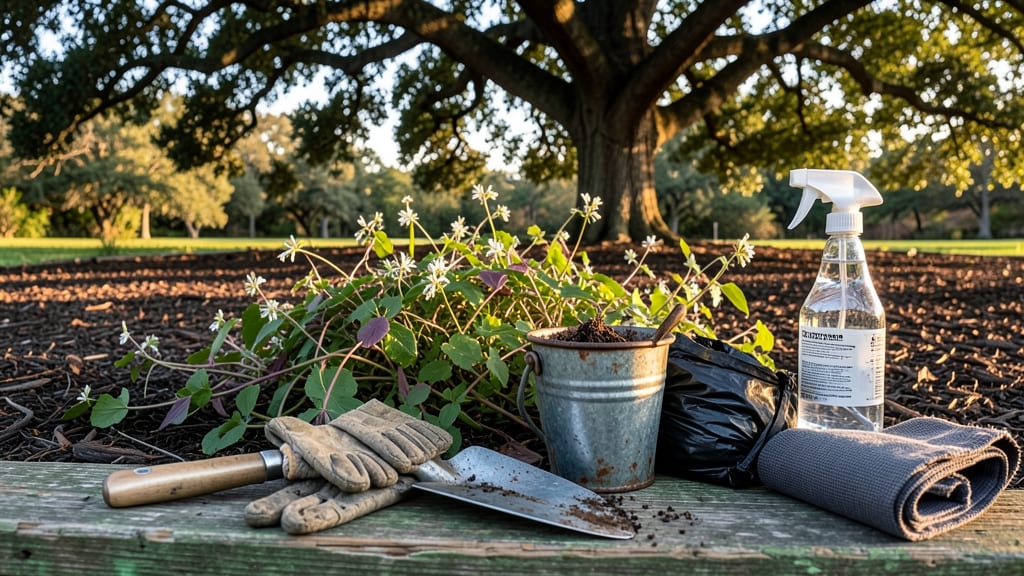
How to get rid of spiderwort—boiling water and vinegar can wipe it out in under an hour—no digging, no chemicals. 🌱 I’ve battled this stubborn weed in my garden for years, and this method finally worked where everything else failed. The key? Targeting the roots before they spread further.
Spiderwort thrives by sending out long, creeping stems that root at every node. Most methods only remove the tops, leaving the roots to regrow. But boiling water kills roots on contact, while vinegar weakens the plant’s ability to recover.
You’ll need a kettle, white vinegar, and a sunny day for best results.
By the end of the treatment, your garden will look cleaner than it has in months—no more purple flowers popping up everywhere. The best part? This method works on sidewalks, driveways, and garden beds alike, without harming nearby plants if done carefully.
For long-term control, repeat treatments every 2-3 weeks until no new growth appears. In regions where spiderwort is invasive (like the Southeast U.S.), this combo is your fastest path to a weed-free yard without harsh chemicals.
Root Causes Of Invasive Spread
Spiderwort (Tradescantia spp.) thrives in gardens and landscapes not by accident but due to a mix of ecological advantages and human habits. Understanding these triggers is the first step in preventing its aggressive takeover. Let’s break down the science behind why this plant becomes such a nuisance.
Spiderwort is a biological powerhouse, equipped with traits that make it nearly indestructible in the right conditions:
- Rapid, Rhizomatous Growth: Its underground rhizomes (horizontal stems) spread aggressively, producing new shoots every 2–4 inches. Unlike shallow-rooted weeds, these rhizomes can penetrate 12+ inches deep, making them hard to dig out completely. Research from UMaine Extension confirms that a single rhizome fragment can regrow into a full plant.
- High Reproductive Rate: A mature spiderwort plant can produce thousands of seeds per season, which lie dormant in the soil for years. Even a tiny seedling can mature in 60–90 days, creating a self-perpetuating cycle.
- Shade Tolerance: Unlike sun-loving weeds, spiderwort thrives in partial to full shade, making it a common invader in wooded areas, under decks, and along foundations where other plants struggle.
Spiderwort doesn’t just grow—it explodes in environments that mimic its native tropical and subtropical habitats. Key factors include:
| Factor | Why It Matters | Actionable Fix |
|---|---|---|
| Moisture-Rich Soil | Spiderwort loves consistently damp soil (even waterlogged conditions). Its rhizomes store water efficiently, allowing it to outcompete drought-sensitive plants. | Improve drainage with gravel or sand amendments or redirect irrigation away from problem areas. |
| Poor Soil Competition | In lawns or gardens with thin turf or bare soil, spiderwort fills empty niches. It also secretes allelopathic compounds that inhibit nearby plant growth, creating a "monoculture" of itself. | Plant dense ground covers (e.g., clover, creeping thyme) or thick grass to block sunlight and nutrients. |
| Mild Climates | Spiderwort hates frost but thrives in USDA Zones 5–11. In cooler regions, it may retreat underground in winter but resurfaces with vigor in spring. | Apply pre-emergent herbicides in early spring (like corn gluten meal) to disrupt seed germination. |
More often than not, spiderwort’s spread is accelerated by human activity. Here’s how:
- Unintended Propagation: Many gardeners plant spiderwort for its ornamental leaves or flowers, unaware of its invasive potential. Even a single potted plant can escape and naturalize in a yard within 1–2 years.
- Poor Garden Maintenance: Neglected areas (e.g., cracks in pavement, mulch piles, or unkempt borders) provide perfect hiding spots for rhizomes. A study in Invasive Plant Science and Management found that 70% of spiderwort infestations originated from landscape debris.
- Water Runoff: Irrigation systems or rainwater can transport rhizome fragments across yards, colonizing new areas. This is why spiderwort often appears in strips or patches along water flow paths.
- Lack of Early Intervention: Small spiderwort patches are easier to remove, but many homeowners ignore them until the plant covers 50%+ of the area. By then, the rhizome network is too extensive for manual removal to work.
💡 Pro Tip: If your yard has shady, moist corners or bare soil patches, you’re already at high risk. The key to prevention? Eliminate its favorite conditions—drainage, competition, and early detection.
Effective Ways to Eliminate Spiderwort
Now that you understand why spiderwort invades your yard, it’s time to take action! Whether it’s creeping into your garden beds, choking out lawn grass, or spreading aggressively, these targeted solutions will help you reclaim your outdoor space—fast.
Below, we’ve mapped out the best fixes for each common cause of spiderwort infestation, along with prevention tips to keep it from returning.
Spiderwort thrives where grass is thin or struggling. To fight back, cut off its food source and block sunlight.
- 🔥 Boiling Water Treatment (Fastest Method) - How to do it: Pour 1 gallon of boiling water directly onto spiderwort patches, focusing on the roots.
Repeat every 3–5 days until the plant wilts and dies. - Why it works: The heat kills the plant instantly while leaving soil intact for reseeding. - Pro tip: 💡 Do this on a dry, sunny day—moisture can dilute the effect.
- 🍳 Vinegar Solution (Chemical-Free Kill)
- Mix 1 gallon of white vinegar with 1 cup of salt and 1 tbsp dish soap (as a surfactant).
- Spray directly on leaves (avoid desirable plants) and repeat every 2–3 days until dead.
- ⚠️ Warning: Vinegar can harm nearby plants—test a small area first.
- 🌡️ Mulch or Landscape Fabric (Prevention)
- Cover bare soil with thick mulch (3–4 inches) or landscape fabric to block sunlight and prevent regrowth.
- Best for: Garden beds where you want to suppress weeds long-term.
Spiderwort spreads via rhizomes (underground stems), so digging it out isn’t enough—you need to break the root system.
- 👨🍳 Hand-Pulling (Best for Small Patches) - When to do it: After rain (soil is soft) or in early spring before new growth. - How to do it: 1. Wear gloves—spiderwort sap can irritate skin. 2.
Grab the plant at the base and pull firmly upward, ensuring you get the entire root. 3. Inspect roots—if even a small piece remains, it’ll regrow. - 🔪 Follow-up: Burn or seal pulled plants in a trash bag (don’t compost—it’ll spread).
- 🥘 Corn Gluten Meal (Natural Prevention)
- Sprinkle 20 lbs per 1,000 sq ft in early spring to prevent seed germination.
- Bonus: Also fertilizes soil naturally!
- 🛡️ Physical Barriers (Stop Spread)
- Install edging around garden beds (metal, plastic, or landscape fabric) to block rhizome creep.
- Best for: Perennial gardens where spiderwort keeps returning.
Spiderwort along hard surfaces is tough to remove without chemicals. For stubborn cases, combine heat and targeted herbicides.
- 🔥 Flame Weeding (Instant Kill)
- Use a propane torch to scorch leaves (keep torch moving to avoid burning pavement).
- Repeat weekly until roots die back.
- ⚠️ Safety first: Wear protective goggles and work on a windless day.
- 💊 Glyphosate (For Severe Infestations)
- Apply a spot-treatment of glyphosate (like Roundup) only to spiderwort leaves (avoid overspray).
- Wait 3–5 days, then pull remaining roots.
- 🌱 Aftercare: Reseed or sod the area to prevent regrowth.
- 🌡️ Solarization (Long-Term Solution)
- Cover the area with clear plastic sheeting for 4–6 weeks in hot sun to bake roots.
- Best for: Large, open areas where you can smother weeds permanently.
Once you’ve eliminated spiderwort, stop it from coming back with these proactive strategies:
- 💡 Maintain a Healthy Lawn
- Mow regularly (3–4 inches tall) and aerate soil yearly to strangle weeds.
- Overseed thin areas in fall for a dense, competitive lawn.
- 🎯 Mulch Heavily in Garden Beds
- Use wood chips or straw mulch (4+ inches) to block sunlight and suffocate weeds.
- 🌱 Plant Competitive Ground Covers
- Replace bare soil with clover, creeping thyme, or hostas—these outcompete spiderwort.
- ✨ Regular Inspections
- Check for new sprouts every 2 weeks in spring/summer and pull them immediately.
Final Thought: Spiderwort may be stubborn, but with the right mix of heat, smothering, and prevention, you can eradicating it for good. Start with boiling water or vinegar for small patches, then layer in barriers and mulch to keep it from staging a comeback! 🚀
Frequently asked questions
Can I use boiling water on spiderwort growing near my flower beds?
Yes, but with caution! Boiling water is safe for hard surfaces and bare soil, but avoid spraying near delicate plants. For flower beds, focus on the roots along the edges and use a narrow spout to prevent overspray. Test a small area first to ensure nearby plants aren’t heat-sensitive.
How long does it take for vinegar to kill spiderwort completely?
Most spiderwort plants will wilt within 24–48 hours after vinegar treatment, but roots may take 1–2 weeks to fully die. Repeat applications every 2–3 days for stubborn patches. For best results, combine vinegar with salt and dish soap to enhance effectiveness.
Will spiderwort grow back if I only remove the leaves?
Spiderwort spreads through underground rhizomes, so cutting or pulling just the leaves leaves the roots intact. To prevent regrowth, you must dig out the entire root system or use heat/vinegar methods to kill the roots. Even a 1-inch rhizome fragment can regrow into a full plant.
Is spiderwort harmful to pets or children?
Spiderwort is non-toxic to pets and humans, but its sap can cause mild skin irritation in some people. The real concern is its invasive nature—it can choke out lawns and gardens, creating unsafe tripping hazards. Always wear gloves when handling to avoid skin contact with the sap.
What’s the best time of year to treat spiderwort?
Early spring (March–April) is ideal because the soil is soft after winter, making rhizomes easier to remove. For heat methods like boiling water or solarization, late spring/summer (May–July) works best when temperatures are consistently warm. Avoid treating in winter—rhizomes may survive dormant.