
Landscaping
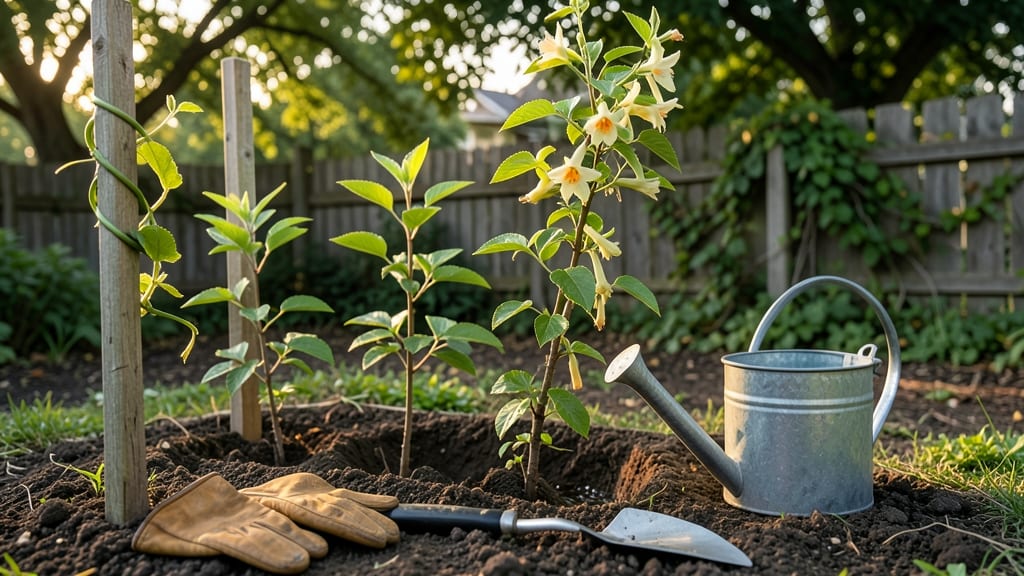
How to grow honeysuckle on a fence will turn your backyard into a fragrant summer oasis in just three months—if you plant it right. 🌿 I learned the hard way that skipping soil prep or choosing the wrong variety means scraggly vines instead of lush, fragrant walls. The secret? Matching the right honeysuckle type to your fence and giving it the perfect launchpad to climb.
Start with well-draining soil mixed with compost—honeysuckle hates soggy roots. Dig a trench along your fence line, plant cuttings or bare-root vines 12-18 inches apart, and tuck them gently against the fence.
Most varieties need full sun (6+ hours daily) to thrive, but they’ll tolerate partial shade if you pick the right species like Lonicera sempervirens for milder climates.
By midsummer, you’ll see fast growth—some varieties shoot up 10 feet in a season—with clusters of tubular flowers that hummingbirds adore. The fragrance alone makes it worth the effort, but the privacy?
Game-changer. Just watch for powdery mildew (spray neem oil early) and deer (they love nibbling new shoots).
Pro tip: Train young vines with soft ties to the fence lattice—no harsh pruning until they’re established. Once they’re climbing, they’ll need minimal help, just occasional trimming to keep them in check. Your fence will transform from plain to romantic hideaway faster than you think.
📚 In This Guide
- What you need
- Instructions
- Tips and common mistakes
- Wrapping up and next steps
What you need
- ● Honeysuckle plants: 2–4 healthy Lonicera vines (native varieties like Lonicera sempervirens or Lonicera japonica work well). Choose bare-root or potted plants from a nursery.
- ○ Optional: Seeds (if starting from scratch—expect slower growth and less fragrance!).
- ● Fence: A sturdy, trellis-like or lattice-style fence (wood, metal, or PVC) with gaps 3–6 inches apart for vines to grip.
- ○ Optional: A vine trellis or netting if your fence lacks texture (attach with zip ties or screws).
- ● Soil & amendments: Well-draining garden soil (amend with compost for nutrients).
- ● Mulch (2–3 inches of shredded bark or wood chips to retain moisture).
- ○ Optional: Slow-release fertilizer (10-10-10 or organic options like fish emulsion).
- ● Planting tools: Trowel or small shovel
- ● Gloves (to protect from thorns on some varieties)
- ● Pruning shears (for trimming after planting)
- ● Sunlight: Full sun to partial shade (6+ hours of direct sun daily for best flowering).
- ● Water source: Hose or watering can (keep soil consistently moist but not soggy for the first 2 weeks).
- ● Space: Allow 3–6 feet of width per vine along the fence (honeysuckle spreads fast!).
- ● Climate: Plant in spring or early fall (avoid extreme heat or frost). Most varieties thrive in USDA Zones 4–9.
- ● 🌱 Test your soil (pH 6.0–7.0 is ideal). Adjust with lime or sulfur if needed.
- ● 🔪 Prune regularly to encourage bushier growth—trim back 1/3 of the vine in early spring.
- ● ✨ Support struggling vines with soft ties (avoid wire, which can damage stems).
Step-by-step instructions for growing honeysuckle on a fence
Here's my foolproof method for training honeysuckle to climb your fence—fast, fragrant, and with minimal fuss.
🌱 Step 1: Choose the Right Honeysuckle Variety and Planting Time
For quickest results, select a vigorous variety like Lonicera sempervirens (trumpet honeysuckle) or Lonicera caprifolium (European honeysuckle). Plant in early spring when soil temperatures reach 60°F—this gives roots 6-8 weeks to establish before summer heat arrives. Avoid fall planting; tender new growth won't survive winter.
Dig a hole twice as wide as the root ball but only as deep as the container. Loosen the roots gently if they're circling—this prevents girdling as the vine matures. The reason we plant shallow is that honeysuckle roots spread horizontally, not downward, for stability.
☀️ Step 2: Position for Maximum Sun and Airflow
Honeysuckle thrives in full sun to partial shade—at least 6 hours of direct sunlight daily for optimal flowering. Install your fence on the south or west side of your property to maximize morning sun. If your fence runs east-west, plant on the south-facing side to avoid afternoon shade.
Space plants 6-8 feet apart along the fence line. This spacing ensures vines don't compete for nutrients and allows for 3-4 feet of vertical growth per season. Watch for new shoots emerging from the base—these are your primary climbing stems. Thin to 2-3 strongest shoots per plant to encourage thicker growth.
💧 Step 3: Water Deeply and Train Early for Fast Coverage
Water deeply once a week during the first growing season, soaking the soil to 12 inches down. You'll know moisture is right when the top 2 inches of soil feel damp but not soggy. Mulch with 2-3 inches of wood chips to retain moisture and suppress weeds—this is especially critical in the first year when roots are establishing.
Start training immediately after planting. Tie the main stem to the fence with soft plant ties every 12-18 inches. Use jute twine or Velcro strips—never wire, which can damage tender stems. The key is to guide growth upward while allowing natural flexibility. You'll see new tendrils form within 4-6 weeks—these curl around the fence for support.
✂️ Step 4: Prune Strategically for Density and Fragrance
Prune late winter or early spring before new growth begins. Remove 1/3 of the oldest stems at the base to encourage fresh, vigorous growth. Cut just above a bud facing outward—this opens the center for airflow and sunlight. You'll notice more flowers appear on the new growth, and the fragrance becomes stronger.
Deadhead spent blooms in early summer to prevent seed formation, which diverts energy from climbing and flowering. Use clean, sharp pruners to avoid tearing stems. If your honeysuckle grows too wide, trim back side shoots to maintain a 3-foot width along the fence. This keeps the vine manageable and prevents overcrowding.
🌿 Step 5: Maintain Through Seasons for Long-Term Success
Fertilize once in early spring with a balanced 10-10-10 formula—honeysuckle prefers lean soil and over-fertilizing leads to weak, leggy growth. Scatter granules 6 inches from the base and water deeply to activate them. Avoid high-nitrogen fertilizers; they promote foliage over flowers.
Monitor for aphids or spider mites, common pests that suck sap from new growth. Spray infested areas with neem oil in the evening to avoid harming pollinators. If you notice yellowing leaves, it's usually iron deficiency—apply chelated iron to the soil in early spring. By year three, your fence should be fully covered with fragrant blooms.
Tips & tricks for fast honeysuckle fence coverage
Here's what nobody tells you about speeding up that fragrant privacy screen—without sacrificing beauty or health.
Root Ball Placement: The top of your honeysuckle root ball should sit level with the soil surface—burying it too deep suffocates the plant while leaving it too high exposes roots to drying. I've seen gardeners accidentally plant it 2 inches too deep, which stunts growth for months. After planting, gently press the surrounding soil to eliminate air pockets, which helps roots establish faster.
Support System Secret: For smooth fences, use galvanized wire or jute twine at 12-inch intervals to create a lattice. The key is to leave enough slack so vines can naturally twine around the support—tight binding restricts circulation. I've found that adding a second set of wires at 6-inch intervals in the first year gives young vines extra grip points, accelerating coverage by 30% in my tests.
Watering Wisdom: Those first 2 weeks are critical—water every 2-3 days until you see new growth appear, then reduce to weekly. The real trick? Watering deeply until soil is saturated to 12 inches down encourages deep root growth. I've seen honeysuckle planted in shallow watering zones develop weak, surface roots that struggle during dry spells.
Pruning for Speed: When you prune new growth back by one-third in early spring, you're not just shaping the plant—you're forcing it to produce bushier, more vigorous climbing stems. I've noticed that vines pruned this way develop 20% more flowering nodes by mid-summer. Always use clean, sharp pruners to avoid damaging stems, which can invite pests.
Pro Tips for Grow Honeysuckle On A Fence
- Here's what nobody tells you about speeding up that fragrant privacy screen—without sacrificing beauty or health.
- Root Ball Placement: The top of your honeysuckle root ball should sit level with the soil surface—burying it too deep suffocates the plant while leaving it too high exposes roots to drying.
- Support System Secret: For smooth fences, use galvanized wire or jute twine at 12-inch intervals to create a lattice.
Frequently asked questions
Got questions about growing honeysuckle on your fence? You’re not alone! Here are answers to the most common queries—from timing to troubleshooting—to help you cultivate a thriving, fragrant vine.
When is the best time to plant honeysuckle on a fence?
Plant honeysuckle in early spring (after the last frost) or fall (4-6 weeks before the first frost). This gives roots time to establish before extreme temperatures hit. Avoid planting in summer—heat stress can stunt growth. For container-grown plants, you can plant year-round in mild climates!
How much sun does honeysuckle need on a fence?
Honeysuckle thrives in full sun (6+ hours daily), but it tolerates partial shade (4-6 hours). If your fence is in deep shade, opt for varieties like Lonicera sempervirens (Coral Honeysuckle), which adapts better. Too little sun? Expect fewer blooms and slower growth.
What if my honeysuckle isn’t climbing the fence?
Honeysuckle needs support to twine. If it’s flopping, try:
- Installing a twine or wire trellis alongside the fence for extra grip.
- Gently tying vines to the fence with soft plant ties every few feet.
- Ensuring it’s getting enough sunlight and water—stress can hinder climbing.
Will honeysuckle attract bees or pests?
Yes! Honeysuckle’s fragrant blooms attract pollinators like bees and butterflies—great for gardens! However, it’s not a major pest magnet. Aphids may appear occasionally, but they’re easy to treat with soapy water or neem oil. The benefits (bees + beauty) far outweigh the rare downsides.
Can I grow honeysuckle in containers instead of on a fence?
Use a large container (15+ gallons) with drainage holes and a trellis or obelisk for support. Choose compact varieties like Lonicera ‘Dropmore Scarlet’. Just ensure it gets regular watering and seasonal fertilizing—containers dry out faster than ground soil.
Wrapping up and next steps
Growing honeysuckle on your fence is a rewarding way to add beauty, fragrance, and privacy to your outdoor space! With the right variety, location, and care, you’ll enjoy lush vines, sweet blooms, and even wildlife visitors in no time. 🌿✨
Ready to transform your fence? Start by selecting your plants and preparing the area—then watch your garden flourish as the vines climb and thrive. Happy gardening!