
How To
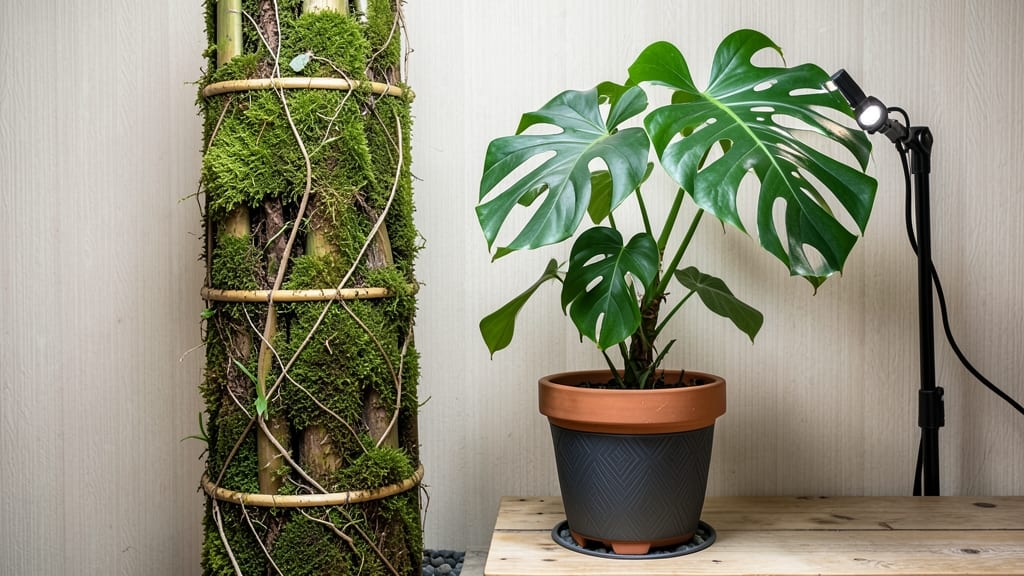
Your Monstera’s vertical potential starts with bright, indirect light—the secret weapon for towering vines. 🌿 I’ve watched mine grow from a foot tall to over six feet in just two years by mastering this one rule: place it near a window but never in direct sun.
The key is mimicking its jungle habitat where dappled light filters through canopy leaves.
Skip the guesswork: moss poles are your growth hack. Wrap young vines around them as they climb, and your plant will send out aerial roots to latch on—this triggers rapid vertical growth.
Pair that with weekly misting (or a pebble tray) to keep humidity high, and you’ll see new leaves unfurling with those iconic splits in under three months. The soil stays lightly moist but never soggy—overwatering is the #1 height killer.
📚 In This Guide
- What you need
- Instructions
- Tips and common mistakes
- Wrapping up and next steps
What you need
- ● Monstera deliciosa plant – Start with a healthy, mature plant (or a cutting with at least 2-3 nodes for propagation).
- ● 14-16" pot with drainage holes – Opt for a slightly larger pot (1-2 inches wider than the root ball) to encourage vertical growth. Terracotta or ceramic works best for airflow.
- ● Well-draining potting mix – A blend of 50% peat moss or coconut coir, 30% perlite or orchid bark, and 20% compost keeps roots happy and prevents rot.
- ● Support structure – Choose one of these: Moss pole (4-6 feet tall) – Best for rapid growth (wrap with sphagnum moss for grip).
- ● Trellis or bamboo stake – Budget-friendly alternative.
- ● Wall-mounted hook system – For urban apartments!
- ○ Grow lights (optional but helpful) – A full-spectrum LED grow light (12-15W) for 12-14 hours/day if natural light is <5+ feet away.
- ● Watering can with a narrow spout – For precise hydration without drowning roots.
- ● Humidity tray or humidifier – Monstera loves 60-80% humidity; a pebble tray with water works in a pinch.
- ● Fertilizer – Balanced liquid fertilizer (10-10-10 or 20-20-20) or worm castings for organic growth. Dilute to half-strength and apply every 4-6 weeks in spring/summer.
- ● Pruning shears or sharp scissors – Sterilized tools for trimming dead leaves or encouraging bushier growth.
- ● Bright, indirect light – Place your Monstera near a south- or west-facing window (or under grow lights). Direct sun can scorch leaves!
- ● Warmth (65-85°F) – Avoid drafts or cold spots (e.g., near AC vents or doors).
- ● Patience – Tall growth takes time! Expect 1-2 feet per year with ideal care.
- ● Consistency – Monstera thrives on routine. Water when the top 1-2 inches of soil are dry and fertilize regularly.
- ● ✨ Rotate the pot weekly to ensure even light exposure.
- ● 🌡️ Warm water (60-70°F) speeds up nutrient absorption.
- ● 🎯 Top-dress with compost annually to feed roots.
- ● 🔥 Prune lower leaves to redirect energy upward (but leave nodes for new growth!).
Step-by-Step instructions for growing a towering Monstera
Here’s how I’ve coaxed my Monsteras to grow 6+ feet tall—using light, support, and patience.
🌱 Step 1: Choose the Right Spot for Maximum Light
Monsteras thrive in bright, indirect light—think 6-8 feet from a south-facing window or under grow lights if natural light is weak. I place mine near a sheer curtain to filter harsh afternoon sun, which can scorch leaves. Watch for yellowing leaves or stretched growth—these are signs your plant needs more light.
If your space is dim, supplement with a full-spectrum LED grow light for 12-14 hours daily. Keep it 12-18 inches above the plant and adjust as it grows. Avoid direct sun—Monsteras grow leggy and weak when stretched toward windows.
🪴 Step 2: Provide a Sturdy Support System
Tall growth starts with proper support. I use a moss pole or trellis (at least 5-6 feet tall) inserted into the pot or placed beside the plant. Gently tie the main stem to the pole with soft plant ties or twist ties—never pull the vine too tight. Monsteras climb by wrapping their aerial roots around supports, so the more they grip, the faster they grow upward.
If you don’t have a pole, a wooden dowel or bamboo stake works too. Rotate the plant occasionally so it grows straight, not leaning toward the light. You’ll see new leaves split and grow larger when the vine has solid support.
☀️ Step 3: Water and Feed for Rapid Growth
Keep the soil evenly moist but never soggy—Monsteras hate wet feet. I water when the top 2 inches of soil feel dry, usually once a week in warm months. Use room-temperature water to avoid shocking the roots. Overwatering causes yellow leaves and root rot, while underwatering leads to crispy edges.
Feed with a balanced liquid fertilizer (like 10-10-10) every 4-6 weeks during spring and summer. I dilute it to half-strength to avoid burning roots. You’ll notice faster growth and deeper green leaves when the plant gets consistent nutrients.
✂️ Step 4: Prune and Encourage Bushier Growth
To keep your Monstera tall and full, prune leggy stems just above a leaf node. This encourages new shoots to grow from the sides. I snip with clean scissors and pot the cutting in water to propagate a new plant—it’s a great way to expand your collection.
Remove any yellow or damaged leaves to redirect energy to new growth. If your Monstera grows too wide, trim back overgrown vines to maintain a central stem focus. You’ll see fresh, healthy leaves emerge within 2-4 weeks of pruning.
⏰ Step 5: Rotate and Monitor for Optimal Growth
Turn your plant quarter-turn weekly so it grows evenly toward the light, not just on one side. This keeps the stem straight and prevents lopsided growth. Check the aerial roots—if they’re brown or mushy, reduce humidity. If they’re dry, mist the plant or place a tray of water nearby.
In winter, growth slows, so cut back on watering and fertilizing. Monsteras are tropical and prefer 65-80°F year-round. If your home gets drafty, move it away from cold windows or vents. With consistent care, your Monstera will reward you with towering vines and massive, fenestrated leaves in just a few months.
Tips & tricks for towering Monstera vines
Here's what I wish I knew when starting my first Monstera—these tricks saved my plants from common growing mistakes.
Light Positioning: In Step 1, when placing your Monstera 6-8 feet from a window, rotate the pot so different sides face the light each week. This prevents lopsided growth toward the window and creates a more balanced vine. I noticed my plants grew straighter after implementing this simple quarter-turn rotation every 7 days.
Support System Secrets: For Step 2, if you don't have a moss pole, try this hack: Insert a bamboo stake into the soil and gently wrap the main vine around it using twist ties every 6 inches. The key is to let the aerial roots naturally attach—they'll grip the stake as they grow, creating a stronger climbing structure over time.
Watering Wisdom: The "top 2 inches dry" rule in Step 3 works best when you check with your finger—not just visually. I learned this the hard way when my Monstera developed crispy edges from inconsistent watering. Also, always water in the morning so excess moisture evaporates during the day rather than sitting in the soil overnight.
Growth Monitoring: In Step 5, pay special attention to your aerial roots—they're your plant's early warning system. Healthy roots should be white or light green, while brown or mushy roots indicate overwatering. Dry, shriveled roots mean your plant needs more humidity, which you can increase by placing the pot on a tray with pebbles and water.
Pro Tips for Grow Monstera Tall
- Here's what I wish I knew when starting my first Monstera—these tricks saved my plants from common growing mistakes.
- Light Positioning: In Step 1, when placing your Monstera 6-8 feet from a window, rotate the pot so different sides fa...
- Support System Secrets: For Step 2, if you don't have a moss pole, try this hack: Insert a bamboo stake into the soil...
Frequently asked questions
Got questions about growing your Monstera deliciosa into a sky-high beauty?
Here are answers to the most common ones—so you can troubleshoot, optimize, and keep your plant reaching for the ceiling with confidence!
How much sunlight does a Monstera really need to grow tall?
Aim for bright, indirect light (think dappled sunlight or a few feet from an east/west-facing window). Too little light = leggy growth; too much direct sun = crispy leaves. Rotate your plant occasionally to encourage even growth toward the light.
Why is my Monstera growing wide instead of tall?
Leggy or bushy growth usually means it’s starving for light or nutrients. Move it to a brighter spot (but avoid harsh afternoon sun) and fertilize every 4-6 weeks during spring/summer. Prune leggy stems to redirect energy upward!
Can I use grow lights to make my Monstera taller?
LED full-spectrum grow lights (12-16 hours/day) work great for indoor Monsteras. Place them 12-18 inches above the plant and adjust height as it grows. Just avoid keeping them on 24/7—your plant needs rest too!
How long does it take for a Monstera to grow tall?
With ideal conditions (bright light, proper care), Monsteras grow 1-2 feet per year. Patience is key—some varieties (like ‘Albo’) grow slower. Use a moss pole or trellis early to train vertical growth and speed up the process!
What should I do if my Monstera’s leaves are yellowing or drooping?
Yellow leaves = overwatering or poor drainage. Let the top 2-3 inches of soil dry out between waterings. Drooping? Check for underwatering or root rot. Trim damaged leaves and repot in well-draining soil if needed.
Can I prune my Monstera to encourage taller growth?
Yes! Prune leggy stems or brown leaves to redirect energy. Cut just above a leaf node (where new growth emerges) to promote bushier, taller growth. Save cuttings to propagate—it’s free plants!
Pro Tip: Rotate your Monstera every few weeks so all sides get even light. This prevents lopsided growth and helps it stretch toward the sky like a champion!
Wrapping up and next steps
Growing a towering Monstera is all about patience, the right environment, and a little extra care! With the perfect balance of bright, indirect sunlight, proper watering, and occasional pruning, your plant will reward you with stunning, lush growth.
Remember, consistency is key—your Monstera will thrive when you give it the love and attention it deserves.
Now that you’re armed with the secrets to sunlight success, why not take the next step? Share your progress with fellow plant lovers online or experiment with propagating cuttings to expand your green family! 🌿✨