
Size
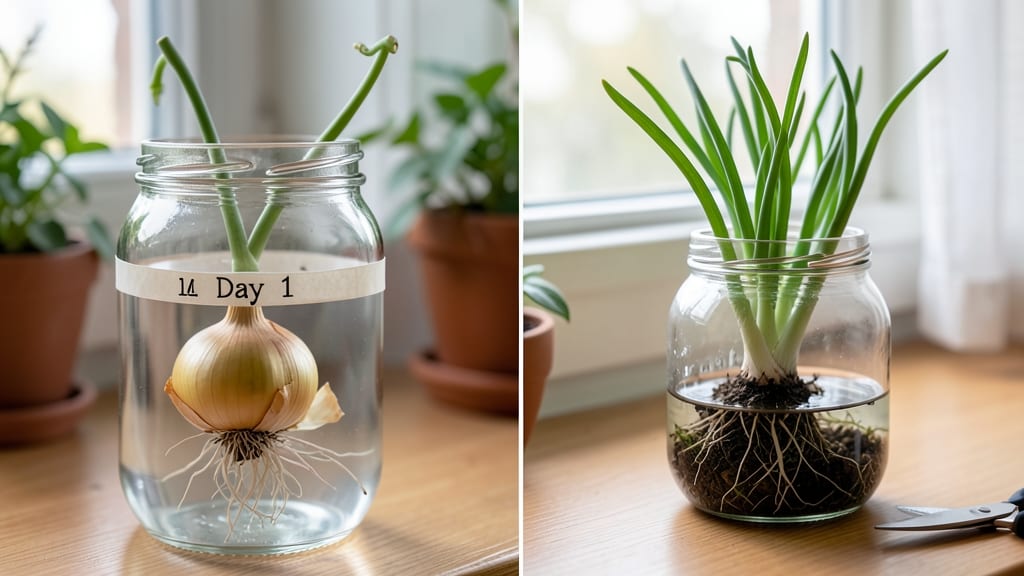
Your kitchen scraps could grow fresh green onions in just 7 days. 🌱 I’ve regrown onions from grocery store roots so many times, my countertop now has a permanent little onion water garden—no soil required.
The secret is simple: place the root end in a shallow container with 1-2 inches of water, keep it in bright light, and change the water every 2-3 days.
Within a week, you’ll see feathery green regrowth, ready to snip for cooking. It’s the easiest way to keep a steady supply of fresh greens without replanting.
Once the greens reach 4-6 inches tall, you can either keep them growing in water or transplant them to soil for a full harvest. The roots will continue producing new growth for weeks, making this one of the most cost-effective propagation methods around.
Works for green onions, shallots, and spring onions—just avoid yellow onions, which don’t regrow well. No fancy equipment needed, just a jar, water, and patience. Here’s how to do it right the first time.
📚 In This Guide
- What you need
- Instructions
- Tips and common mistakes
- Wrapping up and next steps
What you need
- ● 1 fresh onion (yellow, red, or white—avoid sweet onions as they regrow poorly)
- ● 1 clear glass or jar (8–12 oz, wide-mouth preferred for stability)
- ● Room-temperature water (enough to cover the onion’s bottom 1–2 inches)
- ● Freshly sharpened scissors or kitchen knife (for trimming)
- ● Paper towels or a clean cloth (to blot excess moisture)
- ○ Organic apple cider vinegar (1 tsp) (boosts root growth—optional but recommended)
- ● Small pebbles or marbles (to weigh down the onion and keep it submerged)
- ● Grow light or sunny windowsill (6+ hours of indirect light daily)
- ● Food-safe spray bottle (for misting greens if humidity drops)
Step-by-step instructions for growing onion roots in water
Here's the simple method I use to regrow fresh onion greens in just a week—no soil required.
🌱 Step 1: Select and Prepare Your Onion
Choose a fresh onion with a firm base and at least 2 inches of root stubble—this is where your greens will sprout. I always pick the largest onion in the bunch since it has the most stored energy. Cut off the top ½ inch above the root base, leaving the roots intact. This stubble will anchor your onion in the water.
Don't peel the outer skin from the base—it protects against rot in water. Simply trim the top cleanly with a sharp knife, then rinse the cut end under cool water to remove any loose fibers. You'll see tiny root hairs already forming at the base; these will grow longer in water.
💧 Step 2: Submerge the Base in Water
Fill a small glass or jar with room-temperature water until it covers the onion base by about ½ inch. I use a clear container so I can watch the roots grow—it's fascinating to see them lengthen daily. Place the onion in the water, ensuring only the root end touches, never the trimmed top.
Change the water every 2-3 days to prevent bacterial growth. Stagnant water turns cloudy and can rot the base before greens appear. You'll know the water's fresh when it looks clear again after draining and refilling.
☀️ Step 3: Position for Bright, Indirect Light
Set your onion in a spot with bright, indirect light—like a sunny windowsill away from direct midday sun. Too much direct sun scorches the greens before they fully develop. I keep mine on the east-facing window where morning light is gentle but strong enough to encourage growth.
Watch for first signs of growth in 3-5 days: tiny green shoots will emerge from the top of the onion. Once they reach 1-2 inches tall, you can harvest them by snipping just above the base. The onion will keep regrowing greens for 2-3 weeks with proper care.
✂️ Step 4: Harvest and Encourage Regrowth
Use clean scissors to cut the greens ½ inch above the onion base—this prevents the stub from drying out. Rinse the greens under cool water to remove any water droplets, then pat dry with a paper towel. Store them in a sealed container in the fridge for up to 5 days, or use immediately in salads, soups, or as a garnish.
After harvesting, return the onion to its water and keep it in bright light. You'll often see new shoots emerge within 3-5 days, ready for another harvest. This cycle repeats until the onion's energy is exhausted—usually after 3-4 harvests depending on the variety.
🪴 Step 5: Maintain Until Regrowth Stops
Keep the water level at ½ inch by topping off as needed between changes. If the onion base starts to smell or looks mushy, it's time to retire it—this means the roots have rotted and won't produce more greens. A healthy base stays firm and white.
Real talk: your onion might produce more or fewer harvests depending on its size and variety. Red onions often regrow longer than yellow, but all will eventually slow down. When growth stops, compost the onion—it's still nutrient-rich even after its greening days are done.
Tips & tricks for growing fresh onion greens in water
Here's what nobody tells you about making this simple method work perfectly every time.
Onion Selection Matters: The size and health of your onion base make all the difference. Look for onions with a firm, white base and those 2 inches of root stubble—these are the ones with the most stored energy for regrowth. I've found that larger onions (about 3-4 inches in diameter) produce more harvests than smaller ones. If your onion has a soft or dark base, skip it—it won't regrow properly.
Water Quality is Critical: The water you use directly impacts your onion's health. Always use room-temperature water to avoid shocking the roots, and never let the water level drop below that ½-inch mark. I've noticed that filtered or distilled water works better than tap water for some people—if your water is particularly hard, try this alternative. Change the water every 2-3 days as instructed, but if you notice cloudiness before then, refresh it immediately to prevent bacterial growth.
Light Position is Everything: That bright, indirect light is non-negotiable. I've tried growing onions in dim rooms before, and they either grew leggy and weak or didn't sprout at all. For best results, place your onion on an east-facing windowsill where it gets morning sun but avoids the intense afternoon heat. If you don't have a sunny window, a grow light placed about 6 inches above the onion works beautifully—just keep it on for 12-14 hours a day.
Harvesting Technique Preserves Regrowth: When you're ready to harvest those first greens, use clean scissors and cut just ½ inch above the base—this small detail prevents the stub from drying out and encourages more growth. I've ruined several onions by cutting too close to the base, which exposed the tender growing point to air and stopped future harvests. After cutting, always rinse the greens thoroughly and pat them completely dry before storing to prevent wilting.
Pro Tips for Grow Onion Roots In Water
- Here's what nobody tells you about making this simple method work perfectly every time.
- Onion Selection Matters: The size and health of your onion base make all the difference. Look for onions with a firm,...
- Water Quality is Critical: The water you use directly impacts your onion's health. Always use room-temperature water ...
Frequently asked questions
about growing onion roots in water—because even the simplest hacks have curveballs!Can I use any onion for regrowth?
Not all onions work! Choose green onions (scallions) or spring onions—they have a live base. Avoid yellow or red storage onions (they’re dormant). Look for firm, white roots still attached to the bulb.
How long until I see new growth?
Patience pays off! You’ll spot tiny sprouts in 3–5 days, but full green regrowth takes 7–14 days. Keep the water fresh and the onion in bright, indirect light for best results.
Should I change the water daily?
Yes! Stale water breeds bacteria. Refresh it every 2–3 days (or daily if it looks cloudy). Use room-temperature water to avoid shocking the roots.
Can I transfer regrown onions to soil?
Once the greens are 4–6 inches tall, transplant the whole onion into soil. Keep it moist for 2 weeks to help roots adjust. Bonus: You’ll get bigger bulbs than store-bought!
Why are my onion roots turning mushy?
Overwatering or bacteria are likely culprits. Trim any slimy roots, rinse the base with hydrogen peroxide (1:10 ratio with water), and refresh the water. If mold appears, start fresh with a new onion.
Does temperature affect regrowth?
Ideal temps are 60–75°F (15–24°C). Below 50°F (10°C), growth slows; above 80°F (27°C), roots may rot. A sunny windowsill or grow light keeps things perfect!
Wrapping up and next steps
Growing onion roots in water is a simple, rewarding way to regrow fresh greens in just 7 days—no soil or garden needed! 🌱 With just a few basic supplies and a little patience, you can enjoy crisp, nutrient-packed regrowth straight from your kitchen.
Whether you’re saving money, reducing waste, or embracing zero-waste living, this method proves that even the smallest scraps can yield big results.
Ready to level up your regrowth game? Try experimenting with other veggies like celery, lettuce, or even herbs—your countertop (and taste buds) will thank you! 🌿