
How To
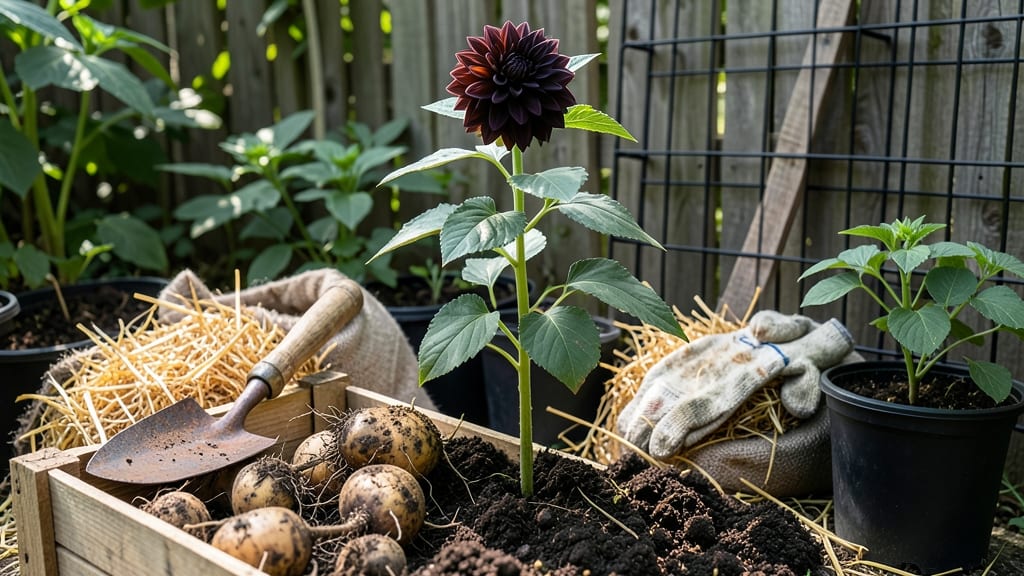
How to grow tall dahlias that steal the show in your garden starts with one critical secret: how deep you plant those tubers. 🌱 I’ve watched weak stems flop over after rain—until I learned the buried-stem technique that makes them grow like skyscrapers. The difference between wobbly stems and sturdy giants often comes down to planting depth and support.
You’ll need a sunny spot with 6+ hours of light daily, rich soil mixed with compost, and sturdy stakes or cages before you even plant. Water deeply after planting, then keep the soil moist but never soggy—dahlias hate wet feet.
The real magic happens when you prune strategically: pinch back early growth to encourage branching, and always cut above a leaf node to trigger more blooms. With the right care, those stems will reach 5-6 feet tall by midsummer, heavy with flowers.
📚 In This Guide
- What you need
- Instructions
- Tips and common mistakes
- Wrapping up and next steps
What you need
- ● Dahlia tubers: Choose tall varieties like ‘Café au Lait,’ ‘Thomas Edison,’ or ‘Bishop’ (1–3 tubers per plant, depending on size).
- ● Well-draining potting mix or garden soil: Amend with compost (1 part compost to 3 parts soil) for fertility.
- ● Containers or garden bed: Containers: At least 12–18 inches deep and 12–18 inches wide (one per tuber).
- ● Garden beds: Full sun (6+ hours/day) and loose, fertile soil.
- ● Stakes or cages: 6–8 feet tall (bamboo, metal, or spiral stakes work best).
- ● Organic fertilizer: 5-10-10 or 10-10-10 (balanced NPK) or compost tea for slow-release nutrients.
- ● Mulch: 2–3 inches of straw or shredded leaves to retain moisture.
- ● Watering can or hose with a gentle spray nozzle: Dahlias hate soggy roots!
- ● Pruning shears: Sharp, clean pair for cutting stems.
- ● Epsom salt: 1 tablespoon per gallon of water (monthly) for magnesium boost.
- ● Dahlia food (high-potassium): Encourages blooming over foliage.
- ● Garden twine or soft ties: Secure stakes to plants gently.
- ● Garden gloves: Protect hands from thorns (some varieties have them!).
- ● Plant markers: Label tubers/varieties if mixing types.
Step-by-Step instructions for growing tall dahlias
Here's how I grow dahlias that reach 6-8 feet tall without flopping—sturdy stems and dramatic blooms guaranteed.
🌱 Step 1: Start Tubers Indoors at the Right Time
Dahlias need 8-10 weeks of indoor growth before your last frost date. Plant your tubers in 4-inch pots filled with sterile potting mix—never garden soil, which causes rot. Place 2-3 eyes (the small bumps) about 1 inch deep in each pot, with the eyes facing up. I like to use a pencil to make small holes for precise placement.
Keep the soil warm (65-75°F) and moist but not soggy. A seedling heat mat speeds up sprouting—you'll see sprouts in 2-3 weeks. Once they reach 4 inches tall, move them under grow lights for 14-16 hours daily. Dahlias stretch toward light, so keep them 2-3 inches below bulbs to prevent legginess.
☀️ Step 2: Harden Off and Plant After Frost
Two weeks before your last frost, start hardening off your dahlias. Place them outside in morning sun for 1-2 hours, then bring them back in. Gradually increase time each day until they can stay out overnight. Dahlias are frost-sensitive—plant them only after all danger of frost has passed and soil is 60°F+. Choose a spot with full sun (6+ hours daily) and well-draining soil.
Dig holes 12-18 inches deep—the deeper the tuber, the stronger the stem. Space plants 18-24 inches apart (taller varieties need more room). Gently place the tuber in the hole with the eyes facing up, then backfill with soil. Water deeply to settle everything—no waterlogging, though, or stems will rot.
🪴 Step 3: Support Stems Early and Fertilize Regularly
Dahlias need support from day one. As soon as stems reach 6 inches tall, insert 5-foot stakes or tomato cages next to each plant. Tie stems to the stake with soft plant ties every 6-8 inches—this prevents wind damage and keeps stems upright. I use cloth strips because they stretch as the plant grows without cutting into the stem.
Feed dahlias every 2 weeks with a balanced fertilizer (10-10-10) until buds form, then switch to low-nitrogen, high-phosphorus (5-10-10) to encourage blooms. Water at the base only—never overhead, or fungal diseases like powdery mildew will take over. You'll know your watering is right when the soil feels damp 2 inches down but not wet.
✂️ Step 4: Deadhead and Prune for Longer Blooms
Deadheading is the secret to nonstop blooms. As soon as a flower fades, snip it off just above the next set of leaves with clean pruners. This redirects energy to new buds instead of seed production. I also remove side shoots (small stems growing from the base) unless you want a bushier plant—these drain energy from the main stem.
Pinch back the top growth when plants hit 3 feet tall to encourage thicker stems. This might seem counterintuitive, but it forces the plant to grow stronger lateral branches that hold more blooms. Watch for yellowing leaves—this usually means overwatering or nutrient deficiency. Adjust watering or fertilize if you see it.
⏰ Step 5: Prepare for Winter and Store Tubers
When frost threatens, cut stems down to 6 inches and dig up tubers carefully. Shake off excess soil and let them cure in a dark, cool (50-60°F) spot for 2 weeks. This hardens the skin so they store better. Store tubers in dry peat moss or vermiculite in a paper bag (not plastic—it traps moisture and causes rot). Keep them in a cool (35-45°F), dark place until spring.
Real talk: Dahlias are annuals in most climates, but saving tubers means you can replant the same varieties year after year. Label your bags so you don’t forget which dahlia is which—purple with red centers vs. deep burgundy can get confusing after a few seasons!
Tips & tricks for growing tall dahlias
Here's what nobody tells you about growing dahlias that actually stand up to the elements.
Timing is Everything: The 8-10 week indoor growing period is non-negotiable for tall dahlias. I learned this the hard way after trying to rush the process—plants grown too quickly become leggy and weak. Use a calendar to count backward from your last frost date and mark your planting window. This ensures your dahlias have enough time to develop strong roots before facing outdoor conditions.
Light Matters More Than You Think: Those 14-16 hours of grow light aren't just about growth—they're about preventing leggy stems. I position my lights 2-3 inches above the plants and adjust as they grow. If you notice stems stretching toward the light, lower the bulbs immediately. This creates shorter, stockier plants that won't flop later in the season.
Planting Depth Creates Stronger Stems: The 12-18 inch deep holes in Step 2 might seem extreme, but they're essential for tall varieties. Deeper planting encourages more root development, which translates to stronger stems that can support those towering blooms. I like to use a garden trowel to create a deep pocket first, then gently place the tuber with eyes facing up. The extra depth makes all the difference when storms hit.
Support System is Non-Negotiable: Don't wait until your dahlias are tall to add support—they need it from day one. I've seen beautiful dahlias topple over because their stems weren't properly staked early. As soon as your plants hit 6 inches, insert those 5-foot stakes and tie with soft cloth strips. This prevents wind damage and keeps stems growing straight. I also recommend adding a second stake later in the season for extra stability.
Pro Tips for Grow Tall Dahlias
- Here's what nobody tells you about growing dahlias that actually stand up to the elements.
- Timing is Everything: The 8-10 week indoor growing period is non-negotiable for tall dahlias. I learned this the hard...
- Light Matters More Than You Think: Those 14-16 hours of grow light aren't just about growth—they're about preventing ...
Frequently asked questions
Got questions about growing tall dahlias? You’re not alone! Here are answers to the most common queries—from planting tips to troubleshooting—so you can cultivate stunning, sturdy blooms with confidence.
When is the best time to plant dahlia tubers?
Plant dahlia tubers after the last frost when soil temperatures reach at least 60°F (15°C). In most regions, this means late spring (April–May). For warmer climates, aim for early spring. Pro tip: Soak tubers in water for 1–2 hours before planting to encourage faster sprouting!
How often should I water tall dahlias?
Keep soil consistently moist but not soggy—about 1–2 inches of water per week. Tall varieties (4+ feet) need more frequent watering to prevent flopping. Water at the base (not leaves) to avoid fungal diseases like powdery mildew. Morning watering is best to reduce evaporation.
Do dahlias need stakes or cages?
Absolutely!
Tall dahlias (5–7 feet) often need sturdy supports like bamboo stakes, tomato cages, or heavy-duty wire cages to prevent snapping in wind or rain. Bury stakes 6–8 inches deep and tie stems gently with soft plant ties. Pro tip: Choose dwarf varieties (under 4 feet) if space is limited!
Why are my dahlia leaves turning yellow?
Yellow leaves usually signal overwatering, nutrient deficiency, or disease. Check soil moisture first—dahlias hate "wet feet." If leaves are yellow with brown edges, it may be chlorosis (iron deficiency). Amend soil with chelated iron or compost. Fungal issues? Prune affected foliage and improve airflow.
Can I grow dahlias in containers?
Yes! Use large pots (18+ inches wide/deep) with well-draining soil and dwarf varieties (e.g., ‘Mignon’ or ‘Thomas Edison’). Place containers in full sun and water regularly. Bonus: Add slow-release fertilizer at planting time for extra nutrition.
Wrapping up and next steps
Growing tall dahlias is all about patience, the right techniques, and a little extra care for their sturdy stems. With well-draining soil, consistent watering, and proper staking or caging, you’ll soon be rewarded with showstopping blooms that reach sky-high heights.
Don’t forget to deadhead spent flowers and protect them from harsh winds or pests—your efforts will pay off in a garden that’s the talk of the neighborhood!
Ready to watch your dahlias flourish? Start with just a few tubers this season, experiment with varieties, and soon you’ll be a dahlia-growing pro. Happy planting—your garden (and your neighbors!) will thank you! 🌸✨