
Size
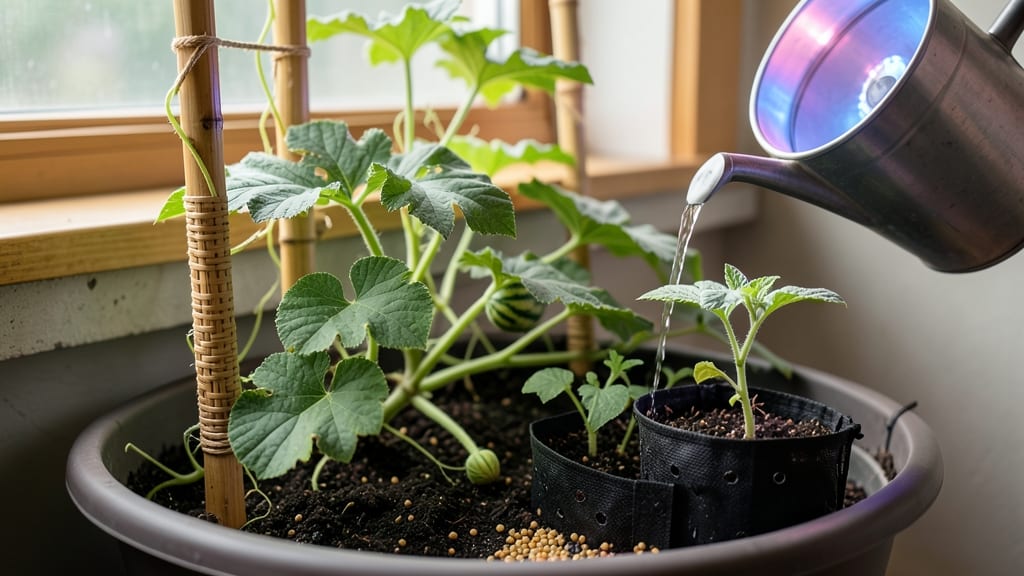
How to grow watermelon inside sounds impossible—until you see the first tendril curl over your balcony railing. 🌱 The key isn't just choosing the right variety (like 'Sugar Baby' or 'Tiny Tim'), but mastering the compact vine hack that turns a 5-gallon container into a fruit-producing powerhouse. Most people assume watermelons need acres, but with proper support and light, you can grow a 3-5 pound melon indoors—even in a sunroom or bright kitchen.
Start with a 5-gallon fabric pot (better drainage than plastic) and a sturdy trellis that can handle 10+ feet of vine. You'll need 12+ hours of direct sunlight daily—grow lights work in a pinch, but the fruit won't be as sweet.
Soil should be lightweight potting mix with compost, and you'll water when the top inch feels dry, never soggy. The real trick? Hand-pollination with a paintbrush when flowers appear—indoor bees won't visit.
By mid-summer, you'll have vines sprawling like jungle gyms and tiny green melons forming. The first harvest might be small, but the satisfaction of biting into a homegrown watermelon grown from a seed you nurtured indoors?
That's the real reward. Just watch for powdery mildew (spray neem oil) and root rot (never let it sit in water).
This method works best in zones 5-10 during summer months, but with grow lights, you could try it year-round. The melons won't be grocery-store giant, but they'll be sweeter, seedless varieties you can't find anywhere else. Ready to turn your living room into a mini orchard?
📚 In This Guide
- What you need
- Instructions
- Tips and common mistakes
- Wrapping up and next steps
What you need
- ● Watermelon seeds: Choose a compact or dwarf variety like 'Sugar Baby', 'Tiny Tim', or 'Black Diamond' (3–5 seeds per container).
- ● Containers: 5-gallon pots or fabric grow bags (at least 12–18 inches deep) with drainage holes. Pro tip: 💡 Use self-watering pots to keep roots happy!
- ● High-quality potting mix: Lightweight, well-draining blend (avoid garden soil). Add perlite or vermiculite for aeration.
- ○ Grow lights (LED or fluorescent): 12–16 hours of full-spectrum light daily (optional but critical for indoor success).
- ● Support system: Trellis, cages, or stakes (4–6 feet tall) to train vines vertically.
- ● Fertilizer: Balanced liquid fertilizer (10-10-10) or organic options like compost tea.
- ● Spray bottle: For gentle watering and humidity control.
- ● Grow tent or reflective surfaces to maximize light efficiency.
- ● Humidity dome or pebble tray to retain moisture.
- ● pH test kit (ideal range: 6.0–6.8 for watermelons).
- ● Pruning shears for managing vine growth.
Step-by-step instructions for growing watermelon indoors
Here's the foolproof way to coax watermelon vines into producing fruit inside—no greenhouse needed.
🪴 Step 1: Choose the Right Container and Setup
Watermelons need room to stretch, so pick a 5-gallon container at minimum for each plant. I use fabric grow bags because they prevent root circling and allow better drainage than plastic. Add a trellis or sturdy wire cage (at least 6 feet tall) to support the vines—watermelons grow 10-15 feet if left unchecked.
Place your container near a south-facing window or under a grow light that provides 12-14 hours of light daily. If using a window, rotate the pot quarter-turn weekly so the plant doesn’t lean. Watermelons need warmth too—keep soil temps above 70°F for proper growth. A seedling heat mat helps if your home runs cool.
🌱 Step 2: Plant Seeds and Encourage Early Growth
Sow 2-3 seeds per container at a depth of 1 inch, spacing them 2 inches apart. Watermelon seeds are large, so don’t bury them too deep—they need light to germinate. Cover the pot with a clear plastic dome or wrap it in plastic wrap to retain moisture and warmth. Germination takes 7-10 days at 75-85°F.
Once sprouts appear, remove the dome and place the pot under bright light immediately. Leggy seedlings mean insufficient light—if stems stretch thin and pale, move the plant closer to the light source or switch to a grow light. Water when the top inch of soil feels dry, but avoid soggy soil. Overwatering at this stage causes rot.
☀️ Step 3: Train Vines and Support Flowering
When vines reach 12 inches tall, gently weave them through the trellis or cage, securing them with soft plant ties. Prune side shoots to 2-3 main vines—this directs energy to fruit production. Watermelons are heavy, so tie the main stem to the trellis every 12 inches to prevent breaking.
Watch for male and female flowers—male flowers have long stems, while female flowers have a tiny watermelon at their base. Hand-pollinate by transferring pollen from male to female flowers with a small paintbrush if no bees are present. Fruit sets in 7-10 days after pollination. Keep soil consistently moist (not waterlogged) during flowering—stress causes flowers to drop.
💧 Step 4: Manage Light, Water, and Fruit Development
As fruits develop, increase watering to 1-2 gallons per week, depending on pot size. Watermelons need steady moisture to grow sweet and plump, but avoid overwatering—yellowing leaves signal too much water. Use a balanced fertilizer (like 10-10-10) every 2-3 weeks once flowers appear to boost fruit production.
If your grow light isn’t strong enough, supplement with a reflective surface (like aluminum foil) behind the pot to bounce light back. You’ll know your watermelon is ready to harvest when the underneath turns cream-colored and the stem near the fruit softens. Indoor watermelons stay small—2-4 pounds—but taste just as sweet as outdoor varieties.
✂️ Step 5: Harvest and Extend the Season
Cut the watermelon from the vine with clean pruning shears, leaving 1 inch of stem attached. Store it in a cool, dry place (like a pantry) for 1-2 weeks. To keep producing, prune back any dead vines and fertilize lightly—some varieties (like 'Sugar Baby') may yield a second small fruit.
After harvest, clean the pot and trellis with soapy water to remove any disease spores. If you loved growing watermelons indoors, try smaller varieties like 'Tiny Tim' next time—they’re even more compact and perfect for containers.
Tips & tricks for growing watermelon indoors
Here's what nobody tells you about coaxing watermelons to thrive in small spaces—these tricks will make all the difference.
Light Strategy: That 12-14 hours of daily light is non-negotiable, but quality matters just as much as quantity. If using a south-facing window, supplement with a grow light for 4-6 hours during cloudy days or winter months. I've seen plants stretch and weaken when they don't get enough bright light—watch for pale, leggy growth as your warning sign. A reflective surface like aluminum foil behind the pot can double your light's effectiveness by bouncing extra photons back onto the plant.
Temperature Matters: Maintaining soil temperatures above 70°F is crucial, but don't let your apartment get too hot either. Watermelons prefer daytime temps around 85°F but can handle cooler nights. If your home runs cool, place your container on a seedling heat mat during germination (7-10 days at 75-85°F) and consider moving it to a warmer room once sprouts appear. A simple trick: Group containers together—their combined warmth creates a microclimate that helps maintain consistent temperatures.
Pruning for Success: When you prune side shoots down to 2-3 main vines in Step 3, don't just cut randomly. Look for vines that grow directly upward from the main stem—these will produce the strongest fruit. The key is to maintain just enough foliage to provide shade for the developing fruit while keeping the plant's energy focused on growth. I've found that leaving too many leaves can actually stress the plant, causing flowers to drop before they can be pollinated.
Watering Wisdom: The 1-2 gallons per week guideline works well, but timing matters more than quantity. Water deeply in the morning so the soil has time to dry slightly before nightfall—this prevents fungal issues. I use a moisture meter to check soil levels, aiming for consistently moist but never soggy conditions. Yellowing leaves often signal overwatering, while wilting indicates underwatering. The goal is to mimic summer rainfall patterns: steady but not constant.
Pro Tips for Grow Watermelon Inside
- Here's what nobody tells you about coaxing watermelons to thrive in small spaces—these tricks will make all the difference.
- Light Strategy: That 12-14 hours of daily light is non-negotiable, but quality matters just as much as quantity.
- Temperature Matters: Maintaining soil temperatures above 70°F is crucial, but don't let your apartment get too hot either.
Frequently asked questions
Got questions about growing watermelon indoors? You’re not alone! Here are some of the most common concerns—and their solutions—to help you crush your compact vine project.
What’s the best indoor temperature for growing watermelons?
Watermelons thrive in 70–90°F (21–32°C) during the day and 60–70°F (15–21°C) at night. Use a grow light with a timer to mimic natural daylight, and avoid drafts near windows or vents. If your space dips below 55°F (13°C), growth slows—consider a heat mat for seedlings!
How long does it take for indoor watermelons to ripen?
Indoor watermelons typically take 70–90 days to mature, depending on the variety (smaller types like ‘Sugar Baby’ ripen faster). Start with fast-maturing seeds (check the packet!) and ensure they get 12–14 hours of light daily. Patience is key—overripe melons get mealy, so monitor with a gentle tap (a ripe one sounds hollow!).
Can I grow watermelons indoors without a greenhouse?
Skip the greenhouse and use a sunny windowsill, grow tent, or even a closet with LED lights. Just ensure your setup has:
- Good airflow (a small fan helps prevent mold).
- Drainage (use pots with holes + saucers).
- Space for vines to sprawl (trellises or hanging baskets work).
Why are my indoor watermelon leaves turning yellow?
Yellow leaves usually signal overwatering, nutrient deficiency, or pests. Check these fixes:
- Watering: Let the top inch of soil dry out between waterings (watermelons hate soggy roots!).
- Nutrients: Feed with a balanced fertilizer (10-10-10) every 2–3 weeks.
- Pests: Inspect for spider mites (tiny webs?) or aphids (sticky residue). Spray with neem oil if needed.
What’s the smallest watermelon variety for indoors?
Opt for compact or dwarf varieties like:
- ‘Sugar Baby’ (4–6 lbs, 70 days)
- ‘Tiny Tim’ (3–5 lbs, 75 days)
- ‘Black Diamond’ (5–7 lbs, 80 days, disease-resistant)
Wrapping up and next steps
Growing watermelon indoors isn’t just possible—it’s a rewarding way to enjoy fresh, homegrown fruit in even the smallest spaces! With the right containers, varieties, and care, you’ll be savoring juicy slices straight from your windowsill or balcony in no time. 🌱
Ready to take the next step? Start by choosing your seeds and setting up your growing station—your future watermelon harvest is just a few sprouts away! Happy planting!