
Picking
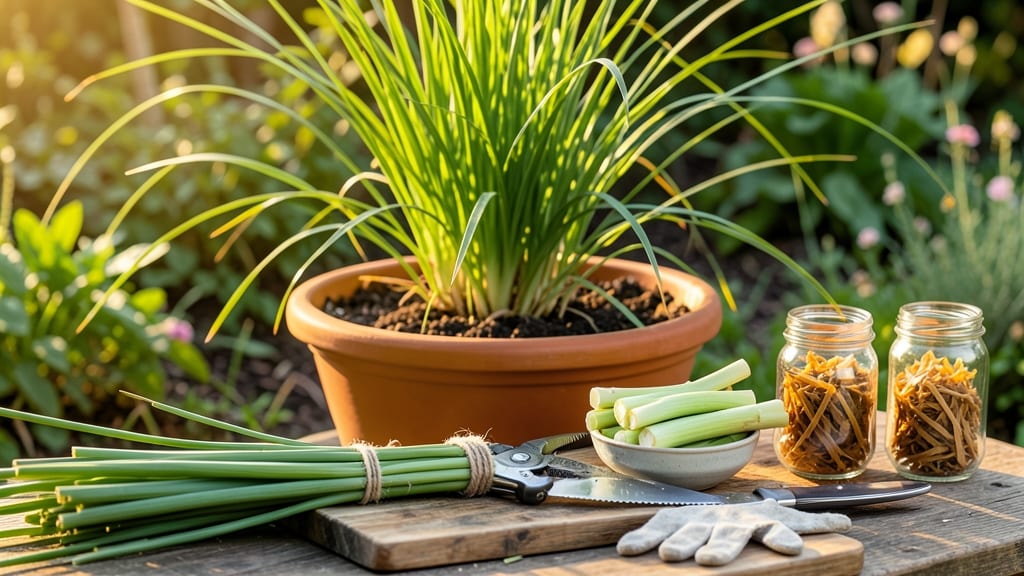
Here’s how to harvest and use lemongrass when stalks reach 12-18 inches tall—thicker than a pencil, with tight, pale green leaves. 🌱 I learned the hard way that harvesting too early means weak flavor and stunted regrowth.
The secret lies in cutting just above the bottom bulb (where the roots begin) to encourage new shoots while preserving the plant's energy.
Once harvested, strip the outer leaves and smash the stalk with a rolling pin or mallet to release oils—this unlocks that bright citrus punch. Use the tender lower 6-8 inches for cooking (think curries, teas, or marinades) and save the fibrous upper stalks for pest-repellent sprays or homemade cleaning solutions.
The bulb itself? Toss it in broth for extra depth.
Store whole stalks in a jar of water like fresh flowers—they’ll stay vibrant for 2-3 weeks. For long-term use, freeze the smashed stalks in ice cube trays or dry the leaves whole.
My plants now regrow within 3-4 weeks if I leave at least 4 inches of stem and keep the soil moist.
Pro tip: Plant lemongrass in full sun with well-draining soil, and it’ll reward you with year-round harvests in warm climates. Even in cooler zones, a potted plant on your patio can provide fresh stalks until frost—just bring it indoors before temperatures dip below 50°F.
📚 In This Guide
- What you need
- Instructions
- Tips and common mistakes
- Wrapping up and next steps
What you need
- ● Fresh lemongrass stalks: 10–15 mature stalks (look for thick, firm stems with tightly rolled leaves—avoid woody or dried ones!).
- ● Sharp kitchen knife or pruning shears: A serrated or chef’s knife (for clean cuts) or bypass pruners (if harvesting from the garden).
- ● Cutting board: A stable, large-enough board (12"x18" or bigger) to handle multiple stalks.
- ● Measuring tools: Ruler or measuring tape (for precise stalk trimming—aim for 3–5 inches of usable stem).
- ○ Kitchen scale (optional but helpful for dried lemongrass—1 stalk ≈ 0.5 oz dried).
- ● Food processor or mortar & pestle: Food processor: With a sharp blade (for mincing—pulse in 1–2 second bursts to avoid overheating).
- ● Mortar & pestle: For a traditional, hands-on grind (great for small batches).
- ● Fine-mesh strainer or cheesecloth: To separate pulp from liquid after extraction.
- ● Air-tight storage containers: For fresh lemongrass: Glass jars with lids (store in the fridge for up to 2 weeks).
- ● For dried lemongrass: Small, opaque jars (keep in a cool, dark place for up to 6 months).
- ● Glass jars or bottles for infusion: Dark amber or cobalt glass (to preserve flavor and block light).
- ○ Alcohol (optional but recommended for extracts): High-proof vodka (190+ proof) or everclear (1 cup per 10 stalks).
- ● Gloves: If your lemongrass has sharp edges or you’re sensitive to citrus oils.
- ● Citrus zester: For adding brightness (like lime or lemon) to infused oils.
- ● Silicon molds: For shaping lemongrass-infused butter or ghee into logs.
- ● Label maker or masking tape + marker: To label jars with dates and uses (e.g., "Curry Paste," "Tea Blend").
- ● Dehydrator or oven: For homemade dried lemongrass (set oven to 200°F (93°C) and dry for 2–3 hours).
Step-by-Step instructions for harvesting and using lemongrass
Here's how I harvest lemongrass for maximum flavor—no waste, just pure citrusy punch.
🌿 Step 1: Identify and Select the Right Stalks
Harvest only mature stalks with 3-4 inches of tender, pale green growth at the top—they're packed with essential oils. Avoid woody, dry stalks at the base; these have lost their potency. Gently grasp a stalk near the base and tug upward—it should pull free cleanly with minimal resistance.
I always harvest 3-4 stalks at a time for a single recipe, as their flavor intensifies when used fresh. If you're unsure, tap the stalk—it should sound hollow, not dull. This is your first sensory checkpoint: a crisp, clean snap means it's ready.
✂️ Step 2: Trim and Clean the Stalks
Use a sharp knife to cut the stalks 1-2 inches above the base, leaving the roots behind. This encourages regrowth from the base. Immediately strip off the tough, fibrous outer leaves, exposing the pale green inner core—this is where the flavor lives. I save the outer leaves for compost or mulch around other citrusy herbs like mint.
Rinse the stalks gently under cool water to remove any dirt or debris clinging to the inner core. Pat them dry with a clean kitchen towel or paper towels. Never soak them—lemongrass absorbs water like a sponge, diluting its essential oils. You'll notice the stalks feel slightly slick to the touch when clean and ready for use.
💧 Step 3: Extract the Juice and Oil
Place the cleaned stalks in a mortar and pestle or small food processor. Pulse or grind them in short bursts until you release the fragrant oils—you'll see a fine, green powder forming. This is where the magic happens: the oils infuse into the mixture, creating a concentrated flavor base. Stop before it turns into a paste; you want a coarse, gritty texture.
For juice extraction, strain the ground lemongrass through a fine-mesh sieve or cheesecloth into a bowl. Press gently but firmly to extract every last drop. For oil extraction, mix the ground lemongrass with 2 tablespoons of neutral oil (like coconut or vegetable oil) and let it sit for 10 minutes before straining. The oil will carry the lemongrass's aroma and flavor perfectly.
🌱 Step 4: Use or Store for Later
Fresh lemongrass juice or oil can be used immediately in curries, soups, or marinades. For a quick infusion, add 1 tablespoon of the ground lemongrass directly to hot dishes—it dissolves easily and imparts a bright, citrusy note. If you're making a larger batch, like a lemongrass paste, mix the ground lemongrass with 1 tablespoon of water or oil to form a thick consistency.
To store, divide the extracted juice or paste into small airtight containers and refrigerate for up to 5 days. For long-term storage, freeze the paste in ice cube trays—each cube makes a perfect single-serving addition to dishes. Label everything with the date; fresh lemongrass loses its punch quickly once processed.
☀️ Step 5: Regrow Your Lemongrass Plant
After harvesting, your lemongrass plant will send out new shoots from the base within 2-3 weeks. Keep the soil consistently moist but not soggy—lemongrass loves humidity but hates waterlogged roots. Trim any yellow or damaged leaves to encourage fresh growth. With proper care, a single plant can yield harvests every 4-6 weeks for years.
Here's the thing—lemongrass grows best in warmth and indirect light. If your plant starts to look leggy or sparse, it’s likely not getting enough light. Move it to a south-facing window or under a grow light for 6-8 hours daily. You'll know it's thriving when new stalks emerge bright green and sturdy within a month.
Tips & tricks for perfect lemongrass extraction
These little-known techniques will help you unlock the maximum citrusy punch from every stalk without wasting a single drop.
Selection Tip: The lower 6-8 inches of the stalk are where the magic happens—these contain 80% of the essential oils. When harvesting, look for stalks with tight, white nodes along this section. The older, woody stalks might look similar, but they'll yield a bitter, watery infusion. Here's what nobody tells you—if you're harvesting from a potted plant, the inner stalks closest to the center are always the most potent. I've found that harvesting these first gives me the strongest flavor for my Thai curries.
Processing Secret: When you're pounding those 3-inch sections in Step 3, work in batches of no more than 6 stalks at a time. The goal is to release oils, not pulverize the stalks into mush. I learned this the hard way after turning my first batch into a green paste that tasted more like grass clippings than lemongrass. Aim for that slightly mushy texture where you can see fragrant liquid pooling at the bottom—this is your visual cue that the oils are being released properly.
Infusion Strategy: For that 24-hour infusion in Step 4, use a dark glass bottle or jar to preserve the vibrant green color and prevent oxidation. The dark glass blocks light, which can degrade the delicate oils. I like to add a bay leaf or two to my infused oils—it adds depth without overpowering the lemongrass. And here's a pro move: After straining, press the fibrous pulp gently with a spoon to extract every last drop of juice. You'll be surprised how much extra flavor you get this way.
Storage Wisdom: When freezing your extracted juice in ice cube trays, don't overfill them. Leave about 1/4 inch of space at the top—lemongrass juice expands slightly when frozen. I also recommend labeling each cube with the date and recipe it's intended for (like "Tom Kha Soup" or "Marinade"). The flavor will degrade after about 3 months, and you'll want to use the oldest cubes first. For long-term storage beyond 3 months, consider making lemongrass paste instead—it keeps for up to 6 months in the freezer.
Pro Tips for Harvest And Use Lemongrass
- These little-known techniques will help you unlock the maximum citrusy punch from every stalk without wasting a singl...
- Selection Tip: The lower 6-8 inches of the stalk are where the magic happens—these contain 80% of the essential oils....
- Processing Secret: When you're pounding those 3-inch sections in Step 3, work in batches of no more than 6 stalks at ...
Frequently asked questions
Got questions about harvesting and using lemongrass? You’re not alone—this fragrant herb can be tricky for beginners! Here are answers to the most common queries to help you master the process like a pro.
How do I know when lemongrass is ready to harvest?
Harvest lemongrass when the stalks are about 12–18 inches tall and the lower leaves have fully unfurled. The best time to pick is in the morning after the dew has dried—this ensures the most vibrant flavor and aroma. Avoid cutting the stalks too close to the ground to encourage regrowth.
Can I harvest lemongrass multiple times from the same plant?
Lemongrass is a perennial plant, meaning it can regrow after harvest. Simply trim the stalks 2–3 inches above the base, and new shoots will sprout within a few weeks. Just be patient—it may take 6–8 weeks for the plant to recover fully before another harvest.
What’s the best way to store harvested lemongrass?
For short-term use (up to 1 week), wrap the stalks in a damp paper towel and store them in a sealed plastic bag in the fridge. For longer storage (up to 6 months), freeze the stalks whole or chop them and store in an airtight container. Avoid drying unless you’re making a concentrated paste—fresh or frozen works best for most recipes!
Can I substitute lemongrass with another herb if I can’t find it?
While nothing replaces lemongrass’s unique citrusy punch, you can use a combo of lime zest + cilantro + a pinch of ginger for a similar vibe in dishes. For soups or teas, ginger or citronella grass (found in some Asian markets) can work in a pinch—but expect a slightly different flavor profile.
Why does my lemongrass taste bitter or lose flavor after cooking?
Bitterness often means the stalks were overcooked or harvested too late. Always use the lower, tender part of the stalk (discard the woody top) and cook for only 5–10 minutes to preserve flavor. If using dried lemongrass, rehydrate it in warm water for 10 minutes before adding to recipes—this restores its aromatic oils!
Wrapping up and next steps
Harvesting and using lemongrass is easier than you think—and the rewards are delicious! Whether you’re growing your own or foraging fresh stalks, this versatile herb adds a bright, citrusy punch to dishes while offering health benefits.
Now that you know how to extract, store, and cook with it, why not experiment with a new recipe or share your harvest with friends? Start small, savor the process, and let your kitchen shine! 🌿✨
Next step: Try making a batch of lemongrass-infused oil or a zesty Thai curry—your taste buds will thank you!