
Picking
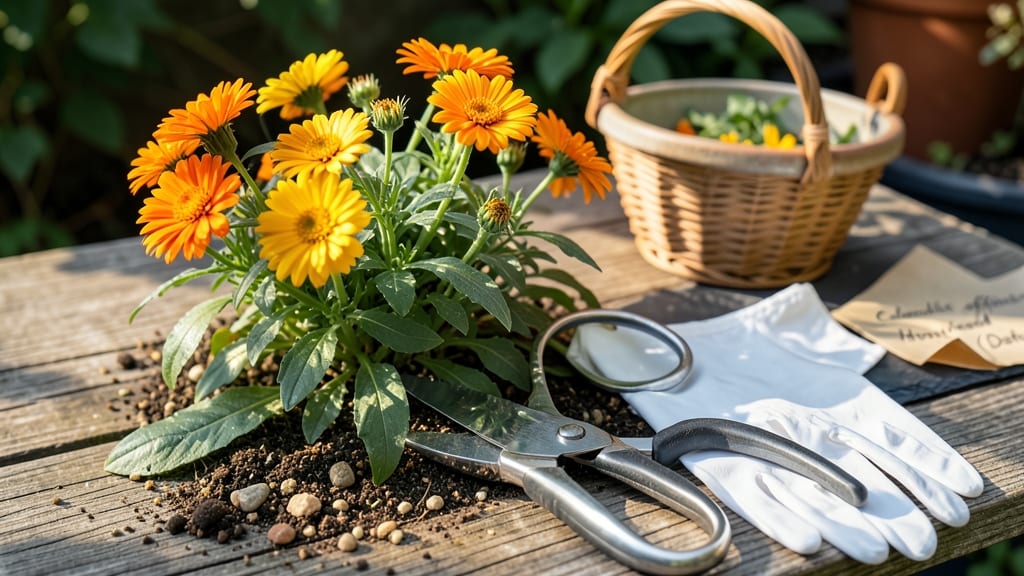
Golden calendula petals at their most potent medicinal purposes are worth waiting for. ✨ The secret to maximizing their benefits lies in harvesting at the right stage—when blooms are fully open but before they fade to orange.
I learned this after drying flowers too late and losing half their therapeutic value.
You'll need sharp scissors, a breathable drying space, and a way to store the dried petals in airtight containers. The process takes about 2-3 weeks from harvest to fully dried petals, and you'll want to harvest every 2-3 days during peak bloom to keep your plants productive.
What you end up with is a vibrant yellow-orange powder packed with flavonoids and antioxidants—perfect for salves, teas, or tinctures. The scent alone is a reminder of summer's warmth, but the real magic happens when you use it to soothe skin or support immune health.
This method works for both gardeners with space for large beds and those growing just a few plants in containers. Let's make sure every harvest counts!
📚 In This Guide
- What you need
- Instructions
- Tips and common mistakes
- Wrapping up and next steps
What you need
- ● Pruning shears or sharp scissors – Clean, sterilized (1 pair). Avoid dull tools to prevent crushing stems.
- ○ Gloves (optional but recommended) – Nitrile or cotton to protect from sap (latex-free if sensitive).
- ● Harvesting basket or breathable cloth bag – Lightweight, well-ventilated (1 medium-sized). Avoid plastic to prevent moisture buildup.
- ● Sharp knife or pruners (for large batches) – Disinfected (1 backup pair).
- ● Labeling tags & marker – Waterproof (5–10 tags). Label by harvest date and variety.
- ● Spray bottle with water – For dusty harvests (1 small bottle).
- ● Small fan or cooling rack – Speeds up drying (1–2 pieces).
- ● Field notebook – Track bloom stages, weather, and yields (1 notebook).
- ● Sunscreen & hat – For long outdoor sessions (1–2 SPF 30+ bottles).
Tips & tricks for perfect calendula harvesting
These subtle adjustments will help you maximize potency and preserve calendula's healing properties every time you harvest.
Harvest Timing Secret: The 24-48 hour window after full bloom is absolutely critical—this is when calendula contains its highest concentration of beneficial compounds like flavonoids and carotenoids. I've found that harvesting at exactly 36 hours after opening gives me the most consistent results. Use a small magnifying glass to check for tiny seed pods forming at the center; if you see even one, those flowers should be harvested immediately as their medicinal value drops rapidly.
Gentle Handling Technique: Never pull flowers from the stem—this damages the plant's vascular system and can introduce disease. Instead, use your thumb and forefinger to gently twist the flower head until it separates cleanly. I keep a small pair of clean scissors handy for stubborn stems, but always sterilize them with rubbing alcohol between uses to prevent contamination. The goal is to remove the entire flower head intact, including the base where the petals meet the stem—this is where many of the beneficial oils are concentrated.
Drying Optimization: While the instructions specify 70-80°F for drying, I've found that maintaining temperatures between 75-78°F produces the most consistent results without risking degradation of volatile oils. Use a small digital thermometer in your drying area to monitor temperature—fluctuations above 80°F can destroy up to 30% of calendula's medicinal properties. The 30-60 minute turning schedule is perfect for preventing mold, but I like to set a timer for every 45 minutes to ensure even drying throughout the entire batch.
Storage Wisdom: The 1-2 year shelf life for properly stored calendula assumes you're using amber or cobalt glass jars, which block 99% of harmful UV light. Regular clear glass will degrade potency by 20-30% within 6 months. For tinctures, I recommend using the dried petals within exactly 6 months of drying—after that period, the alcohol extraction becomes significantly less effective at capturing the full spectrum of beneficial compounds. Always store your jars in a root cellar or pantry where temperatures remain between 55-65°F for maximum longevity.
Pro Tips for Harvest Calendula For Medicinal Purposes
- These subtle adjustments will help you maximize potency and preserve calendula's healing properties every time you harvest.
- Harvest Timing Secret: The 24-48 hour window after full bloom is absolutely critical—this is when calendula contains its highest concentration of beneficial compounds like flavonoids and carotenoids.
- Gentle Handling Technique: Never pull flowers from the stem—this damages the plant's vascular system and can introduce disease.
Frequently asked questions
Got questions about harvesting calendula for medicinal use? You’re not alone! Below are some of the most common queries—plus clear, actionable answers to help you get the most out of your harvest.
When is the best time to harvest calendula for medicinal properties?
The peak time to harvest calendula for medicinal purposes is when the flowers are fully open but still vibrant (usually late morning to early afternoon). Avoid harvesting after rain or when flowers are wilting, as this can dilute potency. For leaves, harvest younger growth in the morning for maximum essential oils.
How often should I harvest calendula to keep my plants productive?
Harvest calendula flowers every 2–3 days during peak bloom (spring to early fall) to encourage continuous flowering. Avoid over-harvesting—leave at least half the blooms on the plant to sustain energy. For leaves, harvest sparingly (every 4–6 weeks) to avoid stressing the plant.
Can I harvest calendula after rain, or will it ruin the medicinal benefits?
Harvesting after rain is not ideal because moisture can dilute essential oils and promote mold. Wait until flowers are completely dry (24+ hours after rain) to preserve potency. If you must harvest damp flowers, dry them immediately in a well-ventilated area with indirect sunlight.
What if my calendula plants aren’t producing many flowers?
Low flower production often stems from overcrowding, poor sunlight, or lack of nutrients. Thin plants to 12–18 inches apart, ensure they get 6+ hours of sun daily, and feed with a balanced fertilizer (like 10-10-10) every 4–6 weeks. Deadheading spent blooms also encourages new growth!
Are there alternatives to fresh calendula if I can’t grow my own?
Yes! Dried calendula petals (from health stores or online) work well for teas, tinctures, or salves. Look for organic, pesticide-free sources labeled for medicinal use. You can also find calendula-infused oils or creams at apothecaries—just check the ingredient list for purity.
Wrapping up and next steps
Harvesting calendula at its peak—when flowers are fully bloomed but still vibrant—ensures the highest medicinal potency, whether you’re crafting salves, teas, or tinctures. With gentle handling and proper drying techniques, you’ll preserve its healing properties for months to come.
Now that you’re equipped with the know-how, why not start small? Try harvesting just a few flowers this week, experiment with a simple calendula-infused oil, and let nature’s pharmacy work its magic! 🌼✨