
Companion Plants
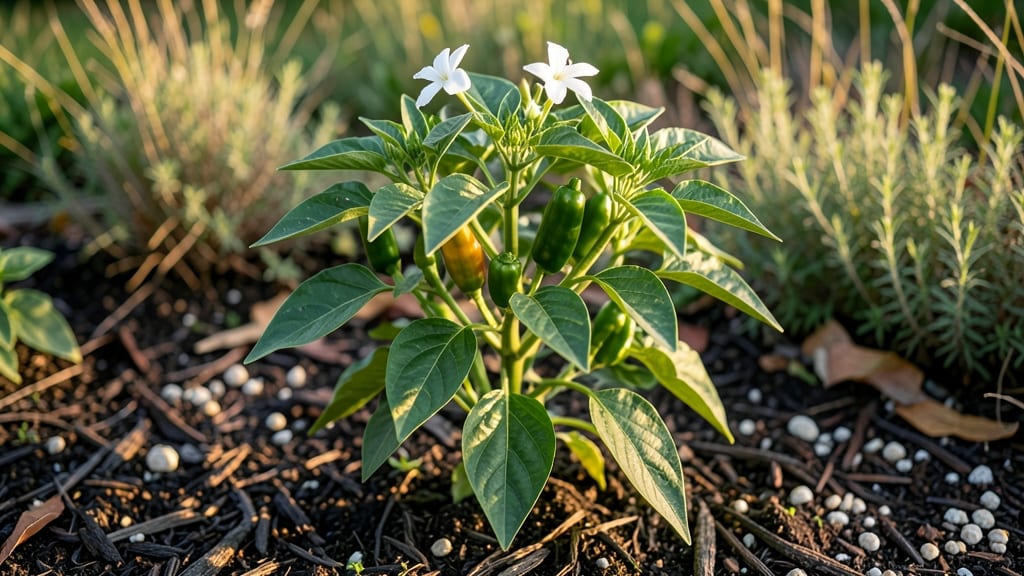
How to identify hot pepper plants starts with the first few weeks of growth—look closely, and you’ll spot the clues. The moment you see jagged, serrated leaves—smaller and narrower than bell pepper seedlings—you’re staring at a hot variety. Jalapeños and habaneros both begin with leaves that look like tiny, pointed fingers, while bell peppers start with smoother, broader edges.
As they mature, hot peppers grow bushier with a more upright habit, while bell peppers tend to sprawl wider. Flowers are another giveaway: hot peppers bloom with white or pale yellow flowers that appear later in the season, often clustered near the stem.
The fruit itself starts small and elongated—jalapeños as pencil-thin pods, habaneros as tiny, waxy nubs—never the blocky shape of a bell pepper.
By summer, the real clues emerge: hot peppers develop a glossy sheen and vibrant colors (reds, oranges, yellows) that intensify as they ripen. Bells stay matte and plump, their colors duller. One quick test? Crush a leaf—hot peppers often have a faint, sharp aroma, while bells smell sweetly vegetal.
Even in shady spots, you’ll spot the difference: hot peppers keep their compact form, while bells stretch leggy. Now you’ll never mistake a habanero for a banana pepper again—just follow the leaves, the flowers, and the fruit shape. Here’s how to spot them at every stage.
📚 In This Guide
- What you need
- Instructions
- Tips and common mistakes
- Wrapping up and next steps
What you need
- ● Hot pepper plant reference guide: A printed or digital guidebook (or app) with images of common hot pepper varieties (e.g., jalapeño, habanero, cayenne, or ghost pepper). Look for guides from trusted sources like University Extension Services or gardening blogs.
- ● Magnifying glass or loupe: A handheld magnifier (3x–10x magnification) to inspect fine details like leaf veins, trichomes, or tiny hairs on stems.
- ● Notebook and pen: For jotting down observations (e.g., leaf shape, color, or plant height) to compare with reference images.
- ● Camera or smartphone: To capture close-up photos of leaves, stems, and flowers for later comparison with online databases.
- ○ Gloves (optional but recommended): Thin gardening gloves (nitrile or latex) to protect your hands from potential irritation or spicy residues.
- ● Pruning shears or scissors: Small, sharp tools for safely snipping leaves or stems for closer inspection (sterilize with rubbing alcohol).
- ● Measuring tape or ruler: To record leaf length/width or plant height for accurate identification.
- ● UV flashlight: Some pepper compounds (like capsaicin) fluoresce under UV light—great for spotting hidden traits!
- ● pH test kit: Soil pH (ideally 6.0–7.0) can affect leaf color; useful if plants look stressed.
- ● Field guide app: Apps like iNaturalist or PictureThis let you upload photos for AI-assisted ID.
- ● Spray bottle with water: Lightly mist leaves to enhance color contrast for photography.
How to identify hot pepper plants: leaf shape and color clues for accurate spotting
Spotting hot peppers early saves you from surprise heat—here’s how to recognize them by leaf alone.
Examine Leaf Shape for Classic Pepper Traits
Hot pepper plants typically have lance-shaped or oval leaves with pointed tips, though some varieties like habaneros develop more rounded edges. The leaves grow alternately along the stem rather than in opposite pairs, which is a key difference from tomatoes or eggplants. Hold a leaf between your fingers—if it feels slightly leathery and has a prominent central vein with smaller veins branching out, that’s a strong pepper indicator.
Young leaves often appear more serrated (with tiny teeth along the edges), while mature leaves may smooth out. Compare them to bell pepper leaves, which tend to be broader and more rounded. If the leaves are deeply lobed or heart-shaped, you’re likely looking at a tomato or other nightshade instead.
Check Leaf Color and Texture for Heat Signs
Healthy hot pepper leaves usually start a vibrant deep green but can develop reddish or purple hues as they mature, especially in cooler temperatures. The undersides often have a slightly waxy coating that helps repel pests. Run your thumb along the leaf surface—pepper leaves should feel firm but not brittle, with a slight glossiness that reflects light.
Watch for hairy stems at the leaf base, a common trait in many hot varieties. Some peppers, like Thai chiles, may also develop small, curved hairs along the stem. If the leaves are soft, pale, or have yellowing edges, the plant might be nutrient-deficient or stressed—common in overwatered or shaded conditions.
Look for Stem and Growth Habits
Hot pepper plants often grow in a bushy, upright habit with stems that develop small, thorn-like projections near the leaf nodes. The stems feel slightly ridged when touched, and new growth emerges in a zigzag pattern rather than straight up. If you see clusters of tiny white flowers forming at the leaf axils (where the leaf meets the stem), that’s a definitive sign—pepper flowers are small, star-shaped, and often appear before fruit sets.
Compare the stem thickness to that of a bell pepper—hot varieties tend to be slightly thinner but more woody as they mature. If the plant has a vine-like, sprawling growth, it’s likely a different nightshade, such as a ground cherry or tomato.
Verify with Leaf Arrangement and Size
Pepper leaves grow alternately along the stem, meaning each leaf attaches at a different height rather than directly across from its neighbor. Measure a mature leaf—hot pepper leaves typically range from 2 to 6 inches long, depending on the variety, while bell pepper leaves can reach up to 8 inches. Hold the plant at eye level and scan the foliage—if the leaves are uniformly spaced and angled slightly upward, that’s a classic pepper growth pattern.
Pay attention to the leaf base where it connects to the stem. Pepper leaves usually have a slightly uneven or asymmetrical attachment, whereas tomato leaves attach more symmetrically. This subtle detail can help distinguish peppers from their nightshade cousins when flowers or fruit aren’t yet visible.
Cross-Check with Common Pepper Leaf Variations
Some hot pepper varieties have distinct leaf shapes that set them apart. For example, jalapeños and serranos often have narrower, more elongated leaves, while habaneros and ghost peppers may develop slightly broader, darker green foliage. If you’re unsure, compare the leaves to known pepper varieties in a gardening guide or app—many include leaf shape as a key identifier.
Remember, leaf shape alone isn’t foolproof, but combining these traits with stem texture, growth habit, and flower structure gives you a reliable way to spot hot peppers early. If you’re still unsure, wait for flowers or fruit to form—they’re the ultimate confirmation, but leaves give you a head start.
Tips & tricks for spotting hot pepper plants like a pro
Here's what nobody tells you about identifying hot peppers—these subtle details make all the difference when you're just starting. I learned this the hard way after misidentifying a plant that later gave me a serious case of heat rash.
Leaf Shape Comparison: When examining leaves in Step 1, focus on the leaf base where it meets the stem. Pepper leaves often have an uneven, asymmetrical attachment—almost like they're slightly twisted at the base. Tomato leaves, by contrast, attach more symmetrically. This subtle detail becomes especially noticeable when comparing young leaves side by side with other nightshades.
Texture Test: In Step 2, the waxy coating on pepper leaves isn't just about pest resistance—it's also a moisture retention feature. Run your thumb along the underside of a leaf: if it feels slightly slick and leaves a faint residue on your skin, that's your confirmation. This waxiness becomes more pronounced as leaves mature, making older leaves more reliable for identification than young ones.
Growth Pattern Clues: The bushy, upright growth habit mentioned in Step 3 is actually a survival mechanism. Hot peppers grow this way to maximize sunlight exposure in their native tropical environments. Notice how the stems develop in a zigzag pattern? This isn't just random—it's a way for the plant to spread its leaves for better light capture. If you see this pattern combined with the alternate leaf arrangement from Step 4, you're definitely looking at a pepper.
Seasonal Color Shift: The color variations in Step 2 aren't just aesthetic—they're functional. That reddish or purple hue developing in cooler weather is actually a protective mechanism. The deeper pigments help shield the plant from cold damage. If you notice this color shift happening in your garden, it's a strong indicator you're dealing with a hot pepper variety, as many mild peppers don't exhibit this trait as prominently.
Pro Tips for Identify Hot Pepper Plants
- Here's what nobody tells you about identifying hot peppers—these subtle details make all the difference when you're just starting.
- Leaf Shape Comparison: When examining leaves in Step 1, focus on the leaf base where it meets the stem.
- Texture Test: In Step 2, the waxy coating on pepper leaves isn't just about pest resistance—it's also a moisture retention feature.
Frequently asked questions
Got questions about spotting those fiery friends? Here are some of the most common ones—and their answers!
How young can I identify a hot pepper plant?
You can start identifying hot pepper plants as early as the seedling stage! Look for serrated leaves (like tiny saws) and a slightly hairy stem. Compare them to bell pepper seedlings, which have smoother, rounder leaves. If you’re unsure, wait until the plant develops its first true leaves (not the initial seed leaves).
What if my pepper plant looks like a hot pepper but isn’t producing heat?
Some peppers (like jalapeños or serranos) can taste mild if they’re underripe or grown in cooler conditions. Harvest them early for heat, or wait until fully ripe. If it’s still bland, it might be a hybrid or non-spicy variety—check the plant tag or grower notes.
How long does it take for a hot pepper plant to show its true colors?
Hot pepper plants typically reveal their distinct leaf shape within 4–6 weeks of germination. However, color changes (like deep green or purple hues) may take 6–8 weeks or longer, depending on the variety. Patience pays off—some peppers, like habaneros, take even longer to show their spicy potential!
Can I use leaf shape alone to guarantee a hot pepper?
Leaf shape is a great starting point, but it’s not foolproof. Some mild peppers (like shishitos) have serrated leaves too! For 100% accuracy, cross-reference with stem hairiness, flower color (white = hot, purple = mild), or the plant’s growth habit. When in doubt, taste-test a ripe pepper—or ask your local nursery for ID help!
What if my pepper plant’s leaves turn yellow or spotty?
Yellowing or spotted leaves could signal pests (aphids, spider mites), fungal issues (like early blight), or overwatering. Check the underside of leaves for pests, and adjust watering to keep soil moist but not soggy. Prune affected leaves and treat with neem oil or insecticidal soap if needed.
Wrapping up and next steps
Identifying hot pepper plants is all about paying close attention to their leaf shape, color, and growth patterns—plus a few handy tricks like scent and seed inspection.
Whether you're a seasoned gardener or just starting out, these clues will help you spot fiery favorites like jalapeños, habaneros, or ghost peppers with confidence. 🌿
Now that you’re armed with this knowledge, why not put it to the test? Head to your garden, local nursery, or even a farmer’s market to practice spotting these heat-loving plants. And if you’re feeling adventurous, consider growing your own—your taste buds (and spice tolerance) will thank you!