
Planting
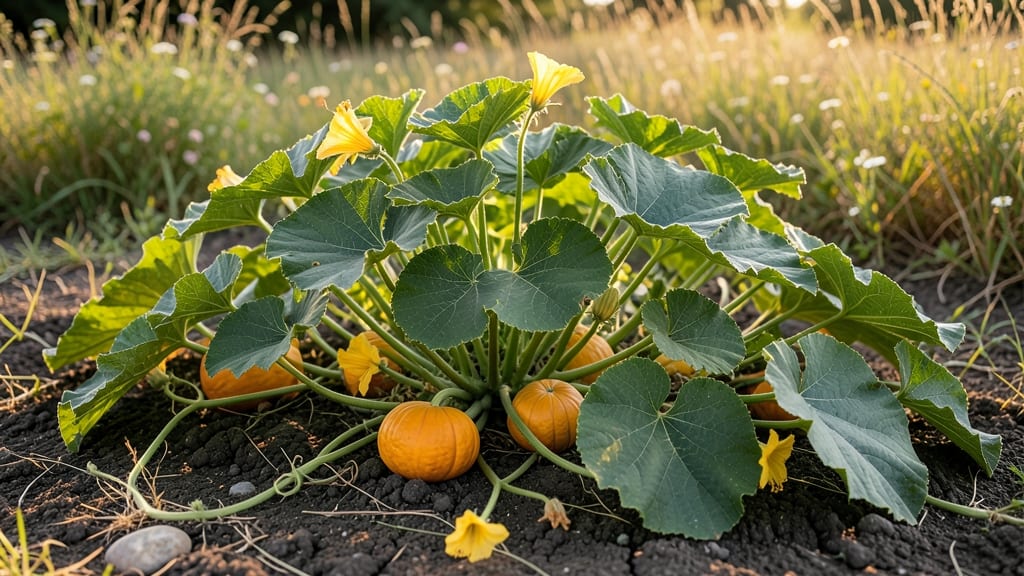
How to identify a pumpkin plant is simpler than you might expect—those first leaves are your best clue. 🌱 I’ve been growing pumpkins for years, and the moment those lobed leaves unfurl—deep green, jagged edges, and slightly fuzzy—you’ll know exactly what’s happening in your garden bed. Pumpkin vines sprawl differently too: thick, hairy stems that grow fast (up to 6 feet a week!) and sprawl low to the ground. Check the flowers—male blooms have long stems, while female flowers sit near a tiny fruit bump. This distinction is your secret weapon for telling pumpkins apart from zucchini or weeds. Once you recognize these clues, you’ll prune, water, and fertilize with confidence. Those lobed leaves mean your plants are strong enough for heavy fruit, and you’ll know when to expect harvests. No more guessing games in the garden. This skill saves time and effort—no more mystery plants stealing nutrients from your intended pumpkins. Master these visual cues, and your garden will thrive with the right care at the right time.
📚 In This Guide
- What you need
- Instructions
- Tips and common mistakes
- Wrapping up and next steps
What you need
- ● Pumpkin plants or seeds – Start with healthy seedlings or fresh seeds (choose heirloom or hybrid varieties for best results).
- ● Garden or container space – Pumpkins thrive in full sun (6–8+ hours/day) and need at least 50 square feet per plant (or a large container with drainage).
- ● Pruning shears or sharp scissors – For examining leaves and vines up close (sterilize with rubbing alcohol to avoid disease spread).
- ○ Magnifying glass (optional but helpful) – To inspect fine details like leaf veins or vine textures.
- ● Notebook & pen – To jot down observations (leaf shape, vine growth, color changes, etc.).
- ● Watering can or hose with a gentle spray nozzle – Keep plants hydrated while you observe.
- ● Gloves (recommended) – Protect your hands from prickly vines or rough leaves.
- ● Plant identification app (e.g., PlantNet or iNaturalist) – For quick comparisons if you’re unsure.
- ● Camera or smartphone – Snap photos of leaves, vines, and flowers for later reference.
- ● pH testing kit – Pumpkins prefer slightly acidic to neutral soil (pH 6.0–7.0).
- ● Stake or trellis – If you want to train vines for easier observation (great for small spaces!).
- ● Reference guidebook – A field guide to squash and pumpkins (e.g., Squash: The Ultimate Grower’s Guide).
Step-by-step guide to identifying pumpkin plants in the garden
Here's how I spot pumpkins early—before the vines sprawl everywhere and you're left guessing what's growing.
🌿 Step 1: Examine Leaf Shape and Texture
Pumpkin leaves are your first clue—they're 5-7 lobed, resembling tiny maple leaves but with a rough, hairy texture. Hold a leaf up to light and you'll see the veins form a palm-like pattern with deep indentations between lobes. Compare it to squash leaves, which are smoother and more rounded.
Young pumpkin leaves start small—about 2-3 inches wide—but grow rapidly as the plant matures. Look for the distinct serrated edges on each lobe. If you see leaves with smooth edges or fewer lobes, it's probably not a pumpkin variety.
🌱 Step 2: Observe Vine Growth Habits
Pumpkin vines are sturdy, sprawling, and hairy, growing in a trailing pattern along the ground. Unlike cucumbers, which climb, pumpkins spread outward aggressively, sending out long, tendril-free runners. Watch for male flowers appearing first—they have long stems and no fruit at the base.
Here's the thing—pumpkin vines produce large, broad leaves spaced about 6-12 inches apart along the stem. If you see vines with small, heart-shaped leaves growing vertically, it's likely a different cucurbit like a melon or winter squash.
🌺 Step 3: Check for Flower Characteristics
Pumpkins produce two types of flowers: male flowers (with long stems and no fruit) and female flowers (with a tiny pumpkin at the base). Female flowers appear after 4-6 weeks of growth, and you'll notice a small bulbous shape where the flower meets the vine.
Male flowers open first and drop pollen onto female flowers, which is how fruit develops. If you see flowers but no signs of fruit formation after 10-14 days, check for proper pollination or pest interference. The presence of both flower types confirms you're dealing with a pumpkin plant.
🎃 Step 4: Identify Fruit Development
Once pollinated, female flowers develop into tiny, round fruit that grows rapidly. Early pumpkin fruits are green with a textured skin, and you'll see them growing directly from the vine where the female flower was. Unlike squash, which often grows on side branches, pumpkins attach directly to the main vine.
Watch for the distinct stem attachment—pumpkins grow from a single stem point, while some squash varieties may have multiple attachment points. If you find a vine with multiple fruit stems at one node, it's likely a squash rather than a pumpkin.
⏰ Step 5: Verify Growth Timeline and Size
Pumpkin plants follow a predictable growth pattern. Vines emerge 7-10 days after germination, and leaves reach 6-8 inches wide within 3 weeks. By 6 weeks, you should see flowers, and fruit should appear by 8-10 weeks. If your plant is growing much faster or slower, it might not be a pumpkin.
Real talk: Pumpkin vines can grow 20+ feet long in a season, so if you're seeing a compact, bushy plant with small fruit, it's probably a different variety. Compare your plant's growth rate and vine length to known pumpkin characteristics to confirm your identification.
Tips & tricks for identifying pumpkin plants
Confession: I used to mistake pumpkin plants for squash or even melons until I learned these visual shortcuts. Here's what nobody tells you about spotting them early.
Leaf Texture Clues: The rough, hairy texture of pumpkin leaves is your secret weapon. Run your fingers over the underside—pumpkin leaves feel almost fuzzy, while squash leaves are smoother. I learned this the hard way after pulling up what I thought was a pumpkin vine, only to realize it was a zucchini plant. That fuzzy texture is non-negotiable for identification.
Veins and Lobes: When you hold a pumpkin leaf up to light, you should see veins that create deep indentations between the 5-7 lobes. Think of it like a tiny maple leaf with extra personality. I keep a magnifying glass handy now—it makes those vein patterns much easier to spot, especially on young leaves that are only 2-3 inches wide.
Vine Spacing: The spacing between leaves is a game-changer. Pumpkin vines produce large, broad leaves spaced about 6-12 inches apart along the stem. If you see leaves growing too close together or in clusters, it's probably not a pumpkin. I measure the distance between leaf nodes when I'm unsure—this simple trick has saved me from misidentifying plants countless times.
Flower Timing: The 4-6 week window for female flowers is crucial. Male flowers appear first, but you're looking for those tiny bulbous shapes at the base of female flowers. Here's what I do: I mark the day I see the first male flowers, then start checking for female flowers after 4 weeks. This timing consistency is what separates pumpkins from other cucurbits in my garden.
Pro Tips for Identify Pumpkin Plant
- Confession: I used to mistake pumpkin plants for squash or even melons until I learned these visual shortcuts.
- Leaf Texture Clues: The rough, hairy texture of pumpkin leaves is your secret weapon.
- Veins and Lobes: When you hold a pumpkin leaf up to light, you should see veins that create deep indentations between the 5-7 lobes.
Frequently asked questions
Got questions about spotting pumpkin plants in your garden? Here are some common ones—and their answers—to help you grow with confidence!
How do I tell if a young pumpkin plant is healthy?
A healthy young pumpkin plant has large, rough, lobed leaves (like maple leaves) and vigorous, trailing vines. Check for no yellowing leaves (unless it’s early morning dew) and strong stems. Wilting or weak growth? It might need more water or sunlight.
When is the best time to identify pumpkin plants in my garden?
Spot them 2–3 weeks after germination when true leaves (not the first seed leaves) appear. For best results, check morning or late afternoon when plants are fully hydrated. If you’re unsure, dig gently—pumpkin roots are shallow and fibrous.
What if my plant looks like a pumpkin but isn’t producing flowers?
Pumpkins need warmth (70°F+) and 12+ hours of sunlight daily to flower. If your plant has leaves but no blooms, it might be too young or stressed. Try hand-pollinating flowers (use a paintbrush!) or check for pests like squash bugs. Patience—some varieties bloom later!
Can I identify pumpkin plants by their smell or touch?
Pumpkin plants don’t have a strong scent, but their leaves feel rough and hairy when rubbed. Squeeze a stem—healthy vines are sturdy but flexible. If it smells musty or rotten, it could be diseased. Always cross-check with leaf shape for accuracy!
What if I think it’s a pumpkin but it’s actually a squash or gourd?
Use this quick guide:
Feature
Pumpkin
Squash
Gourd
Leaf shape
Deeply lobed (5+ points)
Slightly lobed or rounded
Smooth, rounded, or heart-shaped
Vine growth
Long, trailing (10+ ft)
Bushier or medium-length
Compact or climbing
Still unsure? Check the fruit—pumpkins grow large, round, and orange!
Wrapping up and next steps
Identifying pumpkin plants is all about paying attention to their distinctive leaves, sprawling vines, and early signs of blooms—whether you're a seasoned gardener or just starting out. 🌱 By mastering these key traits, you’ll confidently spot pumpkins in your garden and give them the care they need to thrive.
Now that you’re equipped with the know-how, why not plant a few seeds and watch your green thumb grow? Happy gardening!