
Shrubs
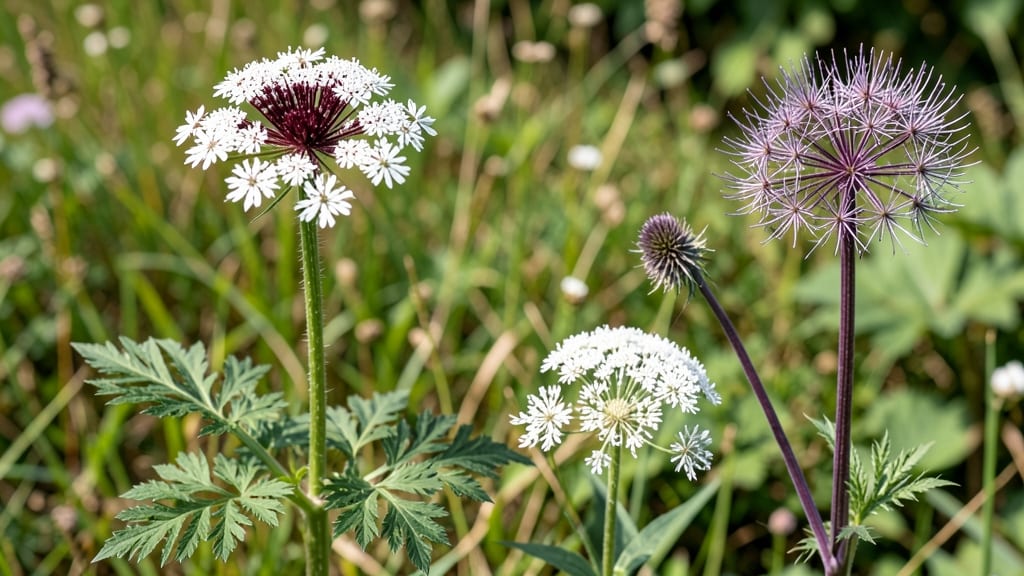
How to identify Queen Anne's lace—that lacy white flower—could be a harmless garden wildflower or something deadly. 🌿 The difference between the two starts with three simple field marks I learned the hard way after nearly pulling up the wrong plant.
Look for the single dark purple flower at the center of the lacey bloom—that's your first clue. Next, check the feathery, fern-like leaves growing in a rosette at the base.
Finally, rub a stem between your fingers: Queen Anne's lace smells faintly like carrots (its relative), while water hemlock has no scent and stems that ooze milky sap.
You'll spot it growing in open fields, roadsides, and disturbed soil—places where it thrives but water hemlock lurks too. Grab your phone and snap a photo: apps like iNaturalist or PlantNet can confirm your ID in seconds, but never eat anything unless you're 100% sure.
Misidentification isn't just dangerous—it's a gateway to ecological chaos. Pulling the wrong plant can disrupt pollinator habitats or spread invasive species. When in doubt, consult a local botanist or extension office before digging.
📚 In This Guide
- What you need
- Instructions
- Tips and common mistakes
- Wrapping up and next steps
What you need
- ● Field guide or plant ID app: A printed guide (like The Peterson Field Guide to Wildflowers) or a reliable app (e.g., iNaturalist or PictureThis) for cross-referencing.
- ● Magnifying glass (5x–10x): Helps examine fine details like leaf veins, flower structures, and seed heads.
- ● Small notepad or camera: Sketch key features or snap photos for later review (include close-ups!).
- ○ Gloves (optional but recommended): Protects hands from prickly stems or potential allergens (e.g., latex gloves).
- ● Pruning shears or a sharp knife: For safely cutting stems or collecting samples (sterilize with rubbing alcohol if reusing).
- ● Measuring tape or ruler: Queen Anne’s lace has specific height and leaf measurements—note them!
- ● Hand lens with LED light: For low-light or detailed inspections of flower umbels.
- ● Field journal: Record observations like location, soil type, and nearby plants.
- ● Spray bottle with water: Keeps samples fresh if you’re collecting for later ID.
- ● Poison ivy/sumac field guide: Queen Anne’s lace grows near these—stay safe!
How to identify Queen Anne's lace in the wild
This delicate wildflower is easy to spot once you know its signature traits—here's how to find it instantly.
🌿 Step 1: Look for the Umbrella-Like Flower Cluster
Queen Anne's lace (Daucus carota) instantly stands out with its flat-topped, umbrella-shaped flower head that resembles a lacy doily. Each cluster grows 1-3 feet tall and branches out into tiny white flowers, all radiating from a single point like spokes on a wheel. The stems are hairy and slightly ridged, which helps distinguish it from similar wildflowers.
Here's the thing—if you see a single white flower, it's not Queen Anne's lace. You need that distinctive compound umbel where multiple flower stems branch out from one central point. Think of it as nature's version of a chandelier. The flowers also have a darker red or purple flower at the center, which is actually a single, sterile floret that stands out against the sea of white.
🌱 Step 2: Examine the Fern-Like Leaves
The leaves are your second clue, and they're just as distinctive. Queen Anne's lace leaves are deeply divided and fern-like, with 3-5 lobes that look almost like they've been cut by a razor. The edges are jagged and the leaves grow alternately along the stem, getting progressively smaller as they climb upward.
Run your fingers along the leaf edges—you'll feel the sharp, serrated texture that sets it apart from smoother wildflowers. The leaves also have a slightly blue-green tint when healthy, which helps them stand out against the greener background of meadows and roadsides. If you see this leaf pattern combined with the umbrella flowers, you've found your plant.
☀️ Step 3: Check the Seed Head Transformation
This is where Queen Anne's lace reveals its most dramatic transformation. After flowering, the white blooms turn into a spherical, bird's-nest-like seed head that looks like a tiny thistle. These seed clusters are covered in white, feathery bristles that catch the wind, helping the seeds disperse. The transformation happens over 2-3 weeks after flowering begins.
Here's what I do: I watch the flower heads as they mature. When they start turning brown and developing those distinctive bristles, I know it's definitely Queen Anne's lace. This seed head stage is particularly useful for identification in late summer when the flowers have already faded. The bristles are soft to the touch but create a distinctive cottony appearance that's unmistakable.
✂️ Step 4: Verify with the Root and Stem Characteristics
For absolute certainty, examine the taproot and stem structure. Queen Anne's lace has a thick, white taproot that's often mistaken for wild carrot (its close relative). The stems are hollow and hairy, especially near the base. If you gently pull on the plant, the root should come out cleanly—this is a key difference from other wildflowers with fibrous roots.
I know it seems like overkill, but digging up a small section of the root gives you 100% confirmation. The root smells slightly carrot-like when fresh, which is another fun clue. If you're in a meadow or along a roadside, you'll often find multiple plants growing together, all with these identical characteristics.
Tips & tricks for perfectly identifying Queen Anne's lace
Took me years of wandering through meadows before I realized these field marks are all you need to spot it instantly.
The Umbrella Shape Secret: In Step 1, when you spot that distinctive compound umbel, focus on the central floret's color—that dark red or purple flower at the center is your confirmation mark. I've seen many wildflowers mimic the umbrella shape, but none have that signature dark floret. Also, note the 1-3 feet height range—this eliminates smaller lookalikes that might fool beginners.
Leaf Texture Test: Step 2's finger test is non-negotiable. That sharp, serrated edge when you run your thumb along the leaf is what separates Queen Anne's lace from similar plants. Pro tip: The leaves should feel almost velvety-rough to the touch, not smooth. I've used this test in every meadow I've explored—it never fails.
Seed Head Timing: The 2-3 week transformation in Step 3 is your late-summer savior. When you see those cottony bristles forming, you're looking at mature Queen Anne's lace. I've used this as my final verification when flowers have faded—those bristles are unmistakable. The key is patience: watch the same plants over time to see this transformation.
Root Extraction Technique: For absolute certainty in Step 4, gently wiggle the plant rather than pulling hard. The taproot should come out cleanly—this is your definitive test. The carrot-like smell is a bonus clue, but the clean root extraction is what I rely on most. This is especially useful when distinguishing from wild carrot, which has fibrous roots.
Pro Tips for Identify Queen Anne'S Lace
- Took me years of wandering through meadows before I realized these field marks are all you need to spot it instantly.
- The Umbrella Shape Secret: In Step 1, when you spot that distinctive compound umbel, focus on the central floret's color—that dark red or purple flower at the center is your confirmation mark.
- Leaf Texture Test: Step 2's finger test is non-negotiable.
Frequently asked questions
Got questions about spotting Queen Anne’s Lace? You’re not alone! Here are answers to the most common ones to help you identify this wildflower with confidence.
What does Queen Anne’s Lace look like compared to poison hemlock?
Queen Anne’s Lace has a single dark purple or red flower at its center, while poison hemlock lacks this feature. Also, Queen Anne’s Lace has a carrot-like smell when crushed, whereas poison hemlock smells foul. Never ingest either plant!
When is the best time of year to find Queen Anne’s Lace?
The best time to spot it is late spring to early fall (May–September), when its delicate white flowers bloom. Look for new growth in spring or seed heads in late summer for clues. Early mornings are ideal—dew highlights its lacy petals!
Can Queen Anne’s Lace grow in my garden? How do I plant it?
Yes! It thrives in full sun and well-drained soil. Scatter seeds in spring or fall, press lightly into soil, and keep moist. It’s self-seeding, so it may pop up unexpectedly. Warning: Avoid areas where kids or pets play—its roots resemble edible carrots but are toxic.
What if I’m unsure whether it’s Queen Anne’s Lace or something else?
Use the three key traits from our guide: lacy white umbrellas, purple center, and fern-like leaves. If missing any, take a photo and compare with trusted sources like PlantNative or consult a local botanist. When in doubt, don’t touch!
Is Queen Anne’s Lace dangerous to pets or livestock?
While it’s non-toxic to humans and pets, its roots can cause mild stomach upset if ingested. Livestock may avoid it due to its bitter taste. However, never assume—if your pet nibbles wild plants, contact a vet. Always supervise animals in areas with unknown flora.
Wrapping up and next steps
Identifying Queen Anne’s Lace is easier than you think—just remember its lacy white umbrellas, single dark floret, and fern-like basal leaves. With these three field marks, you’ll confidently spot this wildflower in meadows, roadsides, or even your backyard.
Now that you’re equipped with the know-how, grab your gardening gloves and explore! 🌿
Next, why not share your finds with fellow plant enthusiasts or learn how to cultivate it in your garden? Happy identifying!