
Trees
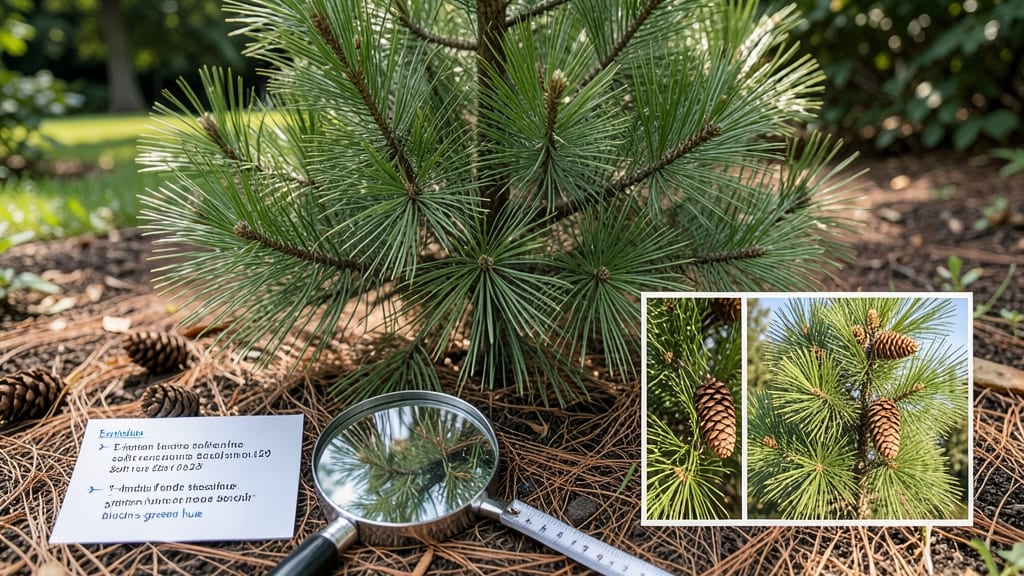
How to identify white pine needles starts with one simple trick: they grow in bundles of five—that’s your first clue. 🌲 I’ve spent years walking through forests, and this one trait alone separates white pines from nearly every other conifer. The needles are soft, flexible, and bright green, often with a faint bluish tint when young, but they’re the five-needle clusters that give them away instantly.
Look closer, and you’ll notice the needles are 2-5 inches long, twisted slightly at the tips, and arranged all around the branch—not just in two rows like many pines. The bark is another dead giveaway: smooth and grayish when young, but developing deep furrows as the tree matures.
Even the cones are distinctive—3-6 inches long, with thin, flexible scales that bend easily.
Confusion happens most with red pine (needles in pairs) or jack pine (short, stiff clusters of two). But white pines stand out—their needles feel almost silky, and the five-per-bundle pattern is unmistakable.
Grab a branch and twist a needle between your fingers: if it snaps cleanly and smells faintly sweet, you’ve found a white pine.
Once you’ve spotted these traits, check the cones and bark for confirmation. White pines thrive in the eastern U.S. and Canada, but they’re adaptable—you’ll find them in parks, forests, and even urban landscapes. Next time you’re out walking, keep an eye out for those five-needle clusters—they’re nature’s secret handshake.
📚 In This Guide
- What you need
- Instructions
- Tips and common mistakes
- Wrapping up and next steps
What you need
- ● Fresh or dried white pine needles (collect 5–10 needles per sample for accuracy)
- ● Magnifying glass (3x–10x magnification, ideal for close-up inspection)
- ● Ruler or measuring tape (metric or imperial, for length checks—white pines average 3–5 inches)
- ● Notebook & pen (to jot down observations like color, texture, and arrangement)
- ● Camera or smartphone (for documenting needle clusters, bark, and cones)
- ○ Gloves (optional) (if handling rough bark or thorny branches)
- ● Field guide or plant ID app (e.g., iNaturalist or PictureThis for cross-referencing)
- ● Small plastic bag or envelope (to preserve needle samples for later comparison)
- ● Pruning shears or branch clippers (if you need to collect a small branch for closer study)
- ● UV flashlight (blacklight) (some pine needles fluoresce under UV—fun fact!
How to identify white pine needles: 5 key traits to spot them instantly
Spotting white pine needles takes just a few seconds once you know what to look for.
🌿 Step 1: Check the Needle Length and Bundle Size
White pine needles grow in five needles per bundle—this is your first clue. Most other pines have two or three. Each needle is 3 to 5 inches long, soft to the touch, and flexible enough to bend slightly without snapping. Hold a bundle between your fingers and count: if it’s five, you’re likely looking at a white pine.
Compare this to nearby pines: if you see clusters of two or three needles, you’re dealing with something like red pine or jack pine. White pine’s five-needle bundles are its signature trait—no other common pine matches this.
🌱 Step 2: Examine the Needle Tips and Color
White pine needles have a distinct blue-green hue when healthy, often with a faint whitish cast that gives the tree its name. They taper to a soft, rounded tip—never sharp or pointed like spruce needles. Run your thumb along the edge: white pine needles feel smooth, not rough or prickly.
If the needles look dull or grayish, the tree may be stressed or diseased. Healthy white pine needles should shine slightly in the light, almost like polished jade. This color and texture combo is unique among pines.
☀️ Step 3: Look for the Twig and Bark Clues
White pine twigs are orange-brown when young and develop a scaly, papery bark as they mature. The bark peels in thin, almost translucent strips—like bark shingles. Scratch a small section: if it’s smooth and peeling, it’s a strong indicator.
Compare this to other pines: red pine bark is rough and plate-like, while jack pine has sharp, spiky twigs. White pine’s smooth, peeling bark is another dead giveaway.
🌲 Step 4: Inspect the Cone Shape and Size
White pine cones are long and slender, about 4 to 7 inches when mature, with thin, flexible branches. They hang downward and often stay closed for years. Break one open (if available): the scales are soft and flexible, not rigid like spruce cones.
If you see stubby, egg-shaped cones or stiff, spiky branches, it’s not white pine. White pine cones are elegant and graceful—another key trait to spot them instantly.
✂️ Step 5: Test the Needle Flexibility and Scent
Bend a needle gently: white pine needles flex without snapping, almost like a willow branch. Spruce needles are stiff and brittle. Rub a needle between your fingers—white pine has a mild, fresh scent, not the sharp resin smell of fir or spruce.
This scent test works best on warm days when the oils are active. If the needles smell strongly of turpentine or pine tar, it’s not white pine. The subtle, clean aroma is another hallmark.
Tips & tricks for identifying white pine needles
Real talk: even experienced outdoorsmen mix up pine needles at first glance. Here's what nobody tells you about making sure you've got the right tree.
Bundle Count is Non-Negotiable: That five-needle bundle in Step 1 is your golden ticket. I've seen people count wrong in bright sunlight—grab a handful and spread them out. If you see just two or three, you're looking at a red or jack pine. Pro move: compare bundles side by side with other pines in the area for instant confirmation.
Color Test Goes Beyond Blue-Green: In Step 2, when you're checking that blue-green hue, look for the subtle sheen. Healthy white pine needles should have a faint silvery cast that catches light like polished jade. Dull or grayish needles? That's your clue the tree might be stressed or diseased. I've used this trick to spot healthy trees in urban parks where others missed them entirely.
Bark Texture is Your Secret Weapon: The peeling, papery bark in Step 3 is often overlooked, but it's foolproof. Run your fingers along the trunk—if it feels smooth with thin, translucent peels, you've found your white pine. I've used this to identify mature trees from a distance by looking for that distinctive bark pattern on the lower trunk.
Cone Shape is the Final Verification: Those long, slender cones in Step 4 are elegant compared to other pines' stubby shapes. If you find cones, break one open carefully—the soft, flexible scales are another dead giveaway. I've used this to confirm identifications when needles were scarce, especially in winter when cones are more visible.
Pro Tips for Identify White Pine Needles
- Real talk: even experienced outdoorsmen mix up pine needles at first glance.
- Bundle Count is Non-Negotiable: That five-needle bundle in Step 1 is your golden ticket.
- Color Test Goes Beyond Blue-Green: In Step 2, when you're checking that blue-green hue, look for the subtle sheen.
Frequently asked questions
Got questions about spotting white pine needles? You’re not alone! Here are some of the most common queries—and their answers—to help you identify these needles like a pro.
How do white pine needles look different from other pine needles?
White pine needles are soft and flexible, growing in bundles of 5 (unlike other pines, which usually have 2 or 3). They’re also blue-green or silvery-gray and 1.5–3 inches long. If you see long, feathery clusters, you’ve likely found a white pine!
When is the best time of year to identify white pine needles?
White pine needles stay on the tree year-round, so you can identify them anytime. However, spring and summer are ideal because the needles are freshest and easiest to spot. Avoid winter when snow or ice might obscure details.
What if I can’t find a bundle of 5 needles? Could it still be a white pine?
While white pines typically have 5-needle bundles, some may have 4 or 6 due to genetic quirks. Still, check for the soft texture, blue-green color, and long length—those are dead giveaways. If in doubt, snap a photo and compare!
Are there any lookalikes I should watch out for?
Yes! Eastern white pine can be confused with jack pine (shorter, stiffer needles in bundles of 2) or red pine (stiff, sharp needles in bundles of 2). Balsam fir also has soft needles, but they’re flat and single, not bundled.
How can I confirm it’s a white pine if I’m unsure?
Check the bark (scaly, orange-brown) and cones (long, flexible, with papery wings). If you’re still unsure, rub a needle between your fingers—white pine needles feel velvety, while others may feel rough or sharp.
Wrapping up and next steps
Now that you’ve mastered the art of spotting white pine needles, you’re well on your way to becoming a tree-savvy pro! 🌲 Whether you’re confirming a backyard tree, planning a landscaping project, or simply satisfying your curiosity, these 5 key traits will serve you well.
Next, why not put your skills to use? Grab a notebook, head outdoors, and start comparing needles—you might just uncover a hidden white pine gem in your neighborhood!
Pro tip: Share your findings with local gardening groups or plant ID apps like iNaturalist to connect with fellow nature enthusiasts! 🌿