
Succulent
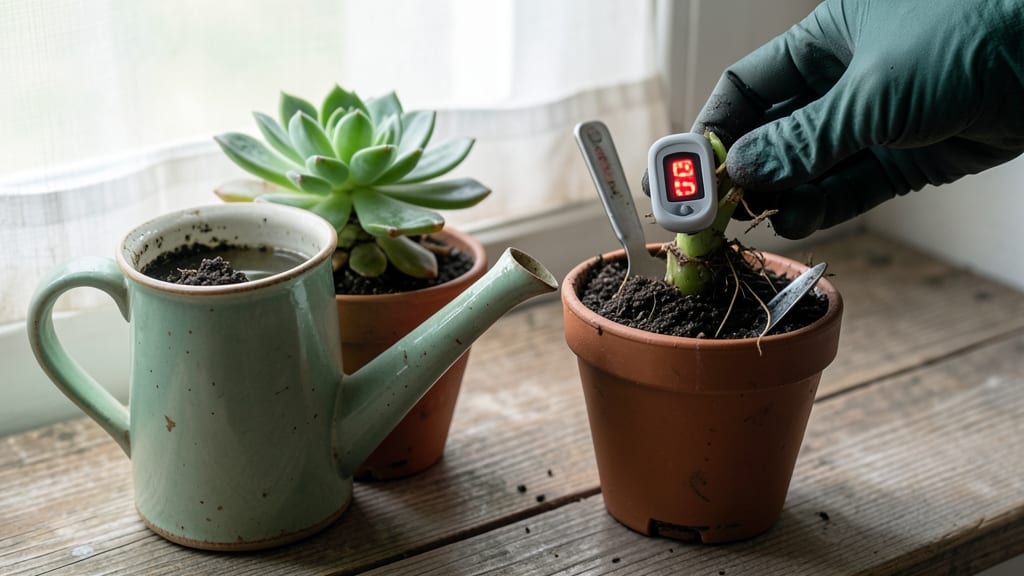
How to know if a succulent is overwatered? Those wrinkled leaves and squishy base are clear signs your plant is drowning—and it’s time to act before it’s too late. 🌱 I've seen this exact scene play out more times than I'd like to admit—especially with my first batch of echeverias—and it's always a watering mistake. The good news? It's fixable, and you can save your plant with just a few simple steps.
Overwatering happens when soil stays too wet for too long, suffocating roots and inviting mold. You'll notice leaves puckering like a dried-up raisin, stems turning soft or mushy, and sometimes a foul smell.
The soil might feel damp even days after watering, and the base of the plant could pull away from the pot when you gently tug it. Between you and me, this is the #1 reason succulents get dumped—don't let yours become a statistic.
First, stop watering completely and let the soil dry out completely. Then, carefully remove the plant and inspect the roots—healthy ones are firm and white, while rotten ones are mushy and brown.
Snip off the bad roots with clean scissors, let the plant dry for a few days, and repot it in fresh, gritty soil with improved drainage. Within weeks, you'll see new growth pushing through, and your succulent will be back to its plump, happy self.
Prevention is easier than fixing: water only when the soil is bone-dry, use pots with drainage holes, and choose a soil mix designed for succulents. I swear by the "finger test"—stick your finger an inch into the soil before watering, and if it feels damp, wait another week.
Your plants will thank you with vibrant color and steady growth all season long.
Why It Happens
Succulents are masters of water conservation, but their resilience has a limit. Overwatering isn’t just a mistake—it’s a silent killer that disrupts their natural survival mechanisms. Let’s break down the science behind why this happens, so you can spot the warning signs before it’s too late.
---
Succulents thrive in well-draining soil and pots, but when drainage is compromised, water pools at the roots instead of evaporating. This creates a soggy, anaerobic environment—one that suffocates roots by blocking oxygen exchange.
- Why it’s deadly: Roots need oxygen to respire (break down sugars for energy). Without it, they start to rot within 24–48 hours of prolonged saturation. - Actionable fix: Use cactus/succulent mix (60% mineral grit, 30% potting soil, 10% perlite) and pots with drainage holes.
Terracotta pots help wick away excess moisture faster than plastic.
---
Succulents store water in their leaves, but their roots don’t like soggy conditions. Watering on a schedule (e.g., every 7–10 days) without checking soil moisture leads to chronic overwatering.
- Why it’s deadly: Excess water triggers osmotic stress—roots absorb too much H₂O, diluting the cell’s internal balance. Cells swell, burst, or develop edema (abnormal water-filled blisters). - Actionable fix: Stick your finger 1–2 inches deep—if the soil feels damp, wait.
Use the "soak-and-dry" method: Water thoroughly, then let the top 50% of soil dry out before repeating.
---
Succulents in humid climates or cold drafts (like near AC vents) struggle to regulate moisture loss. High humidity slows evaporation, trapping water in the soil longer.
- Why it’s deadly: Humidity > 60% + cool temps = reduced transpiration (water loss through leaves). Roots stay wet too long, inviting fungal infections (like Phytophthora). - Actionable fix: Place succulents in bright, indirect light with low humidity (ideal: 30–50%).
Use a dehumidifier or pebble trays (with dry pebbles) to improve airflow.
--- Plastic pots retain moisture longer than breathable materials like terracotta or ceramic. Even with drainage holes, water evaporates 3x slower in plastic.
- Why it’s deadly: Plastic pots create a microclimate where roots stay damp for days. Over time, this leads to root rot (Pythium or Fusarium fungi). - Actionable fix: Switch to unglazed terracotta (porous) or coarse sand-lined pots to speed up drying.
If stuck with plastic, double-pot (place the plant in a cache pot with drainage inside a decorative outer pot).
--- Succulents in active growth (spring/summer) need more water, but their roots are also more vulnerable. Winter dormancy? Water sparingly—overwatering then mimics spring flooding, shocking the plant.
- Why it’s deadly: Winter roots slow metabolism to conserve energy. Extra water forces them to work harder, depleting stored nutrients and causing leaf drop or mushy stems. - Actionable fix: Reduce watering by 70% in winter. Check soil weekly—if dry, water lightly; if damp, wait.
--- Tap water with high salts, chlorine, or fluoride can disrupt a succulent’s water balance. Over time, these chemicals build up in the soil, making it harder for roots to absorb H₂O properly.
- Why it’s deadly: Salt buildup causes osmotic shock, where roots reject water instead of absorbing it. This mimics drought stress, even if the soil is wet. - Actionable fix: Use rainwater, distilled water, or filtered water.
If using tap water, let it sit out 24 hours to off-gas chlorine. Flush the soil every 6 months with plain water to leach salts.
--- Before watering, insert your finger 1–2 inches deep. If it feels: - Dry → Water thoroughly. - Slightly damp → Wait 1–2 more days. - Wet → Stop watering and let it dry out.
Overwatering is a cumulative problem—small mistakes add up. By understanding these root causes, you’ll catch issues early and keep your succulents plump, happy, and thriving! 🌵✨
Revive Your Succulent Step By Step
Overwatering can feel like a death sentence for your succulent, but with the right care, you can often bring it back to life! The key is acting fast and following a structured approach.
Below, we’ll map out specific fixes for each symptom and share prevention tips to keep your plants thriving.
---
Cause: Excess water causes cells to burst, leading to a squishy texture. Fix: 1. Stop Watering Immediately 🚫💧 - Let the soil dry out completely before watering again.
2. Remove Damaged Leaves ✂️ - Snip off mushy leaves with sterilized scissors to prevent rot from spreading.
3. Repot in Fresh Soil 🏺 - Gently remove the plant from its pot and inspect the roots. Trim any black, mushy roots with clean scissors. - Use a well-draining cactus/succulent mix (add perlite or pumice if needed).
4. Give It Time to Recover ⏳ - Place the plant in bright, indirect light and avoid watering for 2–4 weeks to let it heal.
💡 Pro Tip: If the base is entirely soft, the plant may not recover—but you can propagate healthy leaves!
---
Cause: Overwatering disrupts nutrient absorption, causing leaves to pucker. Fix: 1. Check the Soil Moisture 🌡️ - Stick your finger 1–2 inches deep—if damp, wait before watering.
2. Water Deeply but Infrequently 💦 - Water only when the soil is bone-dry (usually every 2–4 weeks, depending on climate).
3. Improve Drainage 🏗️ - Ensure the pot has drainage holes and use a fast-draining mix.
4. Boost Humidity (Temporarily) 🌬️ - Place a pebble tray with water nearby to help recovery (but avoid soggy conditions).
✨ Prevention: Use a moisture meter to track soil dryness accurately.
---
Cause: Fungal or bacterial rot from prolonged moisture. Fix: 1. Trim Affected Areas ⚔️ - Cut off yellow/black leaves at the base to stop rot spread.
2. Disinfect the Plant 🧼 - Wipe leaves with a 1:10 hydrogen peroxide solution (or neem oil spray) to prevent infection.
3. Repot in Sterile Soil 🌱 - Use fresh, sterile potting mix and a clean pot to avoid reinfection.
4. Adjust Watering Habits 📅 - Switch to a strict watering schedule (e.g., once every 3–4 weeks in summer).
🎯 Prevention: Avoid getting water on leaves—water at the soil base only.
---
Cause: Waterlogged roots suffocate, turning brown/black. Fix: 1. Inspect & Prune Roots 🔪 - Remove the plant and trim black, mushy roots—keep only firm, white roots.
2. Let Roots Dry Out ☀️ - Lay the plant on paper towels for 1–2 days to air-dry before repotting.
3. Repot in Fresh, Dry Soil 🏡 - Use a fast-draining mix and a terracotta pot (helps wick away moisture).
4. Hold Off on Watering ⏰ - Wait 3–4 weeks before watering to ensure roots recover.
💡 Pro Tip: If most roots are rotten, try leaf propagation—healthy leaves can regrow!
---
- Use the Right Pot: Terracotta or ceramic (breathable materials). - Water in the Morning: Lets soil dry out during the day. - Group Succulents Together: Creates a microclimate with balanced humidity. - Seasonal Adjustments: Water less in winter (growth slows down).
--- By following these steps, your succulent can bounce back—even if it looks hopeless at first! 🌟 The key is patience, proper drainage, and smart watering. Now, go save that plant! 🌵💚
Frequently asked questions
My succulent's leaves look wrinkled—is this always overwatering?
Wrinkled leaves can indicate both overwatering and underwatering, but the key difference is the soil. If the soil is damp or wet, it's overwatering. If it's bone-dry, your plant needs water. Check by sticking your finger an inch deep—if it feels moist, hold off on watering for 1-2 weeks and let the soil dry completely.
Can I save a succulent with completely mushy stems?
It depends! If only the base is soft, trim away the mushy parts and propagate the healthy leaves. If the entire stem is mushy, the plant is likely beyond saving—but you can still try propagating healthy leaves. Use sterilized scissors, let cuttings dry for 1-2 days, then place them on dry soil to root.
Why does my succulent smell bad after overwatering?
That foul odor means root rot has set in—bacteria and fungi thrive in soggy conditions. The smell comes from decomposing roots. To fix it, remove the plant, trim all black/mushy roots, and repot in fresh, sterile soil with perlite or pumice for better drainage. Avoid watering for 3-4 weeks to let the roots recover.
How often should I water my succulent after fixing overwatering?
After recovery, wait until the soil is completely dry before watering again. In summer, this might be every 2-3 weeks; in winter, once a month is often enough. Always water at the soil base, never on the leaves, to prevent future issues. Use the finger test—if the top 2 inches are dry, it's time to water.
Will my succulent grow back if I cut off all the rotten parts?
Succulents are resilient. After removing damaged leaves and roots, place the healthy parts in bright, indirect light and hold off on watering for 3-5 days to prevent further rot. New growth should appear within 2-4 weeks if the remaining plant is healthy. The key is patience—don't water until you see signs of new growth.