
Container Gardens
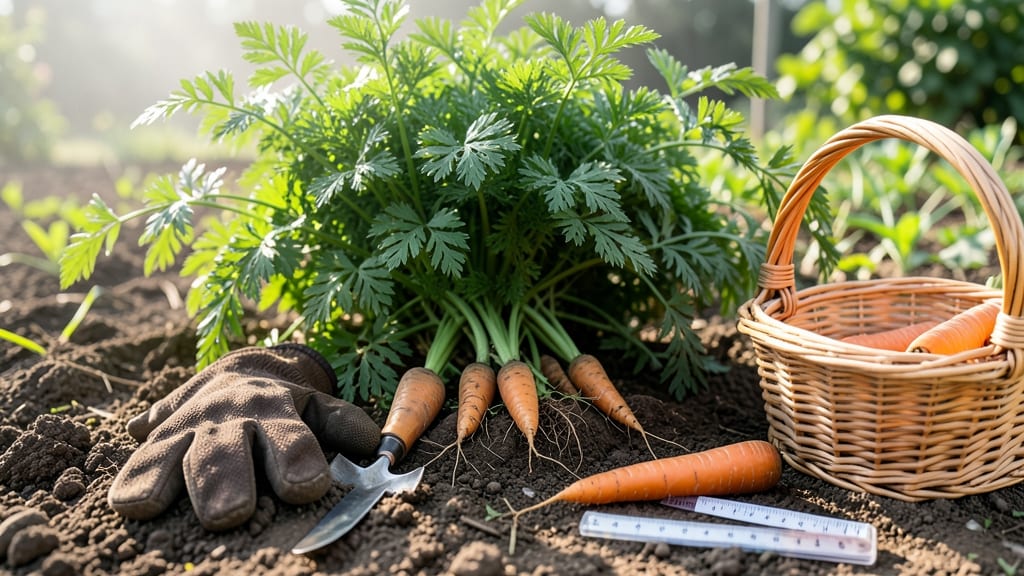
To know when carrots are done growing, check for 3-4 inch diameter roots, 6-8 inch tall leafy tops, and loose soil when gently pressed. Test a carrot—if it's firm and vibrant orange, harvest immediately. Waiting too long turns them tough and bitter.
Carrots follow a predictable growth pattern where root size, leaf height, and soil conditions all signal readiness. 🌱 The key is monitoring these three factors together—roots that grow beyond 4 inches often develop a woody texture, while leaves that exceed 8 inches may indicate nutrient depletion.
I've found that checking soil firmness with your fingers (it should give slightly when pressed) is the most reliable test, as it reveals whether the roots have fully expanded against resistance.
For container gardens, this method works especially well since you can easily see both the tops and bottoms of the plants.
Harvesting at the right moment ensures sweetness and tenderness. Uneven growth? Try thinning seedlings early to give remaining plants more space. And if your carrots seem small after weeks, they might need deeper soil or more consistent moisture.
The goal is that perfect balance between size and flavor—never sacrifice one for the other!
💡 In This Article
- Understanding Carrot Growth Stages and Soil Signals
- Step-by-Step Soil and Leaf Tests for Harvesting Carrots
Understanding carrot growth stages and soil signals
Carrots follow a 3-phase growth cycle where each stage reveals clues about readiness. In the first 4-6 weeks, seedlings focus on leaf development, producing feathery green tops while tiny roots push downward.
This is when you'll notice the 6-inch leaf height threshold—carrots won't reach full flavor until they've built enough foliage to photosynthesize efficiently. 🌱 The second phase (6-8 weeks) is when roots rapidly expand, reaching that ideal 3-4 inch diameter where sweetness peaks.
The final stage is where soil signals become critical. As roots mature, they push against soil particles, creating natural resistance that firms up the surrounding earth. This is why loose soil (tested by gently pressing your finger) indicates completion—the roots have fully expanded against available space.
Temperature matters too: carrots grow best in 60-70°F soil, but below 50°F, their development slows, delaying that perfect harvest window. Overgrowth happens when roots continue expanding beyond this ideal range, triggering the production of lignin (a woody polymer) that makes them tough.
Here's what happens botanically: As carrots mature, their taproot (the main root) stops elongating but continues thickening. The plant redirects energy from leaf growth to root storage, which is why you'll see leaf tops slow in growth while roots reach peak diameter.
This transition is your cue to harvest—leaving them longer risks developing a fibrous core that turns bitter. The bright orange color comes from beta-carotene accumulation, which peaks at this stage before declining as roots age.
Soil composition plays a surprising role too. Sandy soils drain quickly, often producing smaller carrots, while loamy soils with 1-2% organic matter create the ideal balance. I've noticed that container-grown carrots (like in 12-inch deep pots) reach harvest readiness faster because their roots encounter resistance sooner.
The key is matching your growing conditions to these natural signals—when roots meet resistance, leaves slow growth, and color deepens, that's your perfect harvest moment.
What most gardeners miss is the texture test: A fully mature carrot should snap cleanly when bent, not bend like an overripe vegetable.
This happens because the root's cell walls thicken at maturity, creating that satisfying crunch. 💫 If you're growing heirloom varieties like 'Nantes' or 'Danvers', they'll reach this stage slightly earlier than hybrid varieties designed for uniformity but less flavor.
For container gardeners, timing becomes even more critical since space is limited. In 6-inch pots, carrots may max out at 2-3 inches—still edible but less sweet.
This is why choosing the right variety matters: 'Paris Market' carrots (smaller, round) mature in 50 days while 'Chantenay' varieties take 70 days to reach full size. The soil's moisture content also affects timing—dry spells can stall growth, while consistent watering keeps roots expanding at their optimal pace.