
Pruning
Your floribunda roses could bloom nonstop all summer—if you deadhead them right. ✂️ I learned the hard way that skipping this step means fewer flowers and leggy plants by August. The secret isn’t just cutting spent blooms—it’s knowing where and when to make those snips for maximum regrowth.
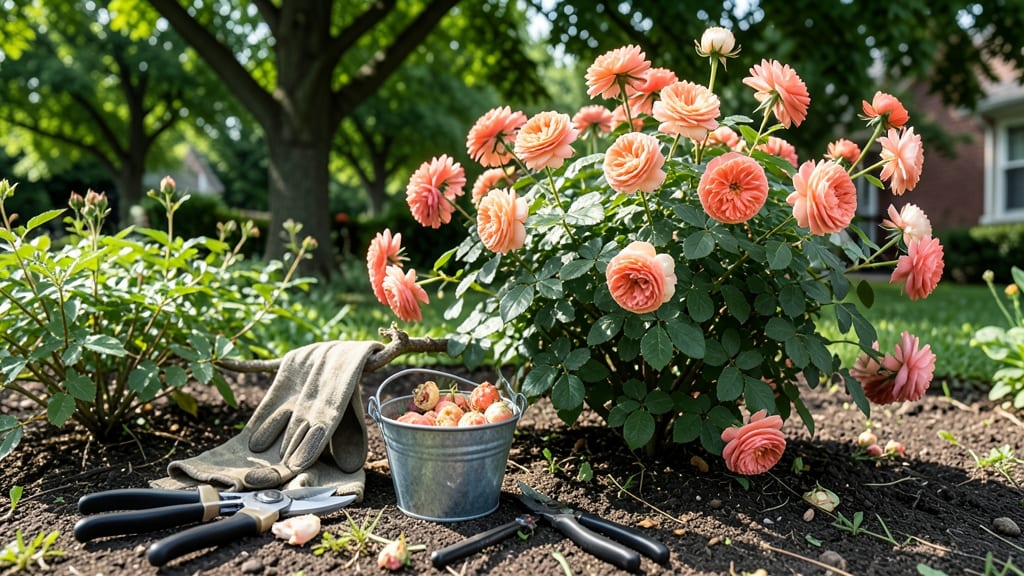
You’ll need just three simple tools: sharp pruners, clean gloves, and a small bucket for trimmings. Timing matters too—wait until blooms fade completely but before seed pods form.
A quick pinch above a leaf with five leaflets (the fifth leaflet tells you it’s ready) triggers new buds to form in record time.
Done correctly, you’ll see new blooms in 4-6 weeks, with roses staying bushier and healthier. The key is avoiding over-pruning—never cut into old wood, and always leave at least three strong canes for structure. My bushes now produce 50% more flowers than before I mastered this technique.
Works for any floribunda variety, from classic ‘Iceberg’ to ‘Julia Child.’ The same method extends blooming season in cooler climates too. Let’s get those roses back in full glory—without the guesswork.
📚 In This Guide
- What you need
- Instructions
- Tips and common mistakes
- Wrapping up and next steps
What you need
- ● Pruning shears or secateurs – Sharp, clean bypass pruners (4-6 inch blades) for precise cuts. Disinfect with rubbing alcohol before and after use to prevent disease spread.
- ● Gloves – Heavy-duty gardening gloves (leather or reinforced) to protect against thorns and dirt.
- ● Disposable pruning bags or bucket – A 5-gallon bucket or biodegradable bags (10-20) to collect spent blooms and debris.
- ● Rake or small broom – A leaf rake or hand broom to clear fallen petals and debris from the base.
- ● Water and mild soap – For cleaning tools post-pruning.
- ● Loppers – For thicker stems (if your floribundas have woody growth beyond shears’ reach).
- ● Pruning saw – Only needed for very thick, stubborn stems (rare in floribundas).
- ● Rose fertilizer – A balanced 10-10-10 or bloom booster (like 5-10-5) to revive the plant post-deadheading.
- ● Mulch – Shredded bark or compost (2-3 inches) to retain moisture and protect roots.
- ● Knee pad or stool – For comfort if your roses are tall or ground-level pruning is tough.
Step-by-step instructions for deadheading floribunda roses
Here's how to extend your blooms all season—no fancy tools required.
✂️ Step 1: Identify the Right Blooms to Deadhead
Floribunda roses bloom in clusters, so focus on spent blooms that have lost their petals or turned brown. Look for blooms that have fully opened and are starting to wilt—these are ready for removal. I always check in the morning when blooms are freshest; it's easier to spot the ones that need attention.
Leave behind any buds that haven't opened yet. These will develop into new blooms if you give them time. The goal is to remove only the flowers that have completely finished their cycle, not the ones still holding potential. You'll know you're doing it right when you see fresh, green buds still tightly closed on the stems.
✂️ Step 2: Use the Proper Cutting Technique
Grab your pruners and make a clean cut just above a set of five healthy leaves or a leaf bud. This is where new growth will emerge. I like to make the cut at a 45-degree angle—this helps water run off the stem instead of pooling and causing rot. Avoid cutting too close to the stem base or you might remove future blooms.
If you're unsure where to cut, look for the small bump where the flower stem meets the main branch. This is your target spot. Never cut blindly—always find that leaf set or bud first. A sharp cut also reduces stress on the plant, so take your time to get it right.
✂️ Step 3: Clean Up and Encourage New Growth
After removing the spent blooms, take a moment to inspect the plant for any dead or diseased branches. Snip those off too, cutting back to healthy wood. This keeps your rose bush tidy and prevents pests from moving in. I always toss the cuttings into the trash—not the compost—since diseased material can spread.
Once you're done, give the plant a light watering to help it recover. You'll notice within a week or two that new buds form where you made your cuts. This is your reward for deadheading! The more you do it, the more blooms you'll get throughout the season.
🌿 Step 4: Maintain a Regular Deadheading Schedule
For floribunda roses, deadhead every 5-7 days during peak bloom season to keep the plant producing flowers. Check your bushes regularly, especially after rain or wind, when blooms may wilt faster. I set a reminder on my phone to inspect them every week—it's easy to forget in the hustle of summer.
In late summer, slow down on deadheading. This allows the plant to focus on developing next year's blooms instead of putting all its energy into new flowers. By early fall, you can stop completely and let the plant rest. You'll thank yourself next spring when your roses burst back to life.
Tips & tricks for perfect floribunda rose deadheading
These simple strategies will help you keep your floribunda roses blooming beautifully all season long.
Timing Tip: Early morning is the best time to deadhead—roses are most hydrated then, and you can easily spot wilted blooms before the heat of the day. If you must deadhead later, do it in the evening to avoid stressing the plant during peak sunlight. I've found that deadheading in the morning also helps prevent pests from being attracted to the spent flowers.
Tool Technique: If you don't have pruners, use clean, sharp scissors or even your fingers for small blooms. The key is always to make clean cuts at the right spot—just above a set of five leaves or a leaf bud. A dull tool will crush stems and invite disease, so if your tools aren't sharp, take a moment to sharpen them before starting. I keep a small pocket knife in my gardening bag just for this purpose.
Seasonal Strategy: During peak bloom season, stick to the 5-7 day schedule mentioned in the instructions. But in late summer, reduce to every 10-14 days to let the plant focus on next year's blooms. I mark my calendar with reminders—some weeks I get so busy I'd forget entirely! The transition to less frequent deadheading in late summer is crucial for winter hardiness.
Visual Cue: When checking for spent blooms, look for petals that have fallen to the ground around the plant—that's your first sign it's time to deadhead. Also watch for blooms that have lost their vibrant color and appear papery or brown. Fresh, tightly closed buds should remain untouched—they're your plant's promise of future blooms.
Pro Tips for Deadhead Floribunda Roses
- These simple strategies will help you keep your floribunda roses blooming beautifully all season long.
- Timing Tip: Early morning is the best time to deadhead—roses are most hydrated then, and you can easily spot wilted blooms before the heat of the day.
- Tool Technique: If you don't have pruners, use clean, sharp scissors or even your fingers for small blooms.
Frequently asked questions
Got questions about deadheading your floribunda roses? You’re not alone—this task can feel tricky at first! Below, we’ve answered the most common questions to help you prune like a pro and keep those blooms coming all season.
What’s the best time of day to deadhead floribunda roses?
The best time is early morning when the blooms are fresh and dew is still present. This keeps your tools clean and makes it easier to spot spent flowers. Avoid midday heat, which can stress the plant. If you must prune later, do it in the evening to prevent shock.
How often should I deadhead floribunda roses?
Deadhead regularly—ideally every 2–3 days during peak bloom season (spring to fall). For floribundas, which bloom in clusters, focus on removing entire spent flower heads (including the small stem below them) to encourage new growth. Over time, this keeps energy flowing to fresh blooms!
What if I accidentally cut into a canes or leave stubs too long?
Don’t panic! If you nick a cane, sterilize your tools with rubbing alcohol to prevent disease. For stubs, trim them back to the nearest outward-facing bud (about ¼ inch above it). Avoid leaving long stems—they can attract pests or rot. A little precision goes a long way!
Can I deadhead floribunda roses in winter?
Nope! Wait until spring (after the last frost) to prune. Winter deadheading stresses the plant and exposes it to cold damage. Instead, focus on cleaning up debris and removing dead canes in early spring to prep for new growth. Patience pays off!
What if my floribunda roses stop blooming after deadheading?
Several factors could be at play:
- Over-pruning: Avoid cutting back more than ⅓ of the plant in one session.
- Lack of nutrients: Feed with a balanced rose fertilizer (10-10-10) in early spring.
- Pests/disease: Check for aphids, black spot, or powdery mildew.
- Age of the plant: Older roses may bloom less—consider rejuvenation pruning.
Wrapping up and next steps
Deadheading your floribunda roses doesn’t have to be intimidating—just a few simple steps can transform your garden into a bloom-filled paradise! 🌸 By removing spent blooms regularly, you encourage healthier growth, more vibrant flowers, and a tidier appearance.
Now that you’re armed with the right techniques, grab those pruners and get ready to enjoy longer, lusher blooms all season long.
Ready to take your rose care to the next level? Try experimenting with fertilizing or mulching to give your floribundas an extra boost—your garden will thank you!