
Watering
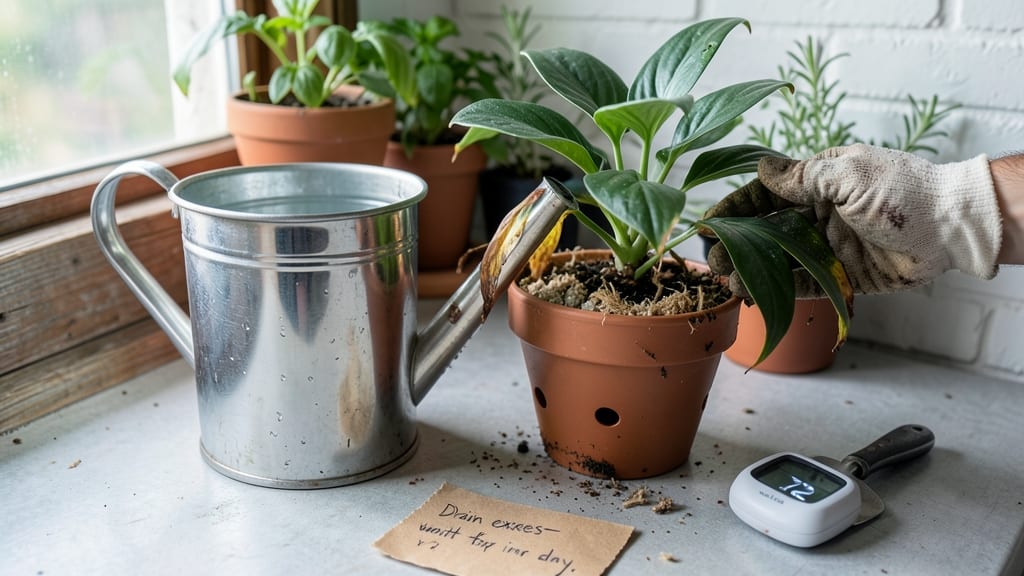
Your peace lily’s drooping leaves and mushy stems aren’t a death sentence—just a cry for help. 🌱 Here’s how to fix an overwatered peace lily before it’s too late. I’ve nursed back more overwatered peace lilies than I can count, and I’ll show you exactly how to revive those roots.
First, check the soil—if it’s soggy or smells foul, your plant’s roots are drowning. Gently remove it from its pot (yes, even if it’s heavy) and inspect the roots: healthy ones are firm and white, while rotten ones are brown and mushy.
Snip off the bad bits with clean scissors, then repot in fresh, well-draining soil. This isn’t just a quick fix; it’s the first step to saving your plant.
Once repotted, hold off on watering for 3-5 days—let the soil dry out completely before giving it even a sip. Place your peace lily in bright, indirect light (no harsh sun) and keep the humidity up with a pebble tray or occasional misting.
Within a few weeks, you’ll see new growth pushing through, and those yellow leaves will start to fall away naturally.
Here’s the secret to keeping it thriving: water only when the top inch of soil feels dry, and always use a pot with drainage holes. Peace lilies are tougher than they look—once you’ve fixed the overwatering, they’ll reward you with glossy leaves and lush growth for years.
Trust me, your plant will come back stronger than ever.
Root of the Problem
Overwatering your peace lily (Spathiphyllum) isn’t just a minor oversight—it’s a silent killer that can suffocate its roots and leave your plant gasping for air.
But why does this happen in the first place? Let’s break down the science behind it so you can spot the warning signs before it’s too late.
Peace lilies thrive in consistently moist—but not soggy—soil. When you water too frequently (or too heavily), the roots become waterlogged, cutting off their oxygen supply. Here’s why this is a disaster: - Oxygen deprivation: Roots need oxygen to respire (yes, they "breathe"!).
When soil stays saturated, oxygen is displaced by water, and roots suffocate—leading to root rot (Phytophthora or Pythium fungi often take advantage of this). - Nutrient starvation: Overwatered soil washes away essential nutrients like nitrogen, phosphorus, and potassium, leaving your plant malnourished despite its thirsty appearance. - Poor drainage: If your pot lacks drainage holes or you’re using dense, compacted soil (like pure clay), water pools at the bottom, creating a toxic anaerobic environment for roots.
💡 Pro Tip: Stick your finger 1-2 inches into the soil before watering. If it’s damp, wait. If it’s bone-dry, you’ve likely been underwatering—but if it’s squishy, that’s your red flag.
Not all pots and soil mixes are created equal. If your peace lily’s home lacks proper drainage, water has nowhere to go but stagnate, turning the roots into a buffet for harmful microbes.
- Clogged drainage holes: Over time, soil particles, debris, or even mineral buildup can block holes, trapping water.
A quick test: Flip your pot upside down—if water drips slowly or not at all, it’s time to clean or repot. - Heavy or non-porous soil: Pure clay or dense potting mixes retain water like a sponge.
Peace lilies prefer well-aerated, chunky mixes (think peat moss, perlite, or orchid bark) that allow excess water to escape. - No tray or saucer: If water sits in a saucer for days, it seeps back into the pot, keeping roots soggy. Always empty excess water after 10-15 minutes.
✨ Quick Fix: Mix in orchid bark or perlite (20-30%) to lighten heavy soil and improve drainage instantly.
Your peace lily isn’t just reacting to water—it’s also responding to its surroundings. Humidity, temperature, and even light play a role in how quickly overwatering becomes a crisis.
- High humidity + poor airflow: Peace lilies love humidity (40-60% is ideal), but if the air is too damp (like in a steamy bathroom with no ventilation), water evaporates slower, keeping soil wet longer. Fungal root rot thrives in these conditions. - Low light + cold temps: In dim or chilly spots, plants metabolize slower, meaning they don’t dry out as quickly.
If you’re watering on a schedule (e.g., every 3 days) without adjusting for light/temperature, you’re overdoing it. - Seasonal changes: Winter slows growth, so your peace lily needs far less water than in spring/summer. Yet many people keep watering the same amount—leading to chronic sogginess.
🌡️ Temperature Check: Keep your peace lily in 65–80°F (18–27°C) with moderate humidity. A hygrometer helps track moisture levels in the air.
Peace lilies are master communicators, but many growers miss their SOS signals until it’s too late. Here’s what you’re probably overlooking:
| Symptom | What It Means | Action Needed |
|---|---|---|
| Yellowing leaves | Overwatering washes away nutrients or roots are rotting. | Check soil moisture; trim damaged leaves. |
| Brown, crispy edges | Often a sign of root stress (too wet or too dry). | Adjust watering; repot if roots are mushy. |
| Drooping (even when soil is wet) | Roots can’t absorb water due to rot or compaction. | Emergency drainage fix; trim rotten roots. |
| White, fuzzy growth | Powdery mildew or fungal infection from excess moisture. | Isolate the plant; treat with neem oil. |
🔥 Warning Sign: If your peace lily’s leaves yellow and fall off rapidly, it’s likely root rot—act fast before the whole plant collapses.
Not all water is created equal. Hard water (high in minerals like calcium and magnesium) or chlorinated tap water can compound overwatering problems.
- Mineral buildup: Over time, salts from hard water accumulate in the soil, disrupting nutrient uptake and making roots work harder to absorb moisture—leading to waterlogging.
- Chlorine shock: While chlorine evaporates quickly, it can still stress roots, making them more susceptible to rot when combined with poor drainage.
- Solution: Use filtered, rainwater, or distilled water, or let tap water sit out for 24 hours before watering to reduce chlorine.
💧 Easy Swap: Collect rainwater in a barrel or use a simple Brita filter to improve water quality.
Revive Your Peace Lily Now
Your peace lily is drooping, its leaves yellowing, or worse—it’s sitting in soggy soil that smells like a swamp? Don’t panic! With the right steps, you can nurse it back to health without losing it.
Below, we’ll tackle the most common signs of overwatering and match them with easy, actionable fixes. Plus, we’ll share pro tips to keep your plant thriving long-term.
Before diving into fixes, confirm the problem. Stick your finger 2 inches deep into the soil—if it’s damp or mushy, you’ve got overwatering. A quick sniff test can also help: does it smell sour or rotten? That’s a red flag.
What to do:
- 🔍 Assess the damage: Gently remove the plant from its pot and inspect the roots. Healthy roots are firm and white or light tan. Mushy, black, or slimy roots? Those need immediate attention.
- 🚿 Drain the excess: If the soil is waterlogged, place the pot in a shallow tray and let gravity do the work. Avoid shaking out the roots—this can cause more harm.
Peace lilies (Spathiphyllum) love moisture but hate soggy conditions. Here’s how to get it right:
🔥 Fix: The "Finger Test" Method
- ⏰ Wait until the top 1-2 inches of soil feel dry before watering again. Stick your finger in—if it’s damp, hold off!
- 💡 Pro Tip: Use a moisture meter for accuracy, especially if you’re forgetful.
These tools take the guesswork out of watering.
🍳 Fix: Improve Drainage
- 🛠️ Repot if needed: If the pot lacks drainage holes, transfer your peace lily to one with holes. No holes?
Poke some with a nail or drill. - 🌡️ Use the right soil mix: Amend heavy or compacted soil with perlite, orchid bark, or coconut coir (20-30%) to improve aeration. A well-draining mix prevents water from pooling.
👨🍳 Fix: Water Less, But Deeply
- 💧 Water thoroughly until it drains from the bottom, then empty the saucer.
Peace lilies prefer bottom-watering—place the pot in a tray of water for 10-15 minutes, then remove excess. - ✨ Prevention Tip: Group plants together to create a humid microclimate (they love 40-60% humidity), but avoid misting the leaves—this can lead to fungal issues.
If roots are rotting, prune them to save the plant. Here’s how:
🔪 Fix: Root Pruning 101
- 🧴 Sterilize your tools: Use sharp scissors or pruners dipped in rubbing alcohol to avoid spreading bacteria.
- 🌱 Cut away the bad: Snip off any black, mushy, or slimy roots.
Healthy roots should snap when bent—rotten ones will squish like overcooked noodles. - 💡 Pro Tip: Don’t trim more than 1/3 of the root system at once. Your peace lily will thank you!
🍃 Fix: Prune Yellow or Brown Leaves
- ✂️ Snip at the base: Use clean scissors to remove yellowed or crispy leaves. This redirects energy to new growth.
- 🌡️ Wait before fertilizing: Hold off on food until you see fresh, green leaves sprouting (usually 2-4 weeks).
Overwatering weakens your plant, making it more susceptible to pests and disease. Boost its recovery with:
💡 Fix: Light It Right
- 🌞 Move to bright, indirect light. Peace lilies thrive in low to medium light but avoid harsh sun (like a south-facing window).
- 🌿 Signs of too much light: Brown leaf tips. Too little? Leggy stems and pale leaves. Find the Goldilocks zone!
🌬️ Fix: Improve Air Circulation
- 💨 Place a small fan nearby (on low) to gently circulate air without stressing the plant. This prevents fungal growth and speeds up drying.
- 🚫 Avoid crowding: Give your peace lily some breathing room—don’t tuck it between other plants.
Recovery takes time, but consistency is key. Track your progress with this
Frequently asked questions
How do I know if my peace lily has root rot from overwatering?
Check the roots—healthy ones are firm and white, while rotten roots will be mushy, brown, or black and may smell foul. If you see white, fuzzy growth on the soil surface, that’s a fungal infection (like powdery mildew) from excess moisture. Gently remove the plant and inspect before deciding whether to trim the roots.
Can I save a peace lily with completely black stems?
If the stems are completely black and mushy, the plant is likely beyond saving. However, if only the roots are rotting, you can trim healthy stems and propagate them in fresh soil. Cut just above a leaf node, let the cutting dry for a day, then place it in water or moist soil—new roots should form in 2-4 weeks.
How often should I water a peace lily after fixing overwatering?
After recovery, wait until the top 1-2 inches of soil feel dry before watering again. In winter, reduce watering to every 7-10 days, while summer may require weekly watering. Always use a pot with drainage holes and empty saucers after 10-15 minutes to prevent soggy soil.
Will my peace lily grow back if I cut off all the yellow leaves?
Yes! Trimming yellow or brown leaves actually helps—it redirects energy to new growth. Use clean scissors to snip at the base, and avoid fertilizing until you see fresh green leaves (usually 2-4 weeks). Place the plant in bright, indirect light to encourage recovery.
Can I use hydrogen peroxide to treat overwatered peace lily roots?
Yes! Mix 1 part 3% hydrogen peroxide to 4 parts water and soak the roots for 5-10 minutes to kill fungi and bacteria. Afterward, repot in fresh, well-draining soil. This method works best for mild root rot—severe cases may still need pruning. Always sterilize tools before and after use.