
Watering
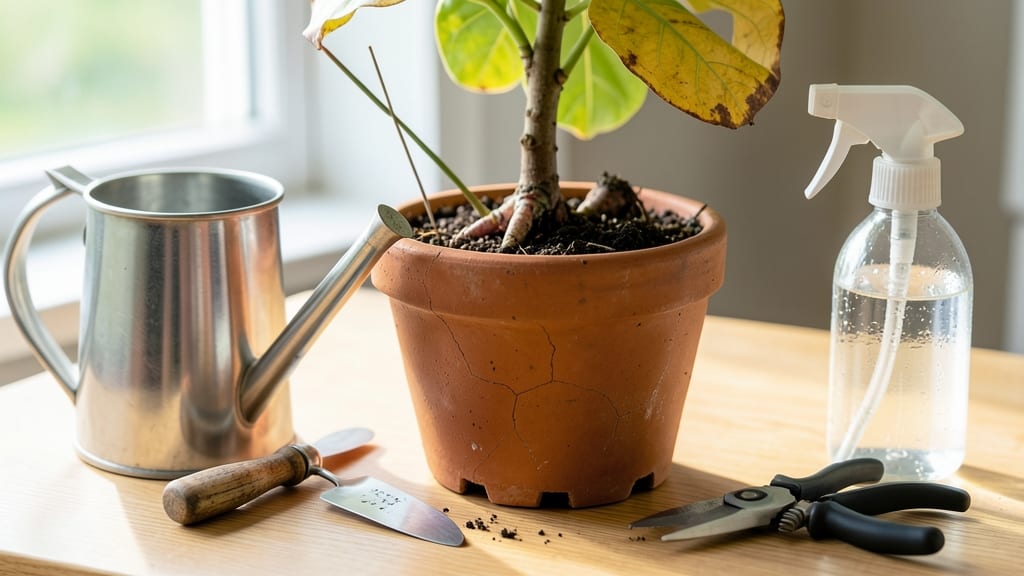
How to fix an overwatered fiddle leaf fig—your drooping leaves aren’t a death sentence, just a cry for help. 🌱 I've nursed back more root-rot victims than I'd like to admit, and the key starts with recognizing the signs: yellow leaves, mushy stems, or soil that smells like a swamp. The good news? With the right steps, you can revive even the most stressed plant.
First, stop watering immediately and gently remove the plant from its pot to inspect the roots. Healthy roots are firm and white, while rotten ones are black, slimy, and smell foul.
Trim away the damaged roots with clean scissors, then repot in fresh, well-draining soil and a pot with drainage holes. This isn't just about saving the plant—it's about giving it a fresh start.
Recovery takes patience, but within 2-4 weeks, you'll see new growth signaling success. Keep the soil lightly moist (not soggy) and place the plant in bright, indirect light. The transformation is worth it—your fiddle leaf fig will bounce back with lush, vibrant leaves that make all the effort worthwhile.
Once recovered, adjust your watering habits: only water when the top 1-2 inches of soil are dry, and always use a pot with drainage. Think of this as a lesson in balance—your plant will thrive when you match its needs, not your schedule.
Trust the process, and you'll both learn something valuable.
Root Causes Of Overwatering
Overwatering your fiddle leaf fig (Ficus lyrata) isn’t just a mistake—it’s often the result of well-meaning habits that clash with the plant’s tropical roots. Understanding why this happens is the first step to preventing it.
Let’s break down the science and common pitfalls that turn your green thumb into a soggy mess.
🚨 The Problem: Fiddle leaf figs hate "wet feet," but many growers unknowingly trap moisture in their pots. Without proper drainage, water pools at the roots, starving them of oxygen and inviting fungal infections like Phytophthora or Pythium.
- Why It Happens: - Clogged Drainage Holes: Over time, soil particles, roots, or debris block holes, creating a waterlogged barrier. - Wrong Pot Material: Terracotta breathes (evaporates moisture), but plastic or glazed pots trap humidity like a sauna. - Compacted Soil: Dense, heavy soils (like garden soil) don’t allow excess water to escape, leading to saturation. - Science Behind It: Roots respire aerobically—they need oxygen to metabolize sugars.
When submerged, they switch to anaerobic respiration, producing toxic ethanol and hydrogen sulfide, which rot the roots faster than a spoiled milk carton.
💦 The Problem: "When in doubt, water it out" is a mantra for many plant parents—but fiddle leaf figs thrive on drought tolerance, not hydration parties.
- Why It Happens: - Ignoring Soil Dryness: Sticking your finger in the soil (1–2 inches deep) is the gold standard. If it’s damp, wait. Many people water on a rigid schedule (e.g., every Tuesday) instead of checking moisture levels. - Mistaking Thirst for Hunger: Drooping leaves?
Often a sign of underwatering, not overwatering. Fiddle leaf figs wilt to conserve water—like a camel’s hump, but less cute. - Overcompensating After Drought: If you’ve underwatered before, you might overcorrect by drowning the roots.
Think of it like eating a whole pizza after a salad—your plant’s stomach (roots) can’t handle the feast.
🌡️ The Problem: High humidity slows evaporation, making soil stay wet longer. If your home is humid (e.g., bathrooms, kitchens, or tropical climates), the roots suffocate faster.
- Why It Happens: - Humid Environments: Humidity above 60% reduces transpiration (water loss through leaves), so the soil stays soggy for days. - Grouping Plants Too Close: Transpiration from neighboring plants increases local humidity, creating a micro-climate that traps moisture. - Lack of Airflow: Stagnant air = stagnant moisture.
Poor ventilation lets humidity build up around the pot, mimicking a rainforest—except your fiddle leaf fig isn’t a jungle dweller; it’s from West African woodlands with dry seasons.
🧵 The Problem: Not all soils are created equal. Heavy, clay-based mixes or peat-heavy blends hold water like a sponge, choking roots.
- Why It Happens: - Peat Overload: Pure peat retains water for weeks, while fiddle leaf figs prefer "fast-draining" mixes.
Think of it like wearing socks made of water—your feet (roots) get pruned. - Lack of Perlite/Pumice: These porous additives create air pockets, but skipping them turns soil into a swamp. - Using Garden Soil: Outdoor soil compacts easily and lacks the aeration roots crave.
It’s like paving your garden—roots can’t breathe.
❄️ The Problem: Winter slows growth, but many people water more in cold months, thinking the plant is "thirsty." Wrong.
- Why It Happens: - Reduced Evaporation: Cool air = slower water loss.
A pot that dries in 3 days in summer might take 2 weeks in winter. - Heating Systems Dry Air: Indoor heaters suck moisture from the air, but the soil stays damp longer because the plant isn’t transpiring as much. - Light Deprivation: Less sunlight = less photosynthesis = less water uptake.
The roots still drink, but the plant isn’t "eating" enough to justify heavy watering.
🚪 The Problem: Roots need space to grow away from water. Crowded pots force roots to circle and suffocate.
- Why It Happens: - Pot Too Small: Roots outgrow the container, leading to root-bound stress and poor drainage. - No Room for Expansion: Fiddle leaf figs grow fast—a 6-inch pot might be maxed out in a year.
Roots compete for oxygen, and water pools where it shouldn’t. - Repotting Neglect: Skipping repots every 1–2 years means roots become a tangled mess, trapping moisture like a wet towel.
Overwatering is rarely about one mistake; it’s a chain reaction of drainage fails, schedule missteps, and environmental mismatches. The good news? Once you spot the root causes (pun intended), fixing them is easier than teaching an old plant new tricks.
Next up: how to rescue those soggy roots before they throw in the towel. 🌱
Revive Your Fiddle Leaf Fig
Now that you’ve identified the signs of overwatering—yellowing leaves, mushy stems, or that dreaded foul odor—it’s time to take action. The good news? With the right steps, your fiddle leaf fig (Ficus lyrata) can bounce back to its lush, healthy glory.
Below, we’ll break down how to fix overwatered fiddle leaf fig based on the root cause, plus prevention tips to keep your plant thriving long-term.
Cause: Overwatering without proper drainage or recovery time. Fix: Halt watering and assess the damage.
- 🚰 Cease Watering Completely
- Stop adding water until the soil is dry to the touch. Overwatering creates anaerobic conditions, suffocating roots. Let nature take its course—your plant needs time to recover.
- 🪴 Check the Roots (Gently!) - Remove the plant from its pot and inspect the roots. Healthy roots are firm and white, while overwatered roots turn mushy, brown, or black. - ⚠️ Warning: If roots smell rotten or crumble at the touch, they’re beyond saving.
Trim the bad ones with sterilized scissors (see Stage 2 for details).
- 💨 Improve Airflow & Light
- Move your fiddle leaf fig to a bright, indirect light spot (no direct sun yet—it’s still stressed).
- Increase airflow by placing a small fan nearby (but not too close!) to help the soil dry faster.
Cause: Root rot or severe wilting from prolonged soggy soil. Fix: Trim damaged foliage and repot in fresh, well-draining mix.
- 🌿 Prune Yellow or Mushy Leaves
- Snip off any leaves that are yellow, brown, or mushy at the base. This redirects energy to healthier growth.
- Pro Tip: 💡 Use clean, sharp scissors to avoid tearing the stem.
- 🌱 Trim Rotten Roots (If Present) - If roots are rotted, rinse them gently under lukewarm water to remove old soil. - Cut away black, mushy roots with sterilized scissors.
Keep only firm, white roots. - ✨ Prevention: 🌡️ After trimming, dip healthy roots in a fungicide solution (like hydrogen peroxide at 3%) for 10 minutes to prevent future infections.
- 🏺 Repot in Fresh, Well-Draining Soil
- Choose a pot 1-2 inches larger than the current one (only if roots are severely damaged).
- Use a fast-draining mix: Combine 50% potting soil, 30% perlite, and 20% orchid bark or coco coir.
- 🔥 Warning: Avoid heavy garden soil—it retains too much moisture!
Cause: Poor watering habits or lack of drainage. Fix: Establish a drought-tolerant care routine.
- 📅 Water Only When Soil is Dry - Stick your finger 1-2 inches into the soil.
Water only when the top 50% is bone-dry (usually every 2-3 weeks in winter, weekly in summer). - 🎯 Pro Tip: Use the "knuckle test"—if your knuckle feels dry, it’s time to water.
- ⚡ Use the Right Pot & Drainage
- Ensure your pot has drainage holes (if not, drill them!).
- Place a saucer underneath to catch excess water—but empty it after 10 minutes to prevent root rot.
- 🌡️ Monitor Humidity & Temperature
- Fiddle leaf figs love 40-60% humidity. Use a humidifier or place the pot on a tray of pebbles with water (ensure the pot isn’t sitting in water).
- Keep temps between 65-80°F (18-27°C)—avoid cold drafts or AC vents.
Once your fiddle leaf fig recovers, keep these habits to avoid overwatering again:
- 🌱 Use the "Finger Test" before watering—never on a schedule.
- 🏺 Upgrade pots gradually—smaller pots = less soil to dry out.
- 🌿 Fertilize lightly (only in spring/summer) with a balanced liquid fertilizer (diluted to half-strength).
- 🚫 Avoid misting leaves—it increases humidity around foliage but doesn’t help roots dry out.
- 📅 Track your watering with a plant journal or phone reminder.
Final Thought: 🌟 Recovery takes 4-8 weeks, but with patience and the right adjustments, your fiddle leaf fig will thrive again. Stay consistent, and soon you’ll be admiring those iconic, glossy leaves!
Frequently asked questions
How do I know if my fiddle leaf fig is overwatered?
Check for these telltale signs: yellowing leaves (especially lower ones), mushy stems, soil that smells foul, or roots that appear black and slimy. If the leaves feel soft or droop even when the soil is wet, your plant is definitely suffering from overwatering. Don’t wait—act fast to prevent root rot.
Can I save a fiddle leaf fig with root rot?
Yes, but you’ll need to act quickly! Trim away all black, mushy roots with sterilized scissors, then repot in fresh, well-draining soil. For extra protection, dip the healthy roots in a 3% hydrogen peroxide solution for 10 minutes before repotting. Recovery takes 4-6 weeks, but many plants bounce back with proper care.
What’s the best soil mix to prevent overwatering?
Use a fast-draining blend like 50% potting soil, 30% perlite, and 20% orchid bark or coco coir. This mix ensures excess water drains quickly while still holding enough moisture for roots. Avoid heavy garden soil or peat-heavy mixes—they trap moisture and suffocate roots.
How often should I water my fiddle leaf fig after recovery?
Once recovered, water only when the top 1-2 inches of soil are completely dry. In summer, this might be weekly, but in winter, it could stretch to every 2-3 weeks. Always check with your finger—if it’s damp, wait longer. Consistency is key!
Why does my fiddle leaf fig keep getting overwatered?
Common mistakes include watering on a schedule (instead of checking soil moisture), using pots without drainage holes, or ignoring environmental factors like humidity. Fiddle leaf figs thrive in 40-60% humidity—if your home is too humid, the soil stays wet longer. Adjust your routine and pot setup to match the plant’s needs.