
Blooming
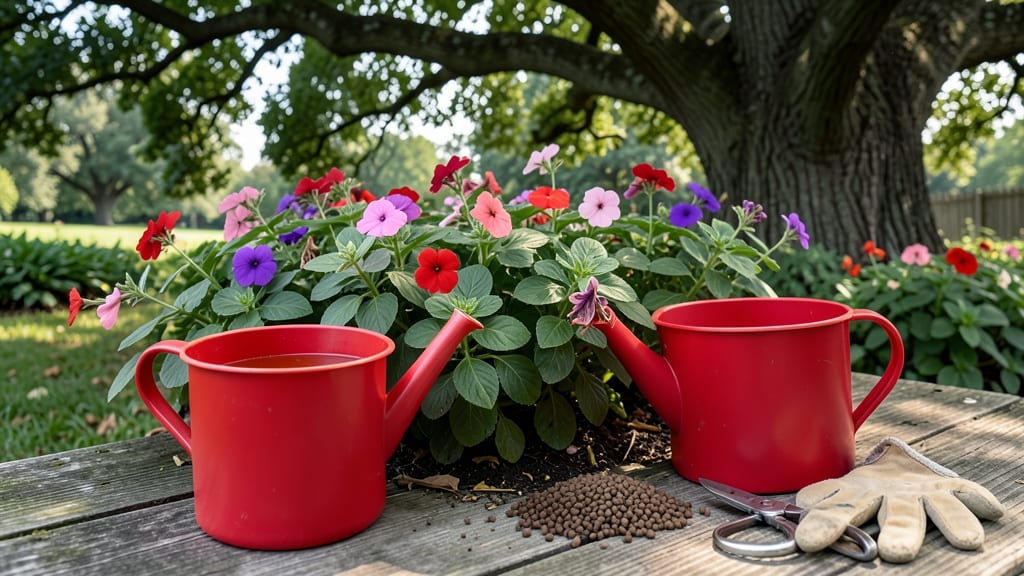
How to get impatiens to bloom—here’s how to turn those lush green walls into nonstop floral displays. 🌸 I’ve seen shade-loving impatiens go from vibrant blooms to stubborn foliage (and back again), and the fix starts with two common mistakes. The first is sunlight: impatiens need bright, indirect light for at least 4-6 hours daily—not deep shade. My first batch sat under a tree, and the blooms vanished. Then I moved them to a south-facing window (or under a sheer curtain), and within weeks, flowers exploded. Pruning is the second secret: snip spent blooms and leggy stems back to a leaf node to force fresh growth.
Once you’ve got the light right, fertilize lightly with balanced 10-10-10 every 4-6 weeks (overdoing it = more leaves, fewer blooms). Deadhead daily, and you’ll see new buds in 7-10 days. The payoff? Nonstop blooms from spring to frost—no more green walls, just a floral waterfall.
This works for both New Guinea impatiens (tolerates more sun) and classic busy Lizzie types. The key is consistency: light, pruning, and patience. Your impatiens will thank you with color that lasts all season.
📚 In This Guide
- What you need
- Instructions
- Tips and common mistakes
- Wrapping up and next steps
What you need
- ● Impatiens plants: Healthy, disease-free seedlings or mature plants (choose varieties like Impatiens walleriana or Impatiens new guinea for best results).
- ● Well-draining potting mix: 10–15 gallons (or enough to fill your containers). Opt for a blend with perlite or vermiculite (20–30% by volume) to prevent root rot.
- ● Containers: Hang baskets (12–18 inches in diameter) for trailing varieties.
- ● Window boxes or pots (10–12 inches wide) for bushier types.
- ● Drainage holes are a must—no exceptions!
- ● Balanced fertilizer: A 10-10-10 or 20-20-20 formula (1 tbsp per gallon of water) or a slow-release granular fertilizer (follow label rates).
- ● Pruning shears: Sharp, clean scissors or bypass pruners (sterilize with rubbing alcohol between cuts).
- ● Watering can or hose with a gentle nozzle: Avoid blasting leaves to prevent fungal issues.
- ○ Mulch (optional but helpful): 1–2 inches of pine bark fines or coco coir to retain moisture and regulate soil temp.
- ● Location: Partial shade (3–6 hours of morning sun or dappled sunlight). Avoid harsh afternoon rays in hot climates.
- ● Temperature: Ideal range: 60–75°F. Protect from frost (impatiens are tender perennials in most zones).
- ● Humidity: Aim for 50–70%. Mist plants lightly on dry days or use a pebble tray for extra moisture.
- ● Consistency: Commit to weekly pruning and biweekly feeding during the growing season (spring–fall).
Step-by-Step instructions for encouraging impatiens to bloom
Here’s how I transform leggy, non-flowering impatiens into vibrant, blooming powerhouses—no fancy tricks, just proven techniques.
☀️ Step 1: Adjust Light Exposure for Maximum Blooms
Impatiens thrive in partial shade (4-6 hours of morning sun or dappled light), but too little light causes them to stretch and produce fewer blooms. If your plants look leggy with sparse flowers, move them to a spot with bright, indirect light—think filtered sun through sheer curtains or a shady patio. Avoid deep shade, which starves the plant of the energy needed for blooming.
Watch for yellowing leaves or stems growing toward light—these are clear signs your impatiens need more brightness. If outdoors, a north-facing window or east-facing garden bed works best. For indoor plants, rotate them quarter-turn daily so they grow evenly toward the light source.
✂️ Step 2: Prune Strategically to Encourage New Growth
Pruning might seem counterintuitive, but cutting back leggy stems right above a leaf node (where leaves attach to the stem) triggers bushier growth and more flowers. Use clean, sharp scissors to snip stems at a 45-degree angle—this prevents water from pooling and causing rot. Remove only 1/3 of the plant at a time to avoid shocking it.
Focus on pruning long, bare stems first. You’ll see new side shoots emerge within 7-10 days—these are your future blooming branches. Avoid heavy pruning in late summer, as it cuts off potential fall blooms. Instead, do most pruning in early spring or after the first flush of flowers.
💧 Step 3: Master Watering for Consistent Blooms
Impatiens wilt dramatically when thirsty but bounce back fast—water deeply when the top inch of soil feels dry. Overwatering is worse, though, as it causes root rot and bud drop. Use a moisture meter or stick your finger in the soil to check before watering. In containers, water every 2-3 days in hot weather, but reduce to every 4-5 days in cooler months.
Mulch around the base with 2-3 inches of organic mulch (like shredded bark) to retain moisture and keep roots cool. Avoid wetting the leaves when watering—buds and flowers rot easily from excess moisture. If you notice drooping leaves that don’t perk up, you’re likely overwatering. Let the soil dry out slightly before watering again.
🌿 Step 4: Feed and Fertilize for Nonstop Color
Impatiens are heavy feeders, but too much fertilizer (especially high-nitrogen) leads to lush foliage and fewer blooms. Use a balanced, water-soluble fertilizer (like 10-10-10) every 2-3 weeks during the growing season. Dilute it to half-strength to avoid burning roots. Stop fertilizing in late summer to encourage blooming rather than leafy growth.
For organic options, mix 1 tablespoon of fish emulsion per gallon of water monthly. You’ll notice brighter flowers and sturdier stems within 2-3 weeks of consistent feeding. If your impatiens produce lots of leaves but few blooms, cut back on nitrogen-heavy fertilizers and switch to a phosphorus-rich formula (like 5-10-5) to promote flowering.
⏰ Step 5: Deadhead and Maintain for Extended Blooming
Deadheading—removing spent blooms—is the secret to long-lasting impatiens. Pinch or snip off faded flowers at the base 2-3 times a week to prevent seed formation. This redirects the plant’s energy into producing new buds instead of seeds. Use fingerpinching for small blooms or small pruners for larger clusters.
If you’re growing New Guinea impatiens (the larger, more tropical varieties), they often self-clean, but garden impatiens (like the classic red or pink varieties) need regular deadheading. You’ll see a fresh flush of blooms in 1-2 weeks after consistent deadheading. For a neater look, trim back any overly leggy stems while you’re deadheading—just snip above a leaf node.
Tips & tricks for getting impatiens to bloom
Here's what I've learned after years of transforming sad, leggy impatiens into flowering showstoppers—these are the details that make all the difference.
Light Optimization: The 4-6 hours of morning sun mentioned in Step 1 is ideal, but if your plants still look stretched, try a reflective surface like a white wall or mirror behind them to bounce more light onto the foliage. I've seen impatiens double their bloom production just by moving them 2-3 inches closer to the light source—don't underestimate how picky these plants are about brightness. For indoor growers, a grow light on a timer (12-14 hours daily) works wonders during winter months when natural light is scarce.
Pruning Precision: When you're pruning those leggy stems in Step 2, look for the healthiest leaf node just below where the stem starts to thin out. This is where new growth will emerge most vigorously. I always make my cuts at a 45-degree angle—not just straight across—and sterilize my scissors with rubbing alcohol between cuts to prevent disease transmission. The key is patience: new shoots will appear within 7-10 days, but resist the urge to prune again until you see those fresh growth points.
Watering Wisdom: The top inch of soil test in Step 3 is perfect, but here's the secret I didn't mention: water in the early morning so the foliage has all day to dry. Wet leaves overnight create perfect conditions for fungal diseases like powdery mildew, which can cause buds to drop before they even open. For container plants, I've found that using terracotta pots helps—they wick moisture away from roots faster than plastic, preventing that dreaded root rot. And if your impatiens are in the ground, consider adding a soaker hose buried 2-3 inches deep to deliver water right to the roots without wetting the leaves.
Fertilizer Fine-Tuning: That balanced 10-10-10 fertilizer in Step 4 is great, but here's what nobody tells you: impatiens actually prefer slightly acidic soil (pH 6.0-6.5). If your water is hard or alkaline, mix in 1 tablespoon of sulfur per gallon of water monthly to keep the pH in check. I've also noticed that foliar feeding (spraying diluted fertilizer on leaves) gives an extra boost—just use half-strength solution to avoid leaf burn. And remember: the "stop fertilizing in late summer" rule is crucial—this shift from growth to bloom mode is what triggers those final flushes of color.
Pro Tips for Get Impatiens To Bloom
- Here's what I've learned after years of transforming sad, leggy impatiens into flowering showstoppers—these are the details that make all the difference.
- I've seen impatiens double their bloom production just by moving them 2-3 inches closer to the light source—don't underestimate how picky these plants are about brightness.
- Pruning Precision: When you're pruning those leggy stems in Step 2, look for the healthiest leaf node just below where the stem starts to thin out.
Frequently asked questions
Got questions about coaxing those vibrant impatiens blooms? You’re not alone! Here are answers to the most common concerns—plus a few pro tips to keep your plants thriving.
Why won’t my impatiens bloom, even with lots of sunlight?
Impatiens need bright, indirect light (like morning sun or dappled shade)—too much direct sun can scorch them, while too little slows blooming. Check for overcrowding too: Pinch back leggy stems to encourage bushier growth and more flowers. If they’re still shy, a balanced fertilizer with phosphorus (the middle number on the label) can give blooms a boost!
How long does it take for impatiens to bloom after planting?
With ideal conditions (moist, well-draining soil, partial shade, and regular feeding), impatiens often bloom within 6–8 weeks of planting. Slow starters? They might need a little patience—especially if planted late in the season. For faster results, start seeds indoors 8–10 weeks before your last frost or choose established nursery plants that already have buds.
Do I need to prune impatiens to encourage more flowers?
Pruning is key
—it removes spent blooms (deadheading) and promotes new growth. Snip just above a leaf node (where new leaves sprout) to redirect energy into fresh flowers. For leggy plants, cut back 1/3 of the stem to encourage bushier, fuller growth. Pro tip: Do this in the morning so cuts heal by evening!
Can I grow impatiens in containers, and what’s the best way to keep them blooming?
Yes! Containers are perfect for impatiens—just use a well-draining mix with peat moss or coconut coir and a pot with drainage holes. Container hack: Fertilize every 2–3 weeks with a water-soluble bloom booster and rotate the pot weekly for even light exposure. Overwatering is a common pitfall—let the top inch of soil dry out between waterings to avoid root rot.
My impatiens have buds but no flowers—what’s wrong?
Bud drop or failure to open can stem from stress. Check for:
- Temperature swings: Impatiens thrive in 60–75°F—hotter or colder temps can shock them.
- Over/under-watering: Wilting or soggy soil both cause buds to abort.
- Nutrient imbalance: Too much nitrogen (first number on fertilizer) = leafy growth, not blooms. Switch to a high-phosphorus formula.
- Pests: Spider mites or aphids can stress plants—spray with neem oil if you spot them.
Wrapping up and next steps
Getting your impatiens to bloom is all about patience, proper care, and a little finesse—but trust us, the vibrant results are worth it! 🌸 With the right balance of sunlight, strategic pruning, and consistent maintenance, you’ll enjoy nonstop color all season long.
Start small, experiment with what works best for your space, and don’t hesitate to tweak your approach.
Ready to transform your garden into a blooming paradise? Pick one tip from this guide and try it this week! Whether it’s adjusting light exposure or giving those leggy stems a trim, every small step brings you closer to a garden bursting with cheerful impatiens. Happy gardening! 🌿✨