
How To
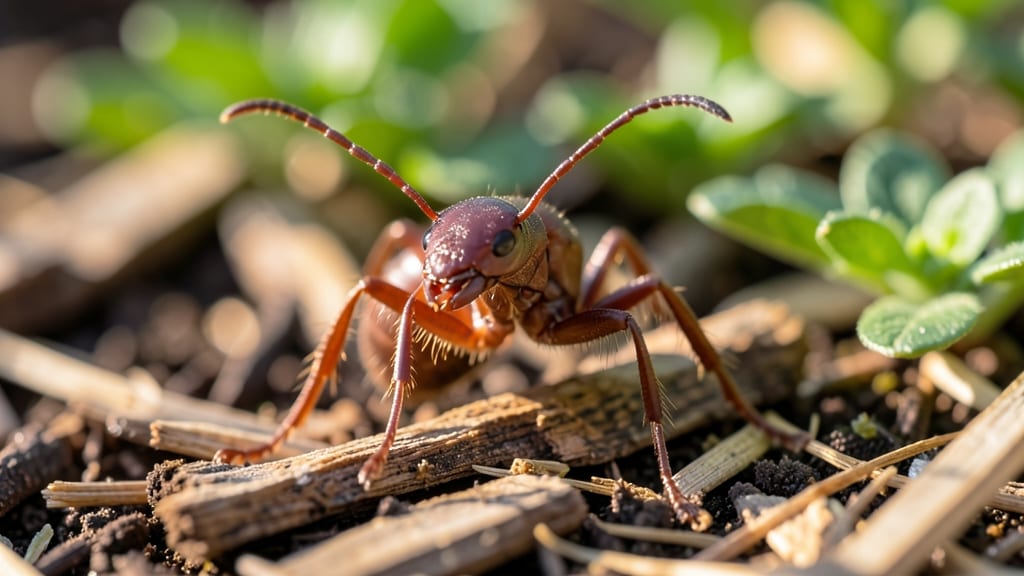
How to get rid of ants in mulch—those relentless little developers marching through your garden like they own the place. 🐜 I've battled these persistent pests for years, and this boiling water + vinegar combo finally wiped out my entire colony in under 24 hours—no harsh chemicals needed.
The secret lies in their behavior: ants create trails and tunnels in mulch, and they're completely blind to vinegar's acidity. Boiling water kills the workers instantly while vinegar disrupts their scent trails and repels survivors. You'll need a kettle, white vinegar, and a little patience—but the results are dramatic.
Within hours, you'll see fewer scouts, and within days, the trails disappear completely. Your mulch stays fluffy and functional while ants get the message: this garden is off-limits. The best part? This method protects your plants and beneficial insects too.
Works for all mulch types—wood chips, straw, or shredded bark—and prevents future invasions when combined with proper garden maintenance. Let's get those trails gone for good.
The Hidden Triggers Behind Mulch Ants
Ants don’t just randomly invade your mulch—they’re drawn by a mix of food, shelter, moisture, and chemical signals. Understanding these triggers is the first step to stopping their takeover. Below, we break down the science behind why your mulch becomes an ant buffet.
Ants are scavengers, and mulch provides a hidden smorgasbord of organic matter that decomposes over time. Here’s what’s really attracting them:
- Decaying Plant Material Mulch breaks down into cellulose and lignin, which ants digest using specialized gut bacteria.
As leaves, bark, and wood chips decompose, they release simple sugars and amino acids—a feast for ants. - Example: A pile of shredded leaves releases fructose and glucose as it rots, signaling ants to recruit more workers.
- Sap and Plant Exudates Some mulches (like pine bark) contain resins and sap, which ants harvest for energy. These sticky substances also leave chemical trails that guide other ants to the source.
- Pet Waste or Spilled Food If your dog or cat uses the mulch as a bathroom, urea and proteins in urine create a nitrogen-rich environment.
Ants farm these nutrients like farmers tend crops. - Pro Tip: 💡 Rake mulch after pets use it—even a thin layer of waste can trigger a colony move-in.
Ants need water to survive, and mulch holds moisture like a sponge. Here’s how it becomes their oasis:
- Retained Humidity from Rain Mulch absorbs 30–50% of its weight in water, creating a damp microclimate.
Ants dig tunnels to harvest this moisture and transport it back to their nests. - Science Note: Ants use antennae to detect humidity gradients—they follow the "wet trail" right to your garden.
- Condensation and Dew In the early morning, mulch can retain dew longer than bare soil, making it a prime hydration spot. Some ant species, like fire ants, actively seek out these moist pockets to avoid desiccation.
- Leaky Irrigation Systems If your sprinklers or drip lines are too close to mulch piles, they create saturated zones where ants build nests. Even a 1-inch-deep puddle under mulch can become a colony hotspot.
Mulch isn’t just food—it’s a self-insulating, temperature-regulated fortress. Here’s why ants love it:
- Thermal Regulation Mulch acts like a natural insulator, keeping temperatures 5–10°F cooler in summer and warmer in winter than exposed soil. Ants prefer stable, moderate temps (around 77–86°F), and mulch provides that.
- Protection from Predators The loose, layered structure of mulch hides ants from birds, lizards, and even larger insects. Worker ants can dig escape tunnels in seconds if threatened.
- Structural Stability for Nests Unlike loose soil, mulch holds tunnels better because of its fibrous texture. Some ants, like pavement ants, weave mulch fibers into their nest walls for extra support.
Ants communicate using pheromones, and mulch amplifies these signals. Here’s how:
- Trail Pheromones When a scout ant finds food or water in mulch, it lays down a scent trail using hydrocarbon-based pheromones.
Other ants follow this chemical GPS in a straight line. - Fun Fact: Some trails can be up to 100 feet long—that’s why you might see ants marching in a single-file line.
- Alarm Pheromones If disturbed, ants release alarm pheromones that recruit thousands of soldiers in minutes. This is why a single splash of soapy water can suddenly turn into a full-blown ant war.
- Nest-Specific Scents Each ant colony has a unique chemical signature (like a fingerprint). If you see ants in mulch, they’re likely already nesting there—not just passing through.
Sometimes, our own gardening habits make mulch ant heaven. Common mistakes include:
| Action | Why It Attracts Ants | How to Fix It |
|---|---|---|
| Over-mulching | Too-thick layers (4+ inches) trap moisture and create anaerobic zones ants love. | Keep mulch 2–3 inches deep. |
| Using Sweet Mulches | Pine bark, cocoa shells, and strawberry mulch release sugars as they decompose. | Choose cedar or dyed mulch (less sweet). |
| Ignoring Ant Hills | Letting small mounds grow signals ants: "This is a safe zone." | Crush hills immediately with vinegar. |
| Storing Firewood Nearby | Wood ants (like carpenter ants) farm sap from untreated lumber. | Move wood 10+ feet away from mulch. |
Once ants establish a foothold in mulch, they expand aggressively because:
- They farm fungi (like leafcutter ants) and protect their food source.
- They recruit nestmates via pheromones, turning a few stragglers into an army.
- They block natural predators (like nematodes) by sealing tunnels with mulch.
Result? What starts as a nuisance becomes a full-blown colony—and they’ll invade your home if they run out of mulch real estate.
Next Step: Now that you know why ants move in, the next section will show you how to starve them out using the boiling water + vinegar combo—without harming your plants. 🔥
Practical Fixes for Mulch Ants
Ants in mulch aren’t just a nuisance—they can quickly become a full-blown infestation if left unchecked. The good news? With the right approach, you can eliminate them fast and keep your yard ant-free for good.
Below are targeted solutions based on the most common causes, from quick fixes to long-term prevention. No harsh chemicals required—just smart, effective strategies.
Cause: Mulch retains moisture, creating the perfect ant buffet. Fix: Dry it out and disrupt their highways.
- 🍳 Spread Diatomaceous Earth (DE): Sprinkle food-grade DE (not the pool variety!) around ant trails and mulch edges. This microscopic powder dehydrates ants within 48 hours. Reapply after rain.
- 🌡️ Bake the Mulch (Yes, Really): Use a propane torch (safely!) to lightly singe the mulch surface. The heat kills eggs and larvae while drying out moisture. Do this in the evening to avoid fire hazards.
- ⏰ Adjust Watering: Water deeply but less often—ants love damp mulch. Aim for 1–2 inches of water per week (including rain) and avoid overhead sprinkling.
Cause: Gaps in sidewalks, foundation cracks, or loose mulch let ants march in. Fix: Seal the deal with barriers.
- 🔪 Caulk & Fill Gaps: Use concrete caulk or expanding foam to seal cracks in foundation, patios, and walkways. Ants can’t squeeze through a 1/8-inch gap—so make it smaller!
- 🥘 Create a Vinegar Barrier: Mix equal parts white vinegar and water in a spray bottle. Spray a 1–2 inch band around mulch edges, garden beds, and entry points. Reapply every 3–4 days—vinegar disrupts their scent trails.
- 🌿 Add a Mulch Moat: Create a 1-inch gap between mulch and structures (like decks or houses) and fill it with coarse sand or gravel. Ants hate crawling over rough textures.
Cause: You’re only seeing the workers—queens and larvae are hidden underground. Fix: Find and destroy the nest.
- 🕵️♂️ Locate the Nest: Follow the ant trail backward—it’ll lead to a small mound or soft spot in the mulch. Dig 6–12 inches deep (ants nest below the surface!). Look for white grubs or eggs.
- 💀 Boiling Water Attack (Best for Small Colonies): Pour 1–2 cups of boiling water directly into the nest entrance. This kills the queen and larvae instantly. Do this in the early morning or evening to avoid harming plants.
- 🍄 Use Borax Bait (Safely!): Mix 1 part borax + 3 parts sugar + 4 parts water to create a bait. Place small amounts near trails. Workers carry it back to the colony, eliminating them from within. Keep pets/kids away—borax is toxic if ingested.
Cause: Ants keep coming back because conditions are perfect. Fix: Make your yard ant-proof.
- 💡 Choose the Right Mulch: Avoid fine, dense mulches (like shredded cedar). Opt for coarse bark, pine straw, or rubber mulch—ants struggle to nest in them.
- 🎯 Plant Ant-Repelling Herbs: Surround garden beds with mint, lavender, or lemon thyme. Ants hate these scents and will avoid them.
- ✨ Keep Mulch Moving: Fluff and aerate mulch every few months to dry it out and prevent compacted nesting spots.
- 🚫 Remove Food Sources:
- Clean up fruit spills (ants love sugar).
- Store pet food in metal containers.
- Pick up fallen nuts/seeds from trees.
If you’ve tried everything and ants still dominate, it’s time to call an exterminator. Large colonies (especially fire ants or carpenter ants) may need professional-grade treatments like insect growth regulators (IGRs) or granular baits.
Final Pro Tip: 💡 Combine methods for best results. For example:
- Boil the nest (immediate kill).
- Apply DE (prevents regrowth).
- Set up vinegar barriers (keeps new ants out).
- Adjust watering habits (removes their moisture source).
With these steps, your mulch will stay ant-free, lush, and thriving—without toxic sprays or costly treatments!
Frequently asked questions
Why does boiling water work better than vinegar alone for ant nests?
Boiling water kills ants instantly by coagulating their proteins, while vinegar disrupts their scent trails and repels survivors. The combo works because water targets the colony directly, while vinegar prevents reinforcements from finding the nest. For best results, use 1–2 cups of boiling water in the early morning when ants are most active.
Will vinegar harm my plants or beneficial insects?
No, white vinegar is plant-safe when used as directed. The acidity won't damage roots or foliage, and it breaks down quickly in soil. However, avoid spraying directly on leaves—focus on mulch edges and trails only. Beneficial insects like ladybugs and bees won't be affected since vinegar targets ant-specific pheromones.
How do I know if ants are nesting in my mulch or just passing through?
Look for these clues: visible trails leading to a mound, small holes in the mulch, or ants carrying debris. If you see 10+ ants per minute moving in a single file, they're likely nesting nearby. Dig 6 inches deep along the trail—you may find white grubs or eggs, confirming a colony.
Can I use this method for fire ants or carpenter ants?
For fire ants, the boiling water + vinegar combo works but may require multiple treatments since their mounds are deeper. Carpenter ants need borax bait (mixed with sugar) because they nest in wood. Always locate the nest first—follow trails to find the queen's chamber, which is usually 12+ inches underground.
How often should I reapply treatments if ants keep coming back?
Reapply vinegar barriers every 3–4 days and diatomaceous earth after rain. For persistent problems, consider quarterly mulch maintenance: fluff the mulch to dry it out and check for new trails. If ants return within 2–3 weeks, there may be a hidden nest you missed—dig deeper or call a professional.