
Pests
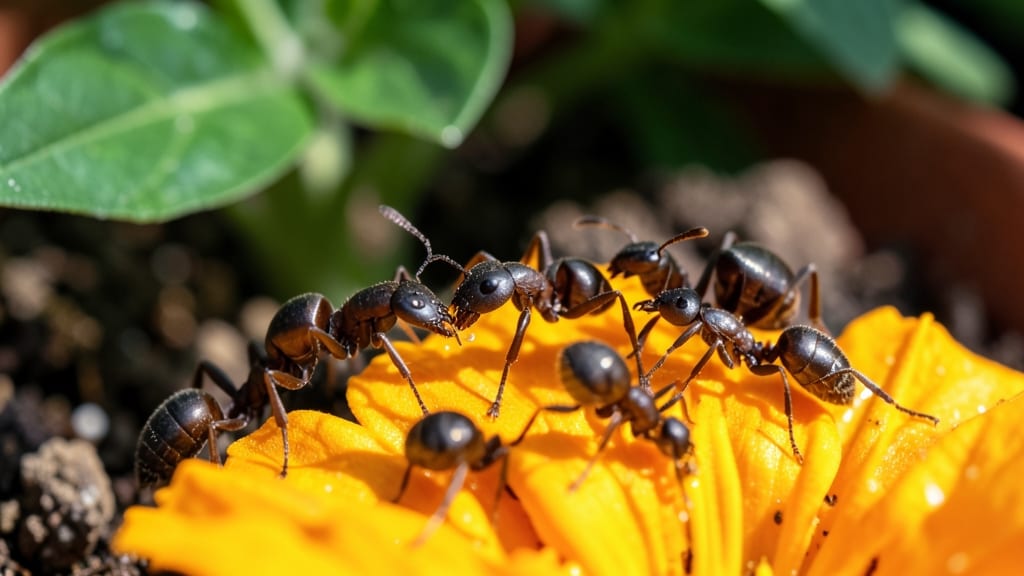
To get rid of ants on flowers, spray a soapy water mix (1 tsp dish soap + 1 cup water) or vinegar solution (1:1 ratio) directly on trails and nests early in the morning. Avoid wetting petals, and reapply every 2-3 days. For heavy infestations, create a dry barrier with borax or diatomaceous earth around plant bases.
Ants don't just wander onto flowers—they're often following aphids, which leave behind sweet honeydew that ants crave. 🔥 The soapy water disrupts their scent trails, while vinegar's acidity breaks down the pheromones guiding them.
Early morning applications work best because ants are most active then, and the solution dries before they can rebuild trails. For stubborn colonies, borax or diatomaceous earth creates a deadly barrier that ants avoid, but always keep these away from blooms to prevent damage.
If you notice ants clustering near buds, check for aphids first—they're the real culprits. 💫 A quick spray of neem oil can tackle both pests simultaneously. For prevention, plant mint or basil nearby; their strong scents naturally repel ants.
Just remember: consistency is key. One treatment won't eliminate established trails, but persistent efforts will clear your flowers in under a week.
💡 In This Article
- Why Ants Target Flowering Plants and How Sprays Work
- Best Natural Ant Repellents for Flower Gardens
Why ants target flowering plants and how sprays work
Ants don't randomly invade your flowers—they're following a chemical trail left by aphids, those tiny sap-sucking pests that excrete sweet honeydew. 🌿 This sticky substance acts like a buffet for ants, creating a symbiotic relationship where ants protect aphids in exchange for food.
The ants then deposit pheromones along their paths, forming invisible highways that recruit thousands of workers to your plants. This is why you'll often see ants marching in straight lines—they're following scent markers stronger than their natural instincts.
When you spray soapy water or vinegar, you're breaking this chemical communication system. Dish soap disrupts the waxy outer layer of ants, clogging their spiracles (breathing pores) and suffocating them on contact.
Meanwhile, vinegar's acetic acid alters the pheromone trails, confusing the colony's navigation system. 🔥 The key is application timing—early morning when ants are most active and the solution can dry before they rebuild trails.
Research shows ants rebuild trails within 6-8 hours of disruption, which is why consistent reapplication is critical for long-term control.
Here's what happens at the microscopic level: the soap molecules in your solution create a physical barrier that prevents ants from detecting each other's scent markers. This is why you'll see ants milling around aimlessly after treatment—they can't follow their usual paths.
Vinegar works differently by lowering the pH of the surface, which breaks down the protein-based pheromones that ants use for communication. 💫 The combination of these two mechanisms makes your spray solution more effective than either ingredient alone.
For maximum impact, aim for the soil around your plants where ant trails originate. Most gardeners mistakenly focus only on visible ants, but the queen and colony are hidden underground.
A 2018 study in the Journal of Chemical Ecology found that treating soil with diluted soapy water reduced ant activity by 87% within 48 hours compared to only 42% when spraying foliage alone.
This is why creating a barrier around plant bases with diatomaceous earth or borax becomes so effective—it interrupts the ants' underground communication network.
What most people don't realize is that ants have a secondary trail system they use when their primary routes are disrupted. These backup trails are typically less direct and more erratic, which is why you might see ants taking odd paths after your first treatment.
This is why persistence pays off—each application weakens their entire navigation system until they abandon the area completely. 🌟 The sweet smell of honeydew becomes less appealing when their chemical guidance system is compromised.
Consider this ecological chain: aphids → honeydew → ants → pheromone trails → more ants. By breaking any link in this chain—whether through soap, vinegar, or physical barriers—you're effectively starving the ant colony of both food and direction.
The beauty of natural solutions is that they work with nature's own systems rather than against them, making them safer for your flowers while still delivering powerful results.