
Propagation
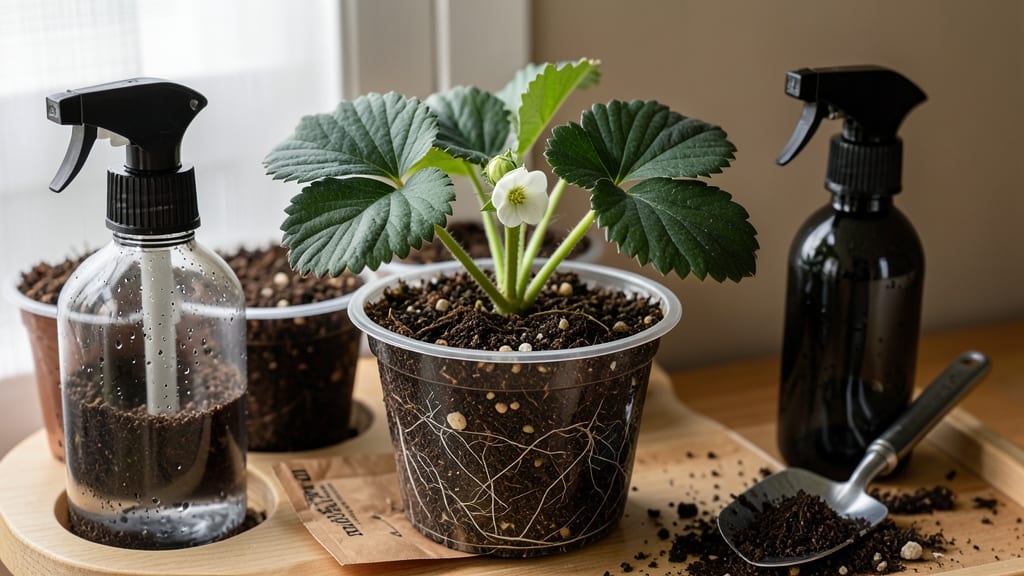
How to grow strawberries from a strawberry indoors—that first ripe berry from your windowsill changes everything. 🌱 I started with a single store-bought berry and now grow enough for jam year-round—no backyard needed. The secret isn't fancy setups but matching strawberries' natural habits to your indoor space.
You'll need just three things: a clear container (for roots to see light), moist paper towels (to keep roots happy), and a sunny window (or grow light).
Strawberries root surprisingly fast—within 10-14 days—if you keep them warm and moist. Most people overthink this part, but it's really about patience and consistent care.
By month three, you'll have plants producing berries that taste sweeter than anything store-bought. The plants stay compact, the berries stay plentiful, and you avoid the summer heat stress that ruins outdoor crops. Plus, you can grow varieties you'd never find at the store.
Works in apartments, greenhouses, or even kitchens—just adjust light and water as seasons change. Here's how to get started without the guesswork.
📚 In This Guide
- What you need
- Instructions
- Tips and common mistakes
- Wrapping up and next steps
What you need
- ● Strawberry plant: 1-2 everbearing or day-neutral varieties (e.g., 'Albion,' 'Seascape,' or 'Ozark Beauty')—look for organic, disease-free runners or bare-root plants.
- ● Container: 1 5-10 gallon pot (with drainage holes) or 2-3 smaller pots (6+ inches deep) per plant. Fabric grow bags work great too!
- ● Potting mix: 1 bag well-draining, sterile mix (e.g., 50% peat moss + 50% perlite or coconut coir). Avoid garden soil—it compacts and holds too much moisture.
- ● Drainage layer: Pebbles, gravel, or broken pottery (1-2 inches) for the bottom of the pot to prevent root rot.
- ● Grow lights: 1 full-spectrum LED grow light (12-16 watts per sq. ft.) or a sunlight window (south-facing, 6+ hours of light daily).
- ● Watering can or spray bottle: 1 with a gentle spray nozzle to avoid disturbing soil.
- ● Fertilizer: 1 balanced liquid fertilizer (e.g., 10-10-10 or fish emulsion) or slow-release granules (follow package rates).
- ○ Humidity tray (optional but helpful): 1 shallow tray + pebbles to create a mini greenhouse effect.
- ● Pruning shears: 1 pair for trimming runners or dead leaves.
- ● pH test kit: 1 to check soil pH (ideal: 5.5–6.5). Adjust with lime (to raise) or sulfur (to lower).
- ● Support stakes or trellis: 1-2 bamboo stakes or small cages to prop up plants as they grow.
- ● Misting bottle: 1 for humidity control (especially in dry climates).
- ● Thermometer/hygrometer: 1 to monitor temperature (60–75°F) and humidity (40–70%).
- ● Compost or worm castings: 1 small bag to boost soil nutrients naturally.
Step-by-Step instructions for growing strawberries from a strawberry indoors
Here’s how to transform a single strawberry into a thriving indoor plant with fruit year-round.
🌱 Step 1: Select and Prepare the Strawberry
Choose a firm, plump strawberry with a green leafy top—the cap should still be attached. Rinse it gently to remove any soil or debris, then pat dry with a paper towel. The key here is to avoid damaging the crown, where new growth emerges. I like to work near a bright window so I can monitor the process closely.
Place the strawberry in a shallow dish of lukewarm water, ensuring the stem (the green part) is submerged by about ½ inch. The roots will begin to sprout in 3-7 days, depending on your home’s warmth. Keep the water clean—change it every 2-3 days to prevent mold. You’ll know it’s working when tiny white roots appear along the stem.
🪴 Step 2: Pot Up the Rooted Strawberry
Once roots reach 1-2 inches long, it’s time to plant. Use a small pot (4-6 inches wide) with drainage holes—strawberries hate soggy roots. Fill the bottom 1 inch with well-draining potting mix (avoid garden soil; it compacts too easily). Gently nestle the rooted strawberry into the soil, burying the crown just below the soil surface—no deeper, or it’ll rot.
Press the soil lightly around the base to secure the plant, then water lightly until moisture reaches the bottom of the pot. Place the pot in a south-facing window or under a grow light for 12-14 hours daily. Strawberries need bright light to thrive, and leggy growth is your first sign of insufficient light. If leaves stretch toward the window, move the plant closer or add a grow light.
☀️ Step 3: Encourage Growth and Flowering
After 4-6 weeks, your strawberry should have 4-6 true leaves and a sturdy stem. This is when you’ll need to prune—pinch off any flowers that appear now. Yes, it’s frustrating, but early blooms won’t produce fruit and drain the plant’s energy. Focus on leaf growth first; strong foliage means better fruit later.
Water when the top inch of soil feels dry, but avoid soggy conditions. Overwatering leads to root rot, which kills the plant quickly. I use a spray bottle for the first few weeks to keep the soil evenly moist without oversaturating it. Once established, let the topsoil dry slightly between waterings—strawberries are surprisingly drought-tolerant once mature.
✂️ Step 4: Support and Harvest Fruit
When your plant is 6-8 inches tall and has 8-10 leaves, it’s ready for its first flowers. Remove the oldest leaves (the bottom ones) to improve airflow and reduce disease risk. Use your fingers to gently twist them off—no need for shears. The plant will redirect energy to new growth and fruit production.
Once flowers appear, do not remove them—these will develop into fruit in 4-6 weeks. Strawberries need consistent light and warmth (65-75°F) to set fruit. If your home runs cooler, a heat mat under the pot can help. Harvest when berries are fully red and slightly soft to the touch. Pinch them off with your fingers to avoid damaging the plant.
🌿 Step 5: Maintain for Year-Round Production
After harvesting, trim back any yellow or damaged leaves to keep the plant healthy. Strawberries are perennial, so with proper care, they’ll keep producing fruit for years. In late fall or winter, reduce watering slightly—just enough to keep the soil from drying out completely. They’ll go dormant but bounce back when light increases in spring.
Every 3-4 months, repot into a slightly larger container (6-8 inches) with fresh potting mix. This prevents root-bound stress and encourages more growth. Fertilize lightly with a balanced liquid fertilizer (10-10-10) every 4-6 weeks during growing season. Too much fertilizer leads to leafy growth at the expense of fruit—strawberries prioritize reproduction, not foliage.
Tips & tricks for growing strawberries from a strawberry indoors
Transforming a single strawberry into a thriving plant takes patience—but these insider tricks will help you avoid common pitfalls and maximize your chances of success.
Root Development: During the 3-7 day rooting phase in Step 1, place your dish in a warm spot (like near a heating vent) to speed up root growth. I've found that maintaining water temperature around 70-75°F encourages faster root development. Watch for roots reaching 1-2 inches—this is your cue to move to soil. If roots appear slower than expected, try changing the water more frequently (every 24 hours) to prevent stagnation.
Lighting Strategy: The 12-14 hours daily of light requirement in Step 2 is non-negotiable for fruiting. If your south-facing window doesn't provide enough light, supplement with a LED grow light placed 6-12 inches above the plant. I've seen dramatic differences when using full-spectrum LEDs—leggy growth disappears within days. Rotate your plant weekly to ensure even light exposure on all sides, preventing one-sided growth that weakens the stem.
Pruning Precision: When pinching off early flowers in Step 3, be ruthless but gentle. Use your thumbnail to make a clean break just above the leaf node where the flower stem meets the main stem. This redirection of energy is crucial—plants that produce fruit too early often become stressed and may even die back. I've had plants recover beautifully after this initial pruning, but those that kept their first flowers rarely produced subsequent fruit.
Harvesting Technique: For the 4-6 week fruit development in Step 4, harvest only when berries are fully red and slightly soft. Use your fingers to pinch the stem cleanly—never twist or pull, as this can damage the plant. I've found that harvesting in the morning gives berries their sweetest flavor, as they've had a full night to develop sugars. Store harvested berries in the fridge for up to 3 days to maintain freshness.
Pro Tips for Grow Strawberries From A Strawberry Indoors
- Transforming a single strawberry into a thriving plant takes patience—but these insider tricks will help you avoid common pitfalls and maximize your chances of success.
- Root Development: During the 3-7 day rooting phase in Step 1, place your dish in a warm spot (like near a heating vent) to speed up root growth.
- Lighting Strategy: The 12-14 hours daily of light requirement in Step 2 is non-negotiable for fruiting.
Frequently asked questions
Got questions about growing strawberries indoors? You’re not alone! Here are answers to the most common concerns to help you succeed with your year-round harvest.
Can I grow strawberries indoors from any store-bought strawberry?
Not all store-bought strawberries work—look for organic, unsprinkled, and preferably heirloom varieties (like Albion or Seascape). Conventionally grown strawberries are often treated with chemicals that inhibit rooting. Save seeds from organic berries or buy propagation-ready runners for best results!
How long does it take for indoor strawberries to produce fruit?
Patience is key! With proper care, you’ll see first leaves in 2–4 weeks and tiny flowers in 3–6 months. Fruit may take 6–12 months depending on light, temperature, and variety. Ever-bearing varieties (like Ostara) often fruit faster than June-bearing types.
Why aren’t my strawberry cuttings rooting?
Check these common issues:
- Low humidity: Try a humidity dome or mist leaves daily.
- Poor light: Move closer to your grow light (12+ hours/day).
- Overwatering: Keep soil moist but not soggy—rotting roots = no growth!
- Wrong variety: Some strawberries (like Chandler) root poorly.
What’s the best indoor setup for strawberries if I don’t have a grow light?
A sunny windowsill (south-facing) can work, but expect smaller yields. For better results:
- Use a LED grow light (12–16 inches above plants).
- Rotate plants weekly for even growth.
- Supplement with a reflective surface (like aluminum foil) to maximize light.
Can I grow strawberries indoors year-round, or do they need a dormant period?
Indoor strawberries don’t need dormancy—they’ll keep producing if you maintain:
- Consistent 18–24°C (65–75°F) temps.
- 12–16 hours of light daily.
- Regular fertilizing (every 4–6 weeks).
Wrapping up and next steps
Growing strawberries indoors is a rewarding journey that brings fresh, sweet berries right to your kitchen—no matter the season! 🌱 With the right container, light, and care, you can enjoy a thriving plant and a bountiful harvest in just a few months.
Start small, stay patient, and soon you’ll be savoring homegrown strawberries year-round.
Ready to take the next step? Share your progress with fellow plant lovers or explore advanced tips for maximizing your indoor harvest. Happy growing! 🍓✨