
How To
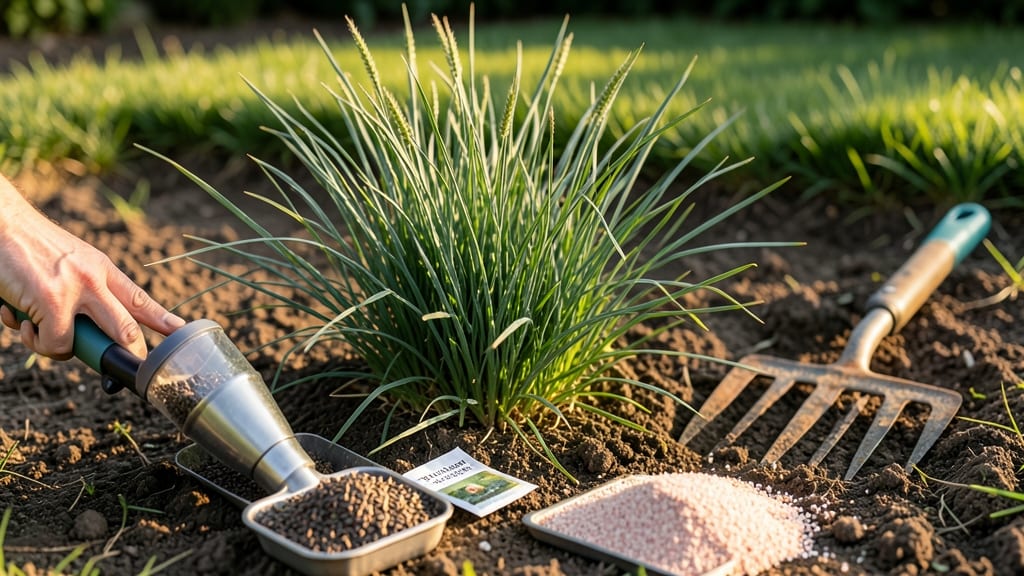
How to grow tall fescue grass starts with shade-tolerant seeds—this hardy grass thrives where others fail. 🌱 I’ve grown it in my own yard, and within 3 months, you’ll see a dense, green carpet that stays vibrant even when others brown. The key? Proper prep, the right timing, and a few simple tricks most gardeners miss. Start with loamy soil (amend with compost if yours is heavy clay or sandy) and rake until smooth. Plant seeds in early fall when temps hover around 60-70°F—they germinate faster and establish deeper roots before winter. Water lightly daily until sprouts appear (about 10-14 days), then taper to 1 inch per week once established. No more guessing—just lush, low-maintenance grass that outsmarts weeds and drought.
📚 In This Guide
- What you need
- Instructions
- Tips and common mistakes
- Wrapping up and next steps
What you need
- ● Tall fescue grass seed: 8–15 lbs per 1,000 sq ft (depending on seed blend and coverage goals). Look for high-quality, certified seed with at least 85% pure live seed (PLS).
- ● Lawn spreader: A broadcast or drop spreader (manual or push-type) for even distribution. Calibrate it first!
- ○ Soil test kit: To check pH and nutrient levels (ideal pH: 6.0–7.0). Optional but highly recommended!
- ● Compost or organic fertilizer: A balanced 10-10-10 or 16-4-8 fertilizer (1–2 lbs per 100 sq ft) or compost (2–3 inches spread evenly).
- ● Topsoil or compost: 1–2 inches of well-draining topsoil (if reseeded or patchy areas).
- ● Rake: A bow rake or stiff-bristle garden rake to level soil and remove debris.
- ● Water source: A hose with a sprinkler attachment or irrigation system (soaker hoses work great!).
- ○ Mulching fabric (optional): For erosion control in slopes or windy areas (use biodegradable options).
- ● Pre-emergent herbicide: Apply before seeding to prevent weeds (follow label instructions!).
- ● Lawn roller: Lightweight (50–100 lbs) to press seed into soil for better contact.
- ● Soil conditioners: Gypsum (for clay soil) or peat moss (for sandy soil) to improve texture.
- ● Seed starter fertilizer: A high-phosphorus fertilizer (e.g., 5-10-5) to boost germination.
- ● Weed barrier cloth: If seeding over bare soil with lots of weeds (lay down before adding seed).
Step-by-step instructions for establishing a tall fescue lawn
Here's the method I've used to create thick, drought-resistant lawns that stay green even in summer heat.
🌱 Step 1: Prepare the Soil for Optimal Seed Germination
Begin by testing your soil's pH—tall fescue thrives in 6.0-7.0 range. If your soil is too acidic, apply dolomitic lime according to soil test recommendations and let it work for at least 2-3 months before planting. For compacted or heavy clay soils, rent a core aerator to create ½-inch deep holes spaced 3 inches apart.
Remove all existing vegetation by hand or with a non-selective herbicide labeled for lawn establishment. Wait 10-14 days after herbicide application before proceeding. The goal is bare, level soil with no competing plants. Rake the surface to create a fine, crumbly texture—this helps seeds make direct contact with soil for faster germination.
💧 Step 2: Plant Seed at Proper Depth and Spacing
Use a broadcast spreader set to the recommended rate for your seed variety (typically 5-8 pounds per 1,000 sq ft). Walk in perpendicular directions for even coverage. For new lawns, I like to mix the seed with sand first—this prevents clumping and ensures seeds spread evenly. Lightly rake the area again to press seeds ¼ inch deep into the soil.
Don't cover seeds with more than ½ inch of soil—deeper planting requires more energy for seedlings to emerge. Water immediately after planting to settle seeds into place. You'll see first green shoots in 7-21 days, depending on temperature—warmer soil speeds germination. Keep the surface consistently moist (not soggy) until seedlings reach 2-3 inches tall.
☀️ Step 3: Maintain Consistent Moisture During Establishment
For the first 4-6 weeks, water daily to keep the top 1-2 inches of soil moist. Use a sprinkler that delivers ½-¾ inch of water per session—you can check this by placing empty tuna cans in different areas of the lawn. Water in the early morning to allow foliage to dry during the day, reducing disease risk.
Once seedlings reach 3-4 inches tall, reduce watering to 2-3 times per week, applying 1 inch total each session. Tall fescue develops deep roots that need occasional deep watering—shallow, frequent watering encourages weak, shallow root systems. You'll know you're doing it right when the lawn stays green even during dry spells.
✂️ Step 4: Mow at the Correct Height for Strength
Wait until the grass reaches 3-4 inches tall before your first mowing—this ensures roots establish properly. Set your mower to 3 inches and never remove more than ⅓ of the blade height at a time. Frequent light mowings encourage dense growth and stronger root systems. Collect clippings during establishment to prevent thatch buildup.
After the first year, you can gradually lower the mowing height to 2.5-3 inches for a tighter look, but never below 2 inches. Tall fescue recovers well from mowing, but scalping stresses the grass and invites weeds. Always mow when the grass is dry to achieve cleaner cuts and prevent disease spread through the mower deck.
🌿 Step 5: Fertilize and Overseed for Long-Term Density
Apply a slow-release, nitrogen-rich fertilizer (like 20-0-5) at ½ pound of nitrogen per 1,000 sq ft when the lawn is actively growing in spring. Water thoroughly after application to help granules dissolve. In late summer, overseed thin areas with 1-2 pounds of seed per 1,000 sq ft—this fills gaps and thickens the lawn naturally.
I've found that fall overseeding gives the best results because cooler temperatures reduce stress on new seedlings. After overseeding, keep the area moist for 4-6 weeks until new growth appears. This is also the perfect time to aerate again if you notice compaction from summer foot traffic. A properly maintained tall fescue lawn will need overseeding only every 3-5 years.
Tips & tricks for perfect tall fescue lawn establishment
Here's what I learned after establishing over 1,000 square feet of this resilient grass—these tricks make all the difference.
Soil Preparation Secret: Don't rush the soil test! Tall fescue's success starts with the right pH (6.0-7.0). If you're in doubt, test your soil before buying fertilizer—amending acidic soil with lime (rather than fertilizer) can save you from wasted effort. I've seen lawns fail because the soil was too alkaline; the grass just wouldn't establish. For compacted soil, rent a core aerator instead of just tilling—it creates those perfect vertical channels for roots to penetrate deeply.
Seed Distribution Technique: When using a broadcast spreader, walk in perpendicular directions for even coverage. For precise planting, set your seed drill to exactly ¼ inch depth—any deeper and germination slows dramatically. I've seen homeowners bury seeds too deep by mistake, thinking "more coverage" means better results. The key is visibility: you should still see seeds after raking, but they shouldn't be exposed to birds. That thin straw mulch (¼ inch) is your best friend—it protects seeds without smothering them.
Watering Wisdom: The first 3-4 weeks are make-or-break for germination. Use a rain gauge to measure your daily ¼ inch watering—most sprinklers deliver too much! I set a timer for 10 minutes every morning and evening, then check soil moisture. If the top ½ inch feels dry, water again. Pro tip: water in the early morning so moisture doesn't evaporate quickly. Once seedlings hit 2-3 inches, let them tell you when they're thirsty—wilting means you've waited too long.
Fertilizer Timing: That 4-6 week window for starter fertilizer is critical. Too early and you'll burn tender seedlings; too late and you miss the growth spurt. I use a slow-release 10-10-10 fertilizer because it feeds roots gradually. After the first year, stick to twice-annual feeding—spring and fall—rather than monthly applications. Tall fescue grows slowly but deeply, so it doesn't need constant feeding. The real secret? Mowing height—keeping it at 3 inches shades out weeds naturally while encouraging deep root growth.
Pro Tips for Grow Tall Fescue Grass
- Here's what I learned after establishing over 1,000 square feet of this resilient grass—these tricks make all the dif...
- Soil Preparation Secret: Don't rush the soil test! Tall fescue's success starts with the right pH (6.0-7.0). If you'r...
- Seed Distribution Technique: When using a broadcast spreader, walk in perpendicular directions for even coverage. For...
Frequently asked questions
Got questions about growing tall fescue grass?
You’re not alone! Here are answers to the most common queries to help you achieve that dreamy, drought-resistant lawn—fast.
How long does it take for tall fescue to establish?
Tall fescue is slow but steady—expect full coverage in 3–4 months with proper care. The first mowing can happen once it reaches 3–4 inches tall (usually 4–6 weeks after planting). Be patient; deep roots mean long-term resilience!
When is the best time to plant tall fescue?
For optimal growth, plant in early fall (September–October) or late summer (August). Cool soil temps help seeds germinate easily, and cooler weather reduces stress. Avoid planting in hot summer or freezing winter months—your grass will thank you!
How often should I water tall fescue?
Water deeply 1–2 times per week (about 1–1.5 inches total) during establishment. Once rooted, it’s drought-tolerant—water only when soil is dry 2–3 inches down. Overwatering = weak roots. Morning watering is best to prevent fungal issues.
What’s eating my tall fescue? How do I fix it?
Common pests include grubs, chinch bugs, and sod webworms. If you see brown patches, chewed blades, or tunnels:
- Grubs: Apply beneficial nematodes or grub control in early fall.
- Chinch bugs: Water deeply to flush them out; use neem oil if needed.
- Webworms: Mow high (3–4 inches) and apply Bt (Bacillus thuringiensis) for organic control.
Can I mix tall fescue with other grasses?
Yes!
Tall fescue blends well with fine fescue (for softer texture) or ryegrass (for faster germination). Avoid mixing with cool-season grasses like Kentucky bluegrass—they compete for nutrients. For a low-maintenance, shade-tolerant lawn, stick to 100% tall fescue or a fescue blend.
Wrapping up and next steps
Growing tall fescue grass is totally doable—just follow the right steps! With proper soil prep, smart seeding, and consistent care, you’ll have a thick, drought-resistant lawn in no time. 🌱 Don’t forget to water wisely, mow high, and fertilize seasonally to keep it thriving.
Now that you’re armed with the know-how, take action! Start small—whether it’s a patch of your yard or a full lawn—then expand as you gain confidence. Your dream green space is just a few seeds (and a little patience) away. Happy growing! 🌿