
Picking
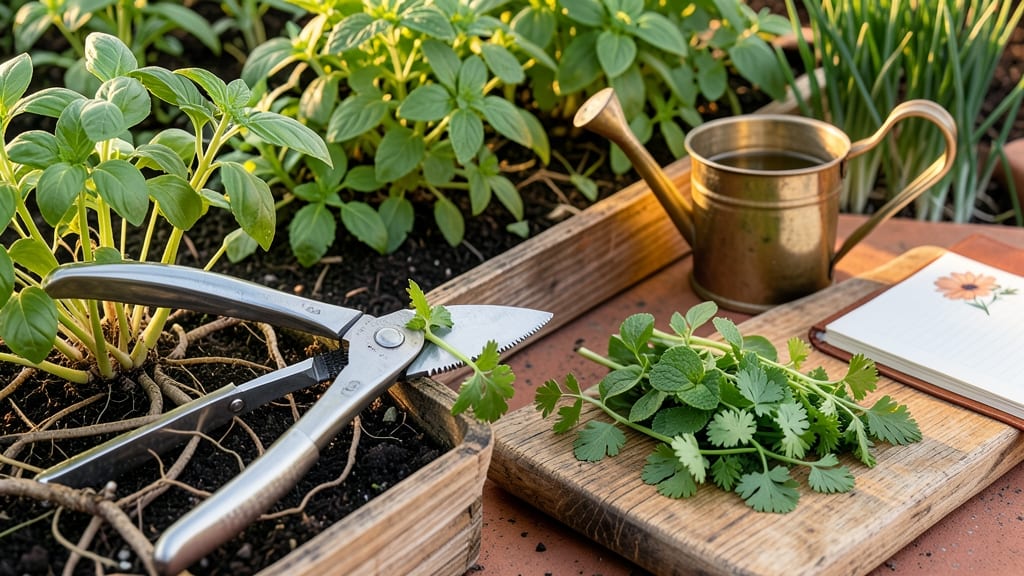
To harvest herbs for regrowth, pick leaves in the morning after dew evaporates to lock in essential oils, always cutting just above leaf nodes with sterilized, sharp tools. Limit harvesting to one-third of the plant at a time and space cuts at least 4-6 weeks apart to encourage full recovery and bushier growth.
Timing matters more than you might think—morning harvests preserve the plant's natural oils, which directly impact flavor and fragrance. 🌿 The key is patience: cutting too aggressively or too often stresses the plant, leading to stunted regrowth.
I've found that sterilizing tools prevents disease transmission, while proper spacing between harvests (especially for perennials like rosemary) ensures the roots stay strong enough to support new growth.
Different herbs have unique recovery needs. For example, basil thrives with frequent light trims but bolts quickly in heat, while hardy rosemary can handle heavier cuts but needs time to recover between harvests. Always check for flowering stems—removing them redirects energy back to leaf production, keeping your herbs productive longer.
💡 In This Article
- Optimal Harvesting Techniques to Boost Herb Regrowth
- Herb-Specific Recovery Strategies for Year-Round Growth
Optimal harvesting techniques to boost herb regrowth
The 1/3 rule isn't just a suggestion—it's a biological necessity. When you remove more than one-third of a plant's foliage at once, you're stripping its ability to photosynthesize efficiently. This forces the plant into survival mode, redirecting energy from growth to recovery.
For example, basil plants can handle weekly trims of 1/3 of their height, but if you take too much too soon, you'll see yellowing leaves and stunted growth within 2-3 weeks. The key is balance: frequent light harvests keep plants bushy, while heavy cuts shock the system.
Timing your harvests isn't just about convenience—it's about chemistry. Morning harvests (after 9-10 AM when dew evaporates) preserve volatile oils that give herbs their flavor and fragrance. These oils peak in concentration after a full night's rest, meaning afternoon harvests can leave you with 20-30% less aromatic potency.
Plus, cutting in the morning reduces stress on the plant as temperatures rise, preventing wilting. For seasonal herbs like cilantro, avoid harvesting during extreme heat (above 85°F), as the plant will bolt (flower) prematurely, ruining its leaf production.
Your cutting tools make a surprising difference in regrowth success. Dull scissors crush plant cells, creating entry points for bacteria and fungi. Always use sterilized, sharp pruners or scissors—even better, clean them with rubbing alcohol between cuts.
Where you cut matters too: always snip just above a leaf node (the point where leaves attach to the stem). This encourages new growth from that node, creating a bushier plant.
If you cut stems too close to the base, you risk damaging the plant's vascular system, which can take 4-6 weeks to recover.
Here's a game-changer most gardeners miss: apical dominance. This is the natural tendency of plants to grow upward from the main stem. When you remove the top growth (the apical bud), the plant redirects energy to lateral buds, creating more branches.
This is why pinching back basil's top leaves leads to bushier plants. For herbs like rosemary, which have woody stems, you'll need to cut back 1/3 of the plant's height in late winter to stimulate new growth. The result? A fuller, more productive plant that can handle more frequent harvests.
Consider these herb-specific cutting strategies for maximum regrowth:
- Basil: Trim 1/3 of the top growth when stems reach 6-8 inches, always above a leaf node. Harvest leaves from the bottom up to encourage upward growth.
- Mint: Cut back 1/4 to 1/3 of the plant in early spring and again in midsummer. Mint spreads aggressively—contain it with barriers to avoid overcrowding.
- Rosemary: Prune 1/3 of the plant's height in late winter or early spring. Avoid cutting into old wood, as it won't regrow.
- Parsley: Harvest outer leaves regularly, leaving the center intact. For biennial varieties, avoid heavy cutting in the second year to preserve root strength.
The recovery period between harvests depends on the herb and season. Most annuals need 4-6 weeks between heavy cuts, while perennials like rosemary can handle harvests every 8-12 weeks if given proper care.
After harvesting, water deeply to help the plant recover, and consider adding a balanced fertilizer (10-10-10) to support new growth. Mulching with 2-3 inches of organic matter helps retain moisture and protects roots during recovery.