
Companion Plants
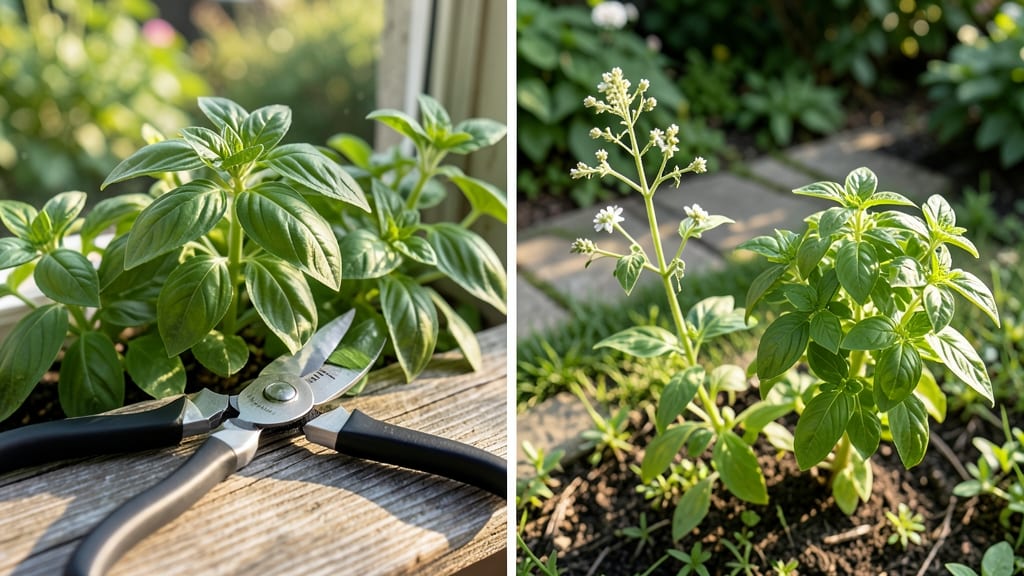
To make basil plants bushier, pinch off the top sets of leaves when they reach 6 inches tall to promote branching. Regularly trim leggy stems and feed with balanced organic fertilizer every 3-4 weeks for dense, full growth.
Making basil bushier comes down to three key actions: strategic pruning, proper feeding, and consistent care. 🌿 When you pinch off the top leaf pairs, you're essentially telling the plant to redirect its energy toward growing more stems instead of just height.
This technique, called apical bud pruning, triggers the release of auxin hormones that stimulate lateral growth. For best results, use clean scissors or your fingers to snip just above a leaf node, and always avoid cutting more than one-third of the plant at once.
Container-grown basil responds especially well to this method, as it encourages a compact, manageable shape perfect for kitchen gardens.
Fertilizing plays a crucial role too—basil thrives on balanced nutrition without becoming leggy from overfeeding. I recommend using a mild organic fertilizer like fish emulsion or compost tea every 3-4 weeks during the growing season.
The key is consistency: too little fertilizer means slow growth, while too much can lead to weak stems that flop over. Pair this with bright, indirect sunlight (at least 6 hours daily) and you'll see those bushy, aromatic leaves you're after in just a few weeks.
💡 In This Article
- Why Pruning Triggers Basil Bushiness
- Step-by-Step Basil Pruning Guide for Maximum Density
Why pruning triggers basil bushiness
When you pinch off the top sets of basil leaves, you're interrupting the plant's natural growth hormone flow. The apical bud at the very top of each stem produces auxin, a hormone that suppresses the growth of lateral (side) buds.
By removing this dominant bud, you break this hormonal monopoly, allowing those dormant side buds to wake up and grow into new branches. This process is called apical dominance reversal, and it's what transforms a single, leggy stem into a full, bushy plant with multiple harvestable leaves.
The timing of this pruning is critical—wait until your basil reaches 6 inches tall with at least 4-6 pairs of true leaves (not just seed leaves). At this stage, the plant has developed enough energy reserves to recover quickly.
What most gardeners don't realize is that the actual cutting point matters too: always pinch just above a leaf node (where leaves attach to the stem) to ensure new growth emerges from that spot. This creates a more compact plant structure and prevents the stems from becoming weak or floppy.
This hormonal shift also boosts photosynthesis efficiency. With more leaf surface area from the new lateral growth, your basil can absorb more sunlight and produce more energy through photosynthesis. The plant redirects its stored nutrients toward these new branches, resulting in denser foliage that's more resistant to pests and diseases.
You'll notice the difference within 7-10 days—new shoots will appear at the pruned nodes, and the plant will start filling out its space more completely.
There's a science to how much you should prune too. Removing more than one-third of the plant's foliage at once can stress it, while pruning too little won't trigger enough branching. The ideal approach is to remove just the top 2-3 sets of leaves during each pruning session.
For container-grown basil, this method is particularly effective because it encourages a compact, manageable shape perfect for kitchen gardens. The plant's root system in containers is more limited, so this pruning technique helps maximize leaf production in the available space.
Seasonal factors also play a role in how well your basil responds. During spring and summer, when days are longer and temperatures are mild (65-75°F), basil grows most vigorously and recovers quickly from pruning.
In hotter climates, you might need to prune more frequently (every 2-3 weeks) to prevent the plant from bolting (flowering prematurely), which reduces leaf production. The key is observing your plant's growth rate and adjusting your pruning schedule accordingly.
One common mistake is pruning too late in the season. If you wait until basil starts flowering, the leaves will become bitter and the plant won't respond well to pruning. Always harvest leaves before they fully open into flowers.
The aromatic oils that give basil its signature flavor are most concentrated in the young, tender leaves, so you're also ensuring better taste by pruning at the right time. This combination of hormonal science and practical timing is what transforms a single basil stem into a lush, productive plant.