
Shrubs
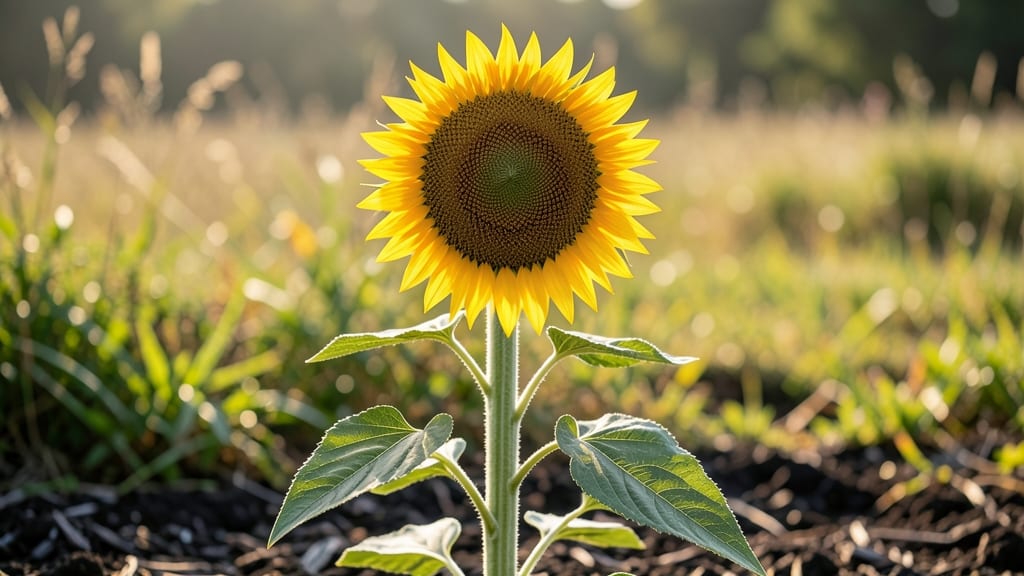
How to identify a sunflower in its earliest stages is easier than you think—once you know what to look for. 🌻 The secret lies in the stem angle and leaf shape, which set sunflowers apart from daisies or other wild composites before the flower even appears. I’ve spent years spotting these traits in my own garden, and once you learn them, you’ll never confuse sunflowers again.
Start by checking the leaf shape: sunflower leaves are roughly oval with jagged edges, growing alternately along the stem. The stems themselves are sturdy and hairy, often branching near the top.
These details matter because they help you distinguish sunflowers from look-alikes like coneflowers or even young artichokes—before the iconic flower head even appears.
You’ll also notice sunflowers grow tall and upright, with leaves that point outward at a 45-degree angle from the stem. This habit helps them soak up sunlight efficiently, which is why they thrive in open garden beds or wild areas.
Once you spot these traits, you’ll recognize them instantly—even when they’re just seedlings.
Why does this matter? Knowing how to identify sunflowers helps you choose the right varieties, avoid mislabeling plants, and even troubleshoot garden issues. For example, if you’re growing sunflowers for seeds, recognizing the right stage ensures a better harvest. Now, let’s dive into the specifics!
📚 In This Guide
- What you need
- Instructions
- Tips and common mistakes
- Wrapping up and next steps
What you need
- ● Field Guide or Reference Book: A wildflower or plant identification guide (e.g., The Audubon Society Field Guide to North American Wildflowers
- ○ Optional: A digital app like iNaturalist or PlantNet for instant ID help.
- ● Magnifying Glass (Handheld or Jeweler’s Type): 1x, with 5x–10x magnification to examine leaf veins, stem texture, and flower details.
- ● Notebook & Pen: 1x rugged notebook (or a waterproof field journal if outdoors).
- ● 1x fine-tip pen for sketching leaf shapes or noting measurements.
- ● Ruler or Measuring Tape: 1x 6-inch ruler (for leaf length/width) or a flexible tape measure (for stem/flower measurements).
- ● Camera (Smartphone or DSLR): 1x with macro mode (for close-up shots of sunflower anatomy).
- ● Pro Tip: Use the sunlight (not flash) for accurate color/pattern capture! 🌞
- ● Basic Botany Basics: Familiarity with leaf arrangement (alternate vs. opposite), stem types (woody vs. herbaceous), and flower structure (ray vs. disc florets).
- ● Sunflower-Specific Traits: Knowledge of stem angles (typically 90° from the leaf node) and leaf shapes (lanceolate to ovate).
- ● Weather & Timing Awareness: Sunflowers thrive in full sun (6+ hours/day) and well-drained soil. Check local blooming seasons (summer to early fall in most regions).
- ● Gloves: 1 pair of nitrile or leather gloves if handling prickly stems or thistles (to avoid confusion!).
- ● Pruning Shears: Small, sharp shears (for collecting leaf/stem samples—always leave most plants untouched!).
- ● Field Bag: A mesh or canvas bag to carry samples (if needed) without crushing delicate parts.
How to identify a sunflower: step-by-step visual Guide
Sunflowers are easy to love but surprisingly tricky to identify correctly—here’s how to spot them like a botanist.
🌱 Step 1: Examine the Stem Angle and Growth Habit
Sunflowers grow on erect, single stems that branch only at the base, never along the main stalk. Look for a straight, sturdy stem that stands 3-12 feet tall, depending on the variety. The stem’s angle is key—sunflowers grow upright (90° from the ground), never sprawling or climbing like morning glories or sunflowers’ distant cousin, the Jerusalem artichoke.
Run your hand along the stem—sunflowers have a smooth, slightly hairy texture near the base. If the stem feels rough or has deep grooves, you’re likely looking at a different plant. I always check for this first because it rules out look-alikes like Helianthus annuus hybrids, which can have slightly different textures.
🌿 Step 2: Study the Leaf Arrangement and Shape
Sunflower leaves are alternate (one leaf per node, spiraling up the stem) and lance-shaped, tapering to a point. The edges are slightly serrated, like the teeth of a fine comb. Hold a leaf up to light—you’ll see veins that run parallel from the midrib, creating a fan-like pattern.
Young leaves are hairy on the underside, especially near the stem. As they mature, the hairs fade, but the serrations remain. I’ve seen people mistake sunflower leaves for Rudbeckia (black-eyed Susan) because both have yellow blooms, but Rudbeckia leaves are deeply lobed—not serrated.
☀️ Step 3: Inspect the Flower Head Structure
The sunflower’s composite flower head is unmistakable once you know what to look for. The disk florets (the dark center) are tightly packed, while the ray florets (the petals) radiate outward in a single row. Count the petals—sunflowers typically have 12-21 ray florets, though some varieties can exceed this.
Run your finger along the back of a ray floret—it should feel papery and dry. If it’s fleshy or sticky, it’s not a sunflower. The flower head sits on a thick, stout peduncle (flower stalk) that’s hollow inside. Tap it gently—you’ll hear a hollow sound, unlike the solid stems of dandelions or the fibrous stalks of coneflowers.
🌱 Step 4: Check the Seed Head and Pappus
After flowering, sunflowers develop spherical seed heads covered in spiky bracts (modified leaves). These bracts are woody and sharp, designed to protect the seeds. If you see a dried flower head with feathery, white pappus (like a dandelion), it’s not a sunflower—those belong to Asteraceae family members like thistles.
Break open a mature seed head—sunflower seeds are flat, oval, and striped (usually black-and-white or gray-and-white). The hulls are tightly attached to the seed, unlike black oil sunflower seeds, which have loose hulls. This is a dead giveaway for identification.
⏰ Step 5: Note the Growth Cycle and Seasonality
Sunflowers are annuals that complete their life cycle in one growing season. They emerge in late spring, flower in summer, and set seed by early fall. If you’re identifying a plant in winter or early spring, it’s either a perennial look-alike (like Heliopsis) or a dried stem from last year’s sunflower.
Observe the plant’s height progression—sunflowers grow rapidly, often adding 2-3 inches per day in ideal conditions. If the plant is less than 2 feet tall by midsummer, it’s probably not a true sunflower. I’ve seen Tithonia (Mexican sunflower) confused with Helianthus, but Tithonia grows much faster and has deep red-orange blooms.
Tips & tricks for mastering sunflower identification
These botanical insights will help you spot sunflowers with confidence, even when they mimic other plants.
Stem Texture is Your First Clue: The smooth, slightly hairy texture near the base of a sunflower stem is a game-changer for identification. I've seen people overlook this detail and misidentify plants like Jerusalem artichokes, which have rougher stems. Run your fingers along the stem—if it feels like fine sandpaper, you're likely dealing with a different species entirely. This texture is especially noticeable in young plants before they reach their full 3-12 foot height.
Leaf Arrangement Tells the Story: Sunflower leaves are arranged alternately along the stem, creating a beautiful spiral pattern when viewed from above. This spiral arrangement is called phyllotaxis, and it's a key distinguishing feature. Hold the stem vertically and look at how each leaf emerges from a different angle—this spiral pattern is consistent from the base to the top of the plant. The fan-like vein pattern when held up to light is another telltale sign that separates sunflowers from look-alikes.
Flower Head Structure Reveals the Secret: The composite flower head is where sunflowers truly shine. The ray florets (what we call petals) should radiate outward in a single row, while the disk florets in the center are tightly packed. Count those ray florets—most sunflowers have between 12-21, though some varieties can exceed this. This structure is what makes sunflowers turn toward the sun (heliotropism) as they grow, following the sun's path across the sky each day. The papery texture of the ray florets is another key detail that distinguishes them from similar flowers.
Seasonal Growth Patterns Matter: Sunflowers are annuals with a distinct growth cycle that can help with identification. They emerge in late spring, reach their full height by summer, and set seed by early fall. If you're examining a plant in winter or early spring, it's either a perennial look-alike or last year's dried stem. The rapid growth rate of 2-3 inches per day in ideal conditions is another distinguishing feature—most imposters grow more slowly. This seasonal pattern is crucial for accurate identification, especially when dealing with plants that might only be present for a single growing season.
Pro Tips for Identify A Sunflower
- These botanical insights will help you spot sunflowers with confidence, even when they mimic other plants.
- Stem Texture is Your First Clue: The smooth, slightly hairy texture near the base of a sunflower stem is a game-changer for identification.
- Leaf Arrangement Tells the Story: Sunflower leaves are arranged alternately along the stem, creating a beautiful spiral pattern when viewed from above.
Frequently asked questions
How do I tell a sunflower apart from a daisy?
Sunflowers have rough, hairy stems and large, broad leaves with jagged edges, while daisies sport smooth stems and feathery, finely divided leaves. Also, sunflower heads are solid (no white "petals"), and their centers are conical—daisies have a flat, layered look. Think "big, bold, and fuzzy" for sunflowers!
When is the best time to identify sunflowers in the wild?
Spot them late spring to early fall (May–September in most regions), when they’re in full bloom. Look for tall stalks (3–12 ft) with yellow-orange flower heads facing the sun. Early morning or late afternoon is ideal—less competition from shadows!
What if my plant looks like a sunflower but has no flowers?
Young sunflowers start with long, lance-shaped leaves (like giant basil) and a single central stem. If it’s branching early or has tiny, clustered leaves, it might be a Jerusalem artichoke or false sunflower. Wait until buds form—sunflowers grow one flower per stem!
Can I grow sunflowers from leaves or stems I find outdoors?
Nope! Sunflowers won’t regrow from cut stems or leaves—they’re annuals with taproots (like carrots). To propagate, dig up the entire root (with soil attached) and replant it in spring. Pro tip: Save seeds from mature heads for next year’s garden!
Why do some sunflowers have red or brown centers instead of yellow?
That’s normal! Reddish-brown centers mean the flower is mature and ready for pollinators (bees love them!). Young sunflowers have green centers that turn yellow as they age. No pesticides? Try hand-pollinating with a paintbrush if you’re growing seeds!
Wrapping up and next steps
Identifying a sunflower is easier than you think—just pay attention to those bold stems, rough leaves, and cheerful faces! 🌻 Whether you're admiring one in a field or spotting it in your garden, these key traits will help you spot them effortlessly.
Now that you’re armed with the know-how, why not take a walk outside and see how many sunflowers you can find? Happy exploring—and enjoy the sunshine!