
Trees
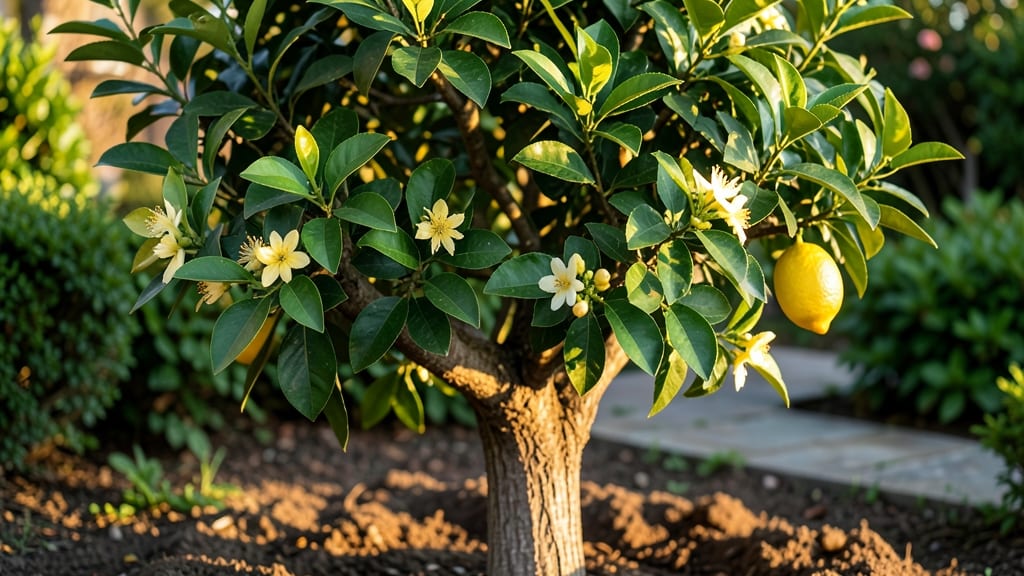
How to identify citrus trees by leaves—the answer lies in their foliage, waiting for you to uncover it. 🌿 I’ve spent years distinguishing between lemon, lime, and orange trees by their leaves, and once you know these telltale signs, you’ll spot them instantly. The shape, veins, and edges hold clues that even experienced gardeners overlook. Start with leaf shape: lemon and lime leaves are narrow and elliptical, while orange and grapefruit leaves are broader and more rounded. Then check the edges—smooth for lemons, finely serrated for limes, and slightly wavy for oranges. Veins also matter: prominent midribs in limes vs. fainter veins in grapefruit. You’ll quickly learn to match leaves to trees, avoiding costly mistakes when selecting varieties for your garden. A single leaf can tell you if you’re dealing with a sour orange, kumquat, or even a false citrus like a mock orange shrub. This skill transforms casual gardening into confident citrus cultivation. Let’s break down the visual cues that make identification foolproof.
📚 In This Guide
- What you need
- Instructions
- Tips and common mistakes
- Wrapping up and next steps
What you need
- ● Fresh citrus leaves: 3–5 healthy, mature leaves (avoid wilted or damaged ones). Pro tip: 🌿 Pick from mid-canopy for the most accurate traits!
- ○ Magnifying glass (optional but helpful): 10x magnification (e.g., blank">Amazon Basics or blank">Onyx International).
- ● Notebook or phone: For sketching leaf details (use blank">Google Lens to compare with online guides).
- ● Ruler or measuring tape: 6-inch minimum (to check leaf length/width).
- ● Field guide or app: Print: Citrus Identification Guide by blank">University of Florida IFAS.
- ● Digital: blank">PictureThis or blank">iNaturalist (free).
- ● Gloves (recommended): Nitrile or latex (to avoid sap irritation, especially with Citrus × aurantium—bitter orange!).
- ● Leaf press: For preserving samples (e.g., blank">A4-sized plant press from blank">Etsy).
- ● Camera with macro mode: Smartphone (e.g., iPhone 13+ or Android with Google Camera) for close-ups.
- ● Citrus fruit reference: A lime, lemon, or orange to compare scent/texture (if available).
- ● UV flashlight: Some citrus leaves fluoresce under UV—fun for advanced ID!
Instructions: mastering the art of citrus leaf identification
Here's how to decode citrus trees like a pro—just by studying their leaves.
🌿 Step 1: Examine Leaf Shape and Size
Citrus leaves vary dramatically in shape, and this is your first clue. Orange and grapefruit trees produce broad, oval leaves that feel slightly leathery to the touch. These leaves typically measure 3-6 inches long and have a rounded tip with a smooth, slightly indented base. Limes, on the other hand, have narrower, elliptical leaves that taper to a point at both ends—almost like a teardrop. Measure a few leaves: if they're consistently 2-4 inches long, you're likely dealing with a lime or key lime tree.
Lemon leaves fall somewhere in between but tend to be more elongated and slightly twisted along the midrib. The key is to compare multiple leaves from different parts of the tree. Young leaves often look different from mature ones, so focus on fully developed foliage. If you notice small, almost circular leaves (1-2 inches), you might be looking at a kumquat or a dwarf citrus variety.
🌿 Step 2: Study the Leaf Edges and Surface
Pay close attention to the leaf margins—the edges tell another story. Most citrus leaves have smooth, entire margins without serrations or lobes, but the texture can vary. Orange and mandarin leaves often have tiny, barely visible teeth along the edges when held up to light. Lemon leaves, however, tend to be completely smooth with a slightly wavy or undulating appearance.
Run your fingers along the leaf surface. True citrus leaves feel firm and slightly waxy, almost like plastic wrap. If the leaf feels soft or fuzzy, it's not a citrus. The underside of citrus leaves is usually lighter in color, sometimes with a faint downy texture. This characteristic is most pronounced in young leaves and helps distinguish citrus from lookalikes like oleander or frangipani.
🌿 Step 3: Trace the Vein Pattern and Stem
The vein structure is where citrus trees reveal their true identity. Hold a leaf up to a bright light and observe the pattern. Citrus leaves typically have a prominent central vein with secondary veins that branch out at 45-60 degree angles, creating a feathery, almost parallel pattern. Count the secondary veins: oranges and grapefruits usually have 5-8 pairs, while lemons and limes tend to have 3-5 pairs that are more widely spaced.
Examine the stem where the leaf attaches to the branch. Citrus leaf stems (petioles) are thick and often slightly swollen at the base. The attachment point is usually rounded or slightly heart-shaped, not pointed like in many other tree species. If the stem is hollow or the leaf attaches at a sharp angle, it's definitely not a citrus.
🌿 Step 4: Consider Leaf Arrangement on the Branch
Citrus trees have a distinctive leaf arrangement called "alternate," meaning the leaves spiral around the branch rather than growing in pairs at the same node. Look at a branch and count how many leaves appear before you reach a point directly above the starting leaf. In citrus, you'll typically find 3-5 leaves before the pattern repeats.
This spiral arrangement helps differentiate citrus from other evergreens that might have similar leaf shapes. Compare it to a close relative like the mock orange (Philadelphus), which has opposite leaves growing directly across from each other. The alternate pattern is most noticeable on new growth where the leaves are still unfolding.
🌿 Step 5: Cross-Reference with Other Tree Features
While leaves provide the most accessible clues, don't ignore the rest of the tree. Citrus trees often have thorns along the branches, though some varieties like Meyer lemons may have fewer. The bark texture—smooth and greenish when young, developing a rougher, more textured appearance with age—is another giveaway. Combine leaf observations with these features for a more accurate identification.
If you're still unsure, note the leaf characteristics and compare them to reference photos. Citrus trees often grow near other evergreens, so distinguishing between them becomes easier with practice. The more trees you examine, the quicker you'll recognize the subtle differences that reveal each species.
Tips & tricks for decoding citrus trees by their leaves
Here's what nobody tells you about turning leaf observation into a foolproof identification system.
Leaf Comparison is Key: Don't rely on a single leaf—collect samples from different parts of the tree, especially mature leaves. I've seen many beginners mistake young, underdeveloped leaves for different species. Focus on fully formed leaves from the middle sections of branches where growth is most consistent. The size differences between 3-6 inches for oranges and 2-4 inches for limes become much clearer when comparing multiple specimens side by side.
The Vein Angle Secret: That 45-60 degree angle for secondary veins isn't just random—it's the golden ratio for citrus identification. Hold leaves up to a bright window and you'll notice how these angles create that signature feathery pattern. Counting 5-8 pairs for oranges versus 3-5 pairs for lemons becomes much easier when you're looking for this specific angular relationship rather than just random vein counts.
Texture Test Reveals the Truth: The waxy, slightly leathery feel of citrus leaves is your most reliable physical clue. Run your thumb along the leaf surface—true citrus should feel firm with a subtle resistance, almost like touching plastic wrap. If leaves feel soft or fuzzy, you're likely dealing with an imposter like oleander. This tactile test works even when visual clues are ambiguous, especially in shaded areas where leaf color might fade.
Seasonal Leaf Variations: Spring growth often produces leaves that look different from summer or fall foliage. Young leaves may appear more rounded or have slightly different vein patterns. That's why Step 1 emphasizes focusing on fully developed leaves—these mature specimens show the most consistent characteristics for identification. If you're examining a tree in early spring, wait until you see the second flush of leaves before making your final assessment.
Pro Tips for Identify Citrus Trees By Leaves
- Here's what nobody tells you about turning leaf observation into a foolproof identification system.
- Leaf Comparison is Key: Don't rely on a single leaf—collect samples from different parts of the tree, especially mature leaves.
- The Vein Angle Secret: That 45-60 degree angle for secondary veins isn't just random—it's the golden ratio for citrus identification.
Frequently asked questions
Got questions about spotting citrus trees by their leaves? You’re not alone! Here are some of the most common queries—and their answers—to help you become a citrus leaf detective in no time.
What’s the easiest way to tell a lemon tree from a lime tree just by looking at the leaves?
Lemon tree leaves are longer (2–4 inches) with a smooth, glossy finish and rounded tips. Lime tree leaves are shorter (1–2.5 inches), darker green, and often have a slightly leathery texture. Hold them up to sunlight—lime leaves may show tiny oil glands as tiny dots!
Can I identify citrus trees in winter when they’ve lost their leaves?
Yes, but it takes a closer look! Check the branch structure—citrus trees have spreading, thorny branches. Look for bud scars (small raised marks where leaves once grew) or fruit remnants clinging to twigs. If you’re unsure, wait for spring when new leaves emerge.
What if my citrus tree’s leaves look healthy but the fruit is weird or bitter? Could it still be a real citrus?
Maybe! Some citrus trees (like trifoliate orange or calamondin) have distinct leaf shapes but produce tart or hybrid fruit. If leaves are smooth, glossy, and alternate (one leaf per node), it’s likely a true citrus—but the fruit’s taste might just be unripe or variety-specific. Try cooking with it!
Are there non-citrus trees with leaves that look similar to citrus?
Rue (Ruta graveolens)
and mock orange (Philadelphus) can mimic citrus leaves with their shiny, oval shapes. The key difference? Citrus leaves are thicker, leathery, and often fragrant when crushed. Non-citrus leaves are usually softer or have serrated edges.
My tree’s leaves are curling or yellowing—could it still be a citrus tree?
Citrus trees are prone to pests (aphids, mites) and diseases (citrus greening), which cause leaf issues. If the shape and vein pattern are still citrus-like but leaves are damaged, it’s likely a citrus under stress. Isolate the tree, check the undersides of leaves for pests, and adjust watering—overwatering is a common culprit!
Wrapping up and next steps
Identifying citrus trees by their leaves is simpler than you think—just focus on shape, veins, and edges! 🌿 Whether you’re spotting a tangy lime, a sweet orange, or a tart lemon, these key traits act like nature’s ID badge.
Now that you’ve mastered the basics, why not put your skills to the test?
Head outdoors, grab a notebook, and collect a few leaves from local trees. Compare them to your newfound knowledge—you’ll be amazed how quickly you spot the differences! Happy tree hunting! 🌳✨