
Shrubs
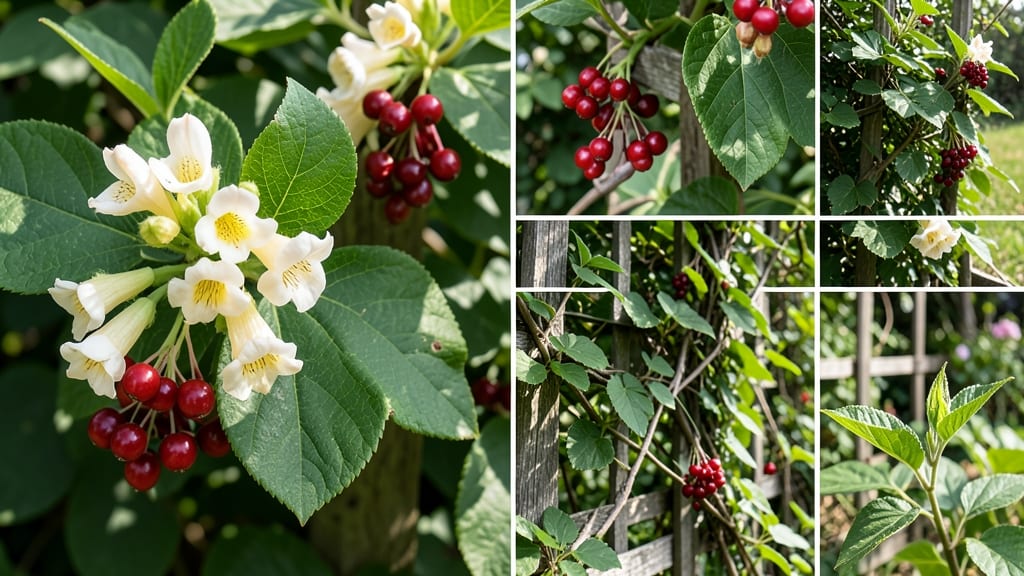
That sweet, heady scent might be honeysuckle—but how to identify honeysuckle properly is the real trick. 🌿 I've spent years untangling honeysuckle from its look-alikes, and the key is in the leaves, flowers, and vine behavior.
One wrong ID could mean inviting an invasive species into your garden or missing out on a pollinator magnet.
The real deal has opposite, oval leaves with smooth edges and pointed tips, paired with star-shaped flowers that twist like a corkscrew.
Native varieties like trumpet honeysuckle (Lonicera sempervirens) climb with twining stems, while Japanese honeysuckle (Lonicera japonica) sprawls aggressively—both give off that signature vanilla-cinnamon perfume at dusk.
Where most gardeners stumble is confusing it with jasmine (smaller, waxy flowers, no twining) or trumpet vine (palmate leaves, trumpet-shaped blooms). Grab a magnifying glass—honeysuckle's five-petaled flowers and red-orange berries (in fall) are dead giveaways. Pro tip: Snap a photo and cross-check with the iNaturalist app for instant verification.
Season matters too: spring brings fresh green growth, summer showcases the flowers, and fall reveals those berries. If your plant checks all boxes but isn't fragrant, it's probably a non-native imposter—time to dig deeper (or pull it out).
📚 In This Guide
- What you need
- Instructions
- Tips and common mistakes
- Wrapping up and next steps
What you need
- ● Field Guide or Plant ID App: Physical guide: National Audubon Society Field Guide to North American Wildflowers (or similar regional guide)
- ● Digital app: iNaturalist, PictureThis, or PlantNet (free/paid)
- ● Hand Lens (10x Magnification): For inspecting flower, leaf, and stem details (e.g., Loupe by Optix or National Geographic Magnifier).
- ● Notebook & Pen: For recording observations (e.g., flower color, leaf arrangement, vine thickness).
- ● Camera or Smartphone: High-resolution camera (12MP+) with macro mode for close-up photos.
- ○ Gloves (Optional but Recommended): Lightweight gardening gloves to protect hands from thorns or sap.
- ● Pruning Shears: Small, sharp shears (e.g., Felco F2) for collecting samples or examining stems.
- ● Measuring Tape or Ruler: To record vine length, leaf size, and flower diameter (standard 6-inch or 15cm tape works).
- ● Field Pressing Kit: A small press or heavy books to preserve leaf/flower samples for later study.
- ● Scent Bottle or Vial: Small glass vial (5mL) to capture and compare floral scents.
- ● GPS Device or App: To log exact locations (e.g., Google Maps or Gaia GPS).
- ● Reference Specimens: Dried honeysuckle flowers/leaves from a trusted source for comparison.
- ● Binoculars (8x42): For spotting honeysuckle in tall trees or dense foliage.
Step-by-Step Guide to identifying honeysuckle vines
Here’s how to spot these fragrant climbers with confidence—no prior botany degree required.
🌿 Step 1: Examine the Vine Structure and Growth Habit
Honeysuckle vines are twining, meaning they spiral clockwise around supports like trellises or fences. Look for smooth, green stems that grow aggressively in a single direction—this sets them apart from random scrambling vines. The stems often have a slightly waxy sheen, especially on younger growth.
Run your fingers along the vine’s length. You’ll notice opposite leaf arrangements (two leaves emerging at each node, directly across from each other). Most other vines have alternating leaves, which appear staggered along the stem. This is your first major clue.
🌸 Step 2: Inspect the Flowers for Key Characteristics
The star-shaped blooms are honeysuckle’s signature feature. Each flower has 5-6 petals that flare outward, often in shades of white, yellow, pink, or red. The tubular center holds the stamens and pistil, which exude a sweet, intoxicating fragrance—especially strong in the evening.
Peel back one petal gently to reveal the two-lipped corolla (the upper lip is usually flat, while the lower lip curves downward). The anthers (pollen-bearing parts) often protrude slightly, creating a "fuzzy" appearance inside the tube. This structure makes them irresistible to hummingbirds and butterflies.
🍃 Step 3: Check the Leaf Shape and Arrangement
Honeysuckle leaves are oval to lance-shaped, with smooth or slightly serrated edges. They grow in opposite pairs along the stem, each pair attached at the same node. The leaves are typically 2-6 inches long, with a pointed tip and a prominent central vein running from base to tip.
Here’s the trick: hold a leaf up to light. You’ll see 3 main veins branching from the central vein—two side veins that curve upward and connect near the leaf’s edge. This palmate-veined pattern (though not as dramatic as a maple leaf) is a dead giveaway.
🍯 Step 4: Identify the Fruit and Seed Pods
After flowering, honeysuckle produces red, orange, or black berries that resemble tiny ovals. These aren’t true berries but drupes (fleshy fruits with a single seed inside). The berries grow in clusters along the stem, often persisting through winter.
If you find dry, papery seed pods splitting open, you’ve got the wrong plant—honeysuckle berries stay intact until eaten or rotted. The seeds inside are flat and winged, designed to catch the wind for dispersal. This is a key difference from similar vines like trumpet vine, which produce hard, woody seed capsules.
🌳 Step 5: Compare to Common Look-Alikes
Confusion often arises with trumpet vine (Campsis) and wisteria. Trumpet vine has bright orange-red tubular flowers with palmate leaves (5-7 leaflets) and woody seed pods. Wisteria, meanwhile, has long, drooping flower clusters and compound leaves with multiple leaflets.
Honeysuckle’s solitary or paired flowers, simple leaves, and twining habit rule out both. Pro tip: crush a leaf and sniff. Honeysuckle releases a citrusy or vanilla-like aroma when damaged—a scent that’s unmistakable once you know it.
Tips & tricks for perfectly identifying honeysuckle vines
Confession: I spent years mistaking trumpet vine for honeysuckle—until I learned these game-changing details. Here's how to nail the identification every time.
The Twining Test: Honeysuckle's clockwise spiral is its calling card. Run your hand along the vine—if it winds like a clock's hands, you're on the right track. This directional growth distinguishes it from scrambling vines that cling randomly. Pro tip: Check multiple stems; some younger growth might not show the full spiral, but mature sections always do.
Leaf Vein Inspection: The three-vein pattern in Step 3 is often overlooked, but it's foolproof. Hold a leaf up to light and count: one central vein with two curved side veins. This palmate pattern (though less dramatic than maple leaves) is unique to honeysuckle. I learned this the hard way after studying trumpet vine's seven-leaflet compound leaves under a magnifying glass!
Seasonal Clues: Timing matters when checking fruit. In summer, look for intact red/orange/black drupes—these stay whole until eaten. Winter's the best time to spot dry, papery seed pods from other vines, confirming your honeysuckle isn't one of them. I always check both seasons to be absolutely certain.
Scent Verification: Crush a leaf between your fingers—honeysuckle releases that unmistakable citrusy-vanilla aroma. This is your final confirmation test. If you're near flowers, the evening fragrance alone can identify it from yards away. I've used this trick to spot honeysuckle in dense thickets where visual clues were obscured.
Pro Tips for Identify Honeysuckle
- Confession: I spent years mistaking trumpet vine for honeysuckle—until I learned these game-changing details.
- The Twining Test: Honeysuckle's clockwise spiral is its calling card.
- Leaf Vein Inspection: The three-vein pattern in Step 3 is often overlooked, but it's foolproof.
Frequently asked questions
about identifying honeysuckle—because even the most fragrant vines can spark curiosity! Here are answers to the most common questions to help you spot (and savor) this beauty with confidence.What’s the difference between honeysuckle and jasmine?
While both have sweet-scented flowers, honeysuckle grows on twining vines with tubular, trumpet-shaped blooms (often red, yellow, or white) and opposite leaves. Jasmine typically has smaller, star-shaped flowers, glossy leaves, and a more compact, shrub-like growth habit. Pro tip: Honeysuckle’s flowers grow in clusters along the stem, while jasmine’s often bloom singly.
When is the best time to identify honeysuckle?
Spring and early summer are your golden windows! That’s when honeysuckle’s vibrant flowers peak, making identification a breeze. If you’re unsure, check for last year’s growth—honeysuckle’s reddish-brown bark and paired leaves (with serrated edges) are dead giveaways even in winter. Bonus: The scent is strongest in the evening, so a nighttime stroll might reveal hidden vines!
Is there a toxic lookalike I should avoid?
Yes! Japanese honeysuckle (Lonicera japonica) is invasive and can smother native plants, while bittersweet nightshade (Solanum dulcamara) mimics its vines but has toxic berries. Always check for:
- Leaf arrangement: Honeysuckle’s leaves are opposite (paired at nodes); bittersweet’s are alternate.
- Flowers: Honeysuckle’s are tubular; bittersweet’s are star-shaped with purple centers.
- Berries: Honeysuckle’s are red-orange and harmless; bittersweet’s are glossy red (poisonous).
Can I grow honeysuckle from a cutting I found?
Honeysuckle is easy to propagate from semi-hardwood cuttings (taken in late spring or early summer). Here’s how:
- Cut a 4–6 inch section just below a leaf node.
- Strip lower leaves and dip in rooting hormone (optional but helpful).
- Plant in moist potting mix and cover with a plastic bag to retain humidity.
- Keep in indirect light until roots form (4–6 weeks).
Are the flowers edible, and how do I use them?
Yes! Honeysuckle flowers are deliciously floral and slightly citrusy—perfect for teas, syrups, or desserts. Safety first: Only use native, pesticide-free honeysuckle (avoid roadside plants). To harvest:
- Pick fully open flowers in the morning.
- Gently rinse and dry on a towel.
- Use 1–2 tsp per cup of hot water for tea, or infuse in honey for syrup.
Wrapping up and next steps
Identifying honeysuckle is all about noticing its fragrant, trumpet-shaped flowers, opposite leaves, and twining vines—plus a little patience to spot its subtle clues in nature. Whether you're a gardener, forager, or simply curious, mastering these traits will help you distinguish it from lookalikes with confidence. 🌿
Now that you’re equipped with the know-how, why not take the next step? Snap a photo of a vine you suspect is honeysuckle, compare it to your newfound knowledge, and share your findings with fellow plant enthusiasts.
Happy exploring—and may your garden (or wild wanderings) always be blooming with beauty! 🌸