
Flowers
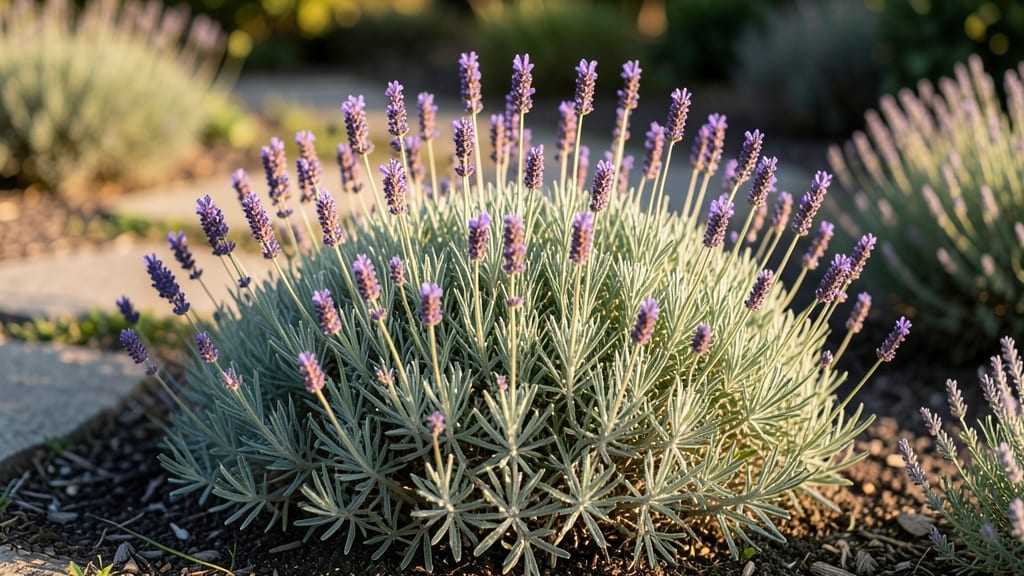
Those purple spires smell like summer in a jar. 🌿 Identifying lavender starts with its signature square stems and fuzzy, silvery-green leaves—key traits that set it apart from rosemary or mint. The flowers grow in dense, vertical spikes, often with a slight curve, and release that unmistakable fragrance when crushed.
The real test? Hold a leaf near your nose—true lavender smells like a mix of floral and camphor, while look-alikes like Spanish lavender (Lavandula stoechas) have a more minty scent.
Square stems (not round) and woolly foliage are dead giveaways, but hybrids might have paler blooms or shorter spikes. Once you confirm it’s lavender, you’ll prune differently—cutting back after flowering preserves its shape, while harvesting stems too early can stunt growth.
The scent alone tells you when to harvest: strongest just before full bloom, when the oils peak. Misidentifying lavender can lead to pruning at the wrong time or treating it like a herb it’s not.
Now that you know what to look for, you’ll spot it (and avoid the imposters) in gardens, wild patches, or even your neighbor’s yard.
📚 In This Guide
- What you need
- Instructions
- Tips and common mistakes
- Wrapping up and next steps
What you need
- ● Fresh or dried lavender (for comparison—grab a sprig from a trusted source or buy a small bunch at a garden center).
- ● Hand lens or magnifying glass (10x magnification recommended for examining fine details like leaf texture or flower structure).
- ● Measuring tape or ruler (to check stem width and flower spike length).
- ● Notebook & pen (to jot down observations like leaf arrangement, scent, or stem shape).
- ○ Gloves (optional but handy) if handling wild plants to avoid skin irritation.
- ● Field guide or lavender ID app (e.g., iNaturalist or PlantNet) for cross-referencing features.
- ● Small pruning shears (for safely snipping stems to examine closer).
- ● Spray bottle with water (to refresh dried samples and reveal hidden details).
- ● Camera or phone (to capture photos of key features like leaf shape or flower arrangement).
How to identify lavender: fragrant purple spikes and square stems
Here's how to spot real lavender—no confusion with mint or rosemary!
🌿 Step 1: Examine the Stem Shape and Texture
Run your fingers along the stem—true lavender has a square, woody texture that feels slightly rough to the touch. This is your first clue. If the stem is round or smooth, it's not lavender. I always compare it to a pencil: a lavender stem looks like you've pressed the sides slightly inward.
Look at the color too. Young stems are green, but mature lavender stems develop a silvery-gray hue from fine hairs. If you see bright green stems with no graying, it's probably a lookalike. The square shape is the most reliable feature—no other common garden plants have this exact stem profile.
💧 Step 2: Check the Leaf Structure and Arrangement
Lavender leaves grow in opposite pairs along the stem, meaning two leaves emerge from the same point. They're narrow, linear, and fuzzy—almost like tiny gray-green toothpicks. Run your thumb along the leaf edge: you'll feel tiny hairs that give lavender its signature softness.
If leaves are broad or toothed (like mint) or needle-like (like rosemary), it's not lavender. The fuzzy texture is key—lavender leaves should feel velvety, not smooth. I've seen people mistake oregano for lavender because of the similar purple flowers, but oregano leaves are smooth and oval-shaped.
☀️ Step 3: Inspect the Flower Spikes
The flowers grow in dense, elongated clusters at the tips of stems, often called "spikes." These should be purple, pink, or lavender-colored (never white or yellow). The buds form tightly along the stem before opening into tiny, tubular flowers that resemble tiny trumpets.
When you gently brush your hand along the flower spike, you'll smell that classic sweet, floral, slightly medicinal aroma—this is the most distinctive feature. If there's no scent or it smells minty/peppery, it's not true lavender. The flowers should also be slightly fragrant even when dry—this helps distinguish it from similar-looking plants.
✂️ Step 4: Verify Growth Habit and Size
Mature lavender plants grow 3-5 feet tall with a woody, bushy base that spreads gradually. The stems are rigid and upright, not floppy like mint. If the plant sprawls along the ground or has flexible stems, it's not lavender.
Look at the base: true lavender develops thick, woody stems over time, while imposters like Spanish lavender (Lavandula stoechas) stay more herbaceous. The leaves should also get smaller as they ascend the stem—a classic lavender trait. If the leaves stay the same size all the way up, it's probably a different plant.
🪴 Step 5: Test the Hardiness and Environment
Lavender thrives in full sun and well-draining soil. If you find a plant in shade or damp soil, it's likely not true lavender. The leaves should look slightly gray-green from the hairs, and the plant should appear drought-tolerant—lavender stores water in its woody stems.
Give the plant a gentle tug on the soil. Lavender roots are fibrous and shallow, spreading horizontally rather than growing deep. If you pull up a plant with a single thick taproot, it's not lavender. This test helps distinguish it from other Mediterranean herbs that might look similar at first glance.
Tips & tricks for spotting genuine lavender
Confession: I've bought lavender bundles that turned out to be something else—here's how to avoid that mistake every time.
Stem Shape Secret: The square stem is lavender's signature trait. When you pinch the stem between your fingers, it should feel like a pencil with slightly flattened sides. This is the most foolproof way to distinguish it from lookalikes like rosemary or sage, which have round stems. I've even used a ruler to verify—true lavender stems measure about 1/4 inch across with those distinctive flat sides.
Leaf Texture Test: Run your thumb along the leaf edge—lavender leaves should feel fuzzy like velvet. This texture comes from microscopic hairs that give lavender its signature softness. If the leaves feel smooth, it's not lavender. I keep a small magnifying glass handy to check this detail when shopping at markets, especially with dried bundles where the texture can be harder to discern.
Flower Scent Check: The aroma is your final verification. Gently crush a few flower buds between your fingers—they should release that unmistakable sweet, floral scent with a hint of camphor. If there's no scent or it smells minty, it's not true lavender. Pro tip: The scent should remain even when the flowers are completely dry, which helps distinguish it from similar-looking plants that lose their fragrance quickly.
Growth Habit Clues: True lavender grows upright with rigid stems that don't flop over like mint. The base should develop woody, thick stems over time while the leaves get progressively smaller as they climb the stem. This "gradual leaf size" pattern is a dead giveaway—no other common herb shows this characteristic. I've seen people mistake Spanish lavender for true lavender, but Spanish varieties have more herbaceous stems and different flower shapes.
Pro Tips for Identify Lavender
- Confession: I've bought lavender bundles that turned out to be something else—here's how to avoid that mistake every time.
- Stem Shape Secret: The square stem is lavender's signature trait.
- Leaf Texture Test: Run your thumb along the leaf edge—lavender leaves should feel fuzzy like velvet.
Frequently asked questions
Got questions about spotting lavender? You’re not alone! Here are some of the most common queries—and their answers—to help you confidently ID this fragrant beauty in the wild or garden.
How can I tell the difference between lavender and other purple flowers?
Lavender stands out with its square stems (unlike round stems in most other plants) and woolly, fuzzy leaves. The flower spikes are also dense and symmetrical, with tiny, tubular blooms that release a sweet, floral scent when crushed. Compare it to lilacs (looser clusters, no square stems) or statice (dry, papery blooms).
When is the best time of year to identify lavender?
Lavender blooms in late spring to early summer (May–July in most regions), but its foliage and stems are identifiable year-round. For the most reliable ID, look during peak bloom when the scent and color are most distinct. If you’re unsure, check for buds forming in spring—that’s a dead giveaway!
Can I identify lavender if it’s not in bloom?
Even without flowers, lavender has silvery-green, aromatic leaves and square stems (like mint). Snap a leaf—if it smells strongly of lavender, you’re likely on the right track. English lavender (Lavandula angustifolia) has narrow leaves, while Spanish lavender (L. stoechas) has unique "rabbit ear" tips on its buds.
What if I think I found lavender but it’s not smelling right?
If the plant lacks the classic lavender scent, it might be a look-alike like butterfly bush (orange flowers, no scent) or Russian sage (blue-purple, strong fragrance but different shape). Pro tip: Crush a leaf—real lavender releases its signature aroma instantly. If it smells like nothing, it’s probably not lavender!
Are there any edible look-alikes I should avoid?
Lavender is edible and safe in culinary uses, but avoid toadflax (Linaria spp.) or speedwell (Veronica spp.), which resemble lavender but are toxic. Stick to plants with square stems, fuzzy leaves, and a sweet floral scent—that’s your green light to harvest (in moderation) for teas, baking, or potpourri!
Wrapping up and next steps
Now that you’ve mastered the art of spotting lavender—from its fragrant purple spikes and square stems to its distinctive aroma—you’re ready to embrace the world of this versatile plant!
Whether you’re a gardener, DIY enthusiast, or simply a lavender lover, your new skills will help you appreciate (and avoid) imposters with confidence. 🌿✨
Your next step? Grow your own! Start with a cutting from a trusted source, plant it in well-draining soil, and watch your garden (or windowsill) transform into a calming, aromatic oasis. Happy identifying—and happy growing! 🌱💜