
Shrubs
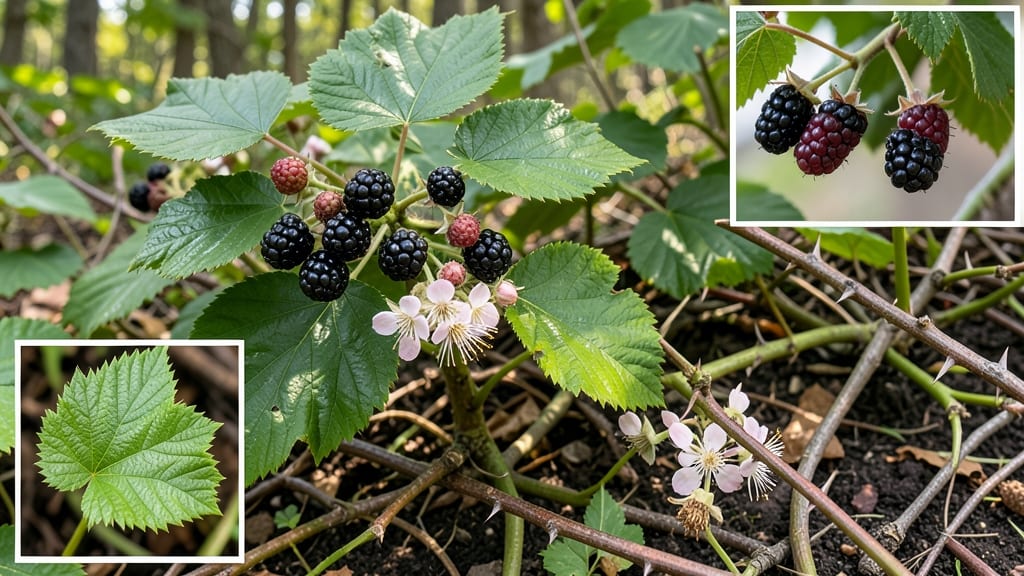
That first wild blackberry you spot might not be what you think—but how to identify wild blackberries comes down to three simple visual clues. 🌿 I've spent years wandering fields and forests, and the difference between edible blackberries and their toxic lookalikes comes down to three simple visual clues—once you know them, you'll never mistake them again.
The leaves are your first hint: blackberries have five leaflets arranged like a fan, with the center leaflet noticeably larger than the others. Then check the thorns—wild blackberries grow on arching canes with sharp, hooked thorns that point downward, unlike raspberries which have straighter stems.
Finally, the berries themselves cling to the plant even when ripe, while raspberries pull away cleanly. You'll find these plants thriving along fences, in sunny clearings, and at the edges of woodlands, especially after a rain when the scent of crushed leaves fills the air.
The best time to hunt is late summer, when berries are plump and dark purple-black, though they won't ripen all at once. Knowing the difference matters if you're foraging, controlling invasive spread, or even planning a cultivated blackberry patch.
That first berry you pick could be the start of a delicious harvest—or a stomachache. Let's get those visual tests down pat.
📚 In This Guide
- What you need
- Instructions
- Tips and common mistakes
- Wrapping up and next steps
What you need
- ● Field Guide or Foraging App: A reliable guide like Peterson Field Guide to Edible Wild Plants or apps like PictureThis or Seek by iNaturalist to confirm identifications.
- ○ Gloves (optional but recommended): Lightweight gardening gloves (e.g., Felco or Workrite) to protect hands from thorns and dirt.
- ● Pruners or Sharp Scissors: Small, durable pruners (e.g., Fiskars or Gonicc) with a 4-6 inch blade for clean cuts.
- ● Small Knife or Dagger: A Swiss Army Knife or Victorinox for precision cuts near the stem.
- ● Container or Basket: A breathable mesh bag (e.g., produce sacks) or a sturdy basket to avoid crushing berries.
- ● Notebook & Pen: For logging locations, plant traits, or sketching unfamiliar features.
- ● Water Bottle & Snacks: Stay hydrated—wild foraging can be tiring!
- ● Magnifying Glass: For inspecting tiny details like leaf serrations or stem hairs.
- ● Camera or Smartphone: Capture close-ups of leaves, stems, and berries for later reference.
- ● Hand Sanitizer or Wet Wipes: Keep hands clean before handling berries or eating snacks.
- ● GPS or Map App: Avoid getting lost—Gaia GPS or AllTrails are great for tracking locations.
- ● First-Aid Kit: Include bandages, antiseptic wipes, and tweezers for thorn pricks or minor scrapes.
How to identify wild blackberries: 3 visual tests to spot edible berries instantly
Spotting wild blackberries takes practice, but these three visual cues will have you confidently picking edible berries in no time.
🌿 Step 1: Examine the Thorns and Canes
The first clue lies in the plant's structure. Wild blackberries grow on arching canes covered in sharp, curved thorns that point downward. These thorns are thicker and more robust than those on raspberry canes, which tend to be straighter and more delicate. Run your fingers along the cane—if the thorns dig in and feel like tiny daggers, you're likely dealing with blackberries.
Look for multiple canes growing together in a thicket. Blackberry canes often form dense clusters, while raspberry canes grow more upright and spaced apart. The base of blackberry canes often root where they touch the ground, creating new plants. This habit helps them spread aggressively, which is why they dominate many wild areas.
🍇 Step 2: Inspect the Berries and Their Attachment
Blackberries stay attached to their stems even after ripening, unlike raspberries, which separate cleanly from the receptacle. Gently tug on a ripe berry—if it doesn't pull away easily and the stem remains intact, it's a blackberry. This is the most foolproof way to distinguish them from raspberries, which leave behind a hollow core when picked.
Check the berry's color and texture. True wild blackberries turn a deep, jet-black or purplish-black when fully ripe, with a slightly dusty, velvety coating. They should feel firm but yield slightly to gentle pressure. Overripe berries will feel mushy and may stain your fingers—avoid these for the best flavor and texture.
🌱 Step 3: Study the Leaves and Growth Pattern
Blackberry leaves are compound with 3-5 leaflets, each with a toothed or serrated edge. The center leaflet is the largest, and all leaflets attach to a single central stem. Run your thumb along the edge of a leaf—if you feel tiny, sharp teeth, it's a blackberry. Raspberry leaves, by comparison, are more lobed and less uniformly serrated.
Observe the plant's growth habit. Blackberries grow horizontally along the ground and send up new canes from the roots, creating a sprawling thicket. The new canes, called primocanes, are green and hairy, while older canes are woody and brown. This sprawling growth pattern helps them dominate sunny edges of forests and clearings.
⚠️ Step 4: Verify with a Taste Test (Safely!)
Before eating any wild berry, perform a small taste test on just a few berries. Start with a tiny bite—blackberries have a tart-sweet flavor with a hint of earthiness. If the taste is bitter, soapy, or metallic, spit it out immediately and avoid that patch. Some wild look-alikes, like nightshade berries, can be toxic.
Watch for any tingling or numbness in your mouth after tasting. This is a sign of potential toxicity and means you should not consume any berries from that plant. If you're unsure, take a photo of the plant and compare it to reliable sources like local foraging guides or university extension websites before proceeding.
Tips & tricks for spotting wild blackberries like a pro
Mastering these visual cues will turn you into a confident forager—no more second-guessing in the wild!
Thorn Texture Test: The sharp, downward-curving thorns of blackberry canes are your first clue. Run your fingers along the cane—if the thorns feel like tiny daggers digging into your skin, you're on the right track. These thorns are thicker and more robust than raspberry thorns, which are straighter and less aggressive. This physical test is often the quickest way to distinguish between the two when you're in the field.
Berry Attachment Secret: The stem test is foolproof: gently tug on a ripe berry. If it stays attached to the stem (even when fully ripe), it's a blackberry. Raspberries, on the other hand, will cleanly separate from their hollow core. This simple tug-of-war is the most reliable way to avoid toxic look-alikes in the wild.
Leaf Edge Inspection: Blackberry leaves have compound structures with 3-5 leaflets, each featuring serrated edges. Run your thumb along the edge—you should feel tiny, sharp teeth. Raspberry leaves, by comparison, have more lobed edges that feel smoother. This leaf detail is especially helpful when berries aren't yet ripe or when you're examining the plant from a distance.
Seasonal Growth Clues: Time your foraging right: new green canes (called primocanes) appear in early summer, while older canes produce berries in late summer. The sprawling, horizontal growth pattern is another giveaway—blackberries create dense thickets that spread aggressively, while raspberries grow more upright. This growth habit helps them dominate sunny forest edges and clearings.
Pro Tips for Identify Wild Blackberries
- Mastering these visual cues will turn you into a confident forager—no more second-guessing in the wild!
- Thorn Texture Test: The sharp, downward-curving thorns of blackberry canes are your first clue.
- Berry Attachment Secret: The stem test is foolproof: gently tug on a ripe berry.
Frequently asked questions
Got questions about spotting wild blackberries? You’re not alone! Here are the most common queries—and quick answers—to help you forage like a pro.
How do I tell the difference between wild blackberries and poisonous look-alikes?
Wild blackberries grow on bristly canes (thorns point downward) and have white or yellowish flowers. Avoid nightshade berries (smooth stems, greenish berries) or poison ivy (three leaflets, no berries). When in doubt, squeeze the berry—if it’s firm and juicy, it’s likely safe!
When is the best time to pick wild blackberries?
Harvest in late summer to early fall (July–September in most regions) when berries are fully dark purple-black and slightly soft to the touch. Avoid picking green or red berries—they’re underripe and may cause stomach upset. Morning picks are often sweeter!
Can I eat blackberries straight from the wild without washing them?
No!
Always rinse wild blackberries under cool, running water to remove dirt, bugs, or pesticide residue. Use a colander and gently pat them dry with a clean towel. Pro tip: Soak in a vinegar-water mix (1:3 ratio) for 5 minutes to kill bacteria before eating.
Are there any alternatives if I can’t find wild blackberries?
Yes! Try these store-bought or cultivated swaps:
- Cultivated blackberries (e.g., ‘Triple Crown’ or ‘Natchez’ varieties)
- Raspberries (similar taste but hollow cores)
- Elderberries (cook first—they’re toxic raw!)
- Black raspberries (darker, seedier, and more tart)
What should I do if I think I ate a poisonous berry?
Seek immediate medical help if you experience nausea, vomiting, or dizziness. Note the berry’s color, location, and any distinguishing features (e.g., stems, leaves). Never rely on taste alone—some toxic berries (like bittersweet nightshade) can mimic blackberries. When in doubt, skip it!
Wrapping up and next steps
Identifying wild blackberries is easier than you think—just remember those three key visual tests: leaf arrangement, thorn placement, and berry shape. With a little practice, you’ll spot them like a pro and enjoy nature’s sweet rewards! 🌿✨
Now that you’re ready to forage, grab your basket and head outdoors. Start small—pick a few berries to confirm their taste before going all out. Happy foraging! 🍇😊