
Trees
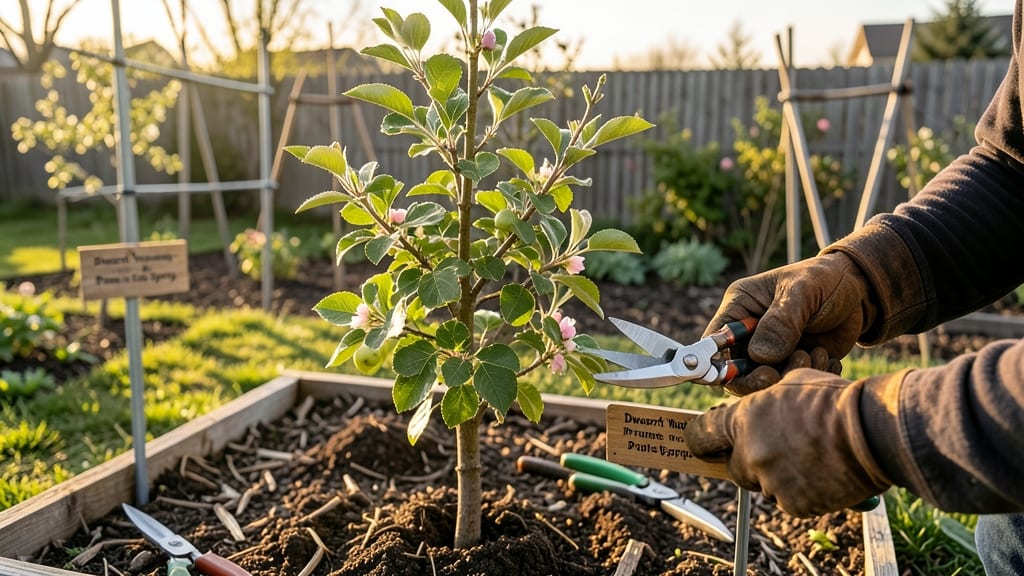
To keep fruit trees small, prune them annually during late winter or early spring before new growth begins, removing 20-30% of branches to encourage compact growth. Use heading cuts, thinning cuts, and avoid over-pruning to maintain size while promoting fruit production. Dwarf rootstock and proper spacing also help control tree height.
Keeping fruit trees small isn't just about cutting branches—it's about strategic timing and technique. 🌳 The key is to prune during dormancy when trees are less stressed, which allows them to redirect energy into new, controlled growth rather than wild shoots.
I've found that heading cuts (trimming back the tips) work best for shaping, while thinning cuts (removing entire branches) improve airflow and reduce disease risk.
For even better results, consider planting dwarf varieties—they naturally stay smaller while producing abundant fruit, and proper spacing (10-15 feet apart) prevents overcrowding that leads to competition for nutrients.
Another game-changer is renewal pruning—this involves removing older branches to stimulate younger, more productive growth. It's especially useful for trees that have outgrown their space. Just remember: less is often more. Over-pruning can stress the tree and reduce fruit production, so aim for gradual adjustments rather than drastic cuts.
With consistent care, you can enjoy a manageable-sized tree that still delivers a bountiful harvest.
💡 In This Article
- Best Pruning Cuts for Compact Fruit Tree Growth
- Dwarf Rootstocks and Spacing for Small Fruit Trees
Best pruning cuts for compact fruit tree growth
When shaping fruit trees for controlled growth, the type of cut makes all the difference. Heading cuts (shortening branch tips) force the tree to grow bushier by stimulating lateral branches. This technique works best on young trees or when you want to encourage a fuller canopy.
For example, cutting back a 6-inch leader shoot to 3 inches will trigger 2-3 new side shoots within 4-6 weeks, creating a denser structure. The key is to avoid cutting into old wood or you risk dieback.
Thinning cuts—removing entire branches at their base—are critical for airflow and light penetration. Unlike heading cuts, these don't stimulate new growth but instead redirect energy to remaining branches. I've seen 30% reductions in tree height within 2 years by removing 1-2 dominant vertical branches annually.
Always cut just outside the branch collar (the swollen area where the branch meets the trunk) to prevent wounds that attract pests. For apple or pear trees, thinning cuts also improve fruit quality by reducing overcrowding.
Renewal pruning targets older branches to rejuvenate growth. This involves removing 10-20% of the oldest wood (typically 3-5 years old) each year, rotating branches to avoid over-stressing the tree. For instance, a 10-year-old peach tree might need 3-4 renewal cuts per year to maintain 6-8 feet height.
The trade-off? You sacrifice some immediate fruit production, but the long-term gain is a more productive, compact tree. Timing matters here—dormant season pruning minimizes stress, while summer pruning can lead to excessive water sprouts.
Timing your cuts is just as important as the technique. Pruning during late winter or early spring (just before buds swell) ensures the tree isn't stressed by cold or active growth. Ever tried pruning in summer?
You'll likely trigger a surge of weak, watery shoots that require more pruning later. The exception is light shaping in summer to control vertical growth, but avoid heavy cuts. For citrus trees, which bloom on new wood, summer pruning can actually boost fruit production in the next season.
One common mistake is over-pruning, which can stunt fruit production. A good rule of thumb: never remove more than 25% of the canopy in a single session. For example, a 10-foot apple tree might need 3-4 cuts per year, each removing 2-3 feet of growth.
The goal is gradual shaping, not drastic reductions. Over-pruned trees often produce smaller fruit and are more susceptible to disease due to poor airflow. Think of it like haircuts—you wouldn't shave your head in one go, would you?
For best results, combine these techniques with annual maintenance. After your dormant-season pruning, monitor the tree's response. If you notice excessive water sprouts (thin, vertical shoots), remove them in late spring to maintain shape.
And always sterilize your pruning tools with 70% isopropyl alcohol between cuts to prevent spreading bacterial canker or fungal diseases. A well-pruned tree isn't just smaller—it's healthier, more productive, and easier to manage.