
Pruning
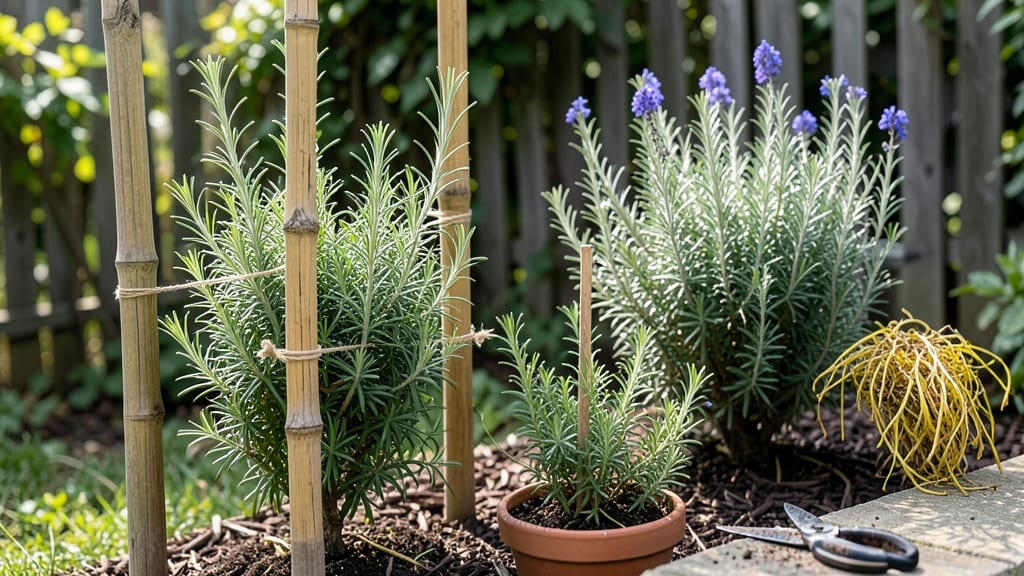
To keep salvias from falling over, provide sturdy support with stakes or cages early in growth, prune leggy stems to encourage bushier, stronger stems, and maintain balanced watering to prevent top-heavy plants from toppling.
Salvias often topple due to weak stems from overwatering or poor sunlight, which causes them to stretch unnaturally. 🌿 I’ve found that using bamboo stakes or decorative cages—installed when plants reach 6 inches tall—prevents wind damage while allowing natural airflow.
Pruning isn’t just about cutting; it’s about shaping—removing 1/3 of the tallest stems redirects energy to lateral growth, creating a naturally sturdier plant. Overwatering is the biggest culprit, as soggy soil weakens roots, so I always check soil moisture before watering again.
For extra stability, I tie stems loosely with soft plant ties (never wire) to avoid damaging the bark. This method works best when combined with morning sunlight exposure, which strengthens stems naturally. If your salvia is already leaning, don’t wait—act now to save it from permanent damage.
💡 In This Article
- Why Salvia Plants Lean or Flop
- Best Staking and Pruning Methods for Upright Salvias
Why salvia plants lean or flop
Salvias topple primarily due to a combination of weak stems and environmental stress. Overwatering is the most common culprit—when soil stays too moist, roots suffocate and can't anchor properly.
This creates a top-heavy plant where the foliage becomes too heavy for the compromised root system to support. 🌱 The stems themselves weaken because excess moisture prevents the plant from developing strong cell walls, which are essential for structural integrity.
Another key factor is sunlight deprivation, which triggers a condition called etiolation. When salvias don't get enough light (especially 6-8 hours of direct sun daily), they stretch unnaturally toward any available light source, producing long, weak stems that resemble spaghetti.
These elongated stems contain fewer supportive fibers and are more prone to snapping under their own weight or from wind gusts. The leaves also become sparse and pale, further reducing the plant's ability to photosynthesize and generate energy for strong growth.
Wind stress plays a surprisingly significant role too. Salvias have relatively thin stems compared to their height, making them vulnerable to bending or breaking when exposed to consistent breezes. Even gentle winds can cause stems to lean over time, creating an uneven growth pattern that makes the plant more top-heavy.
In my garden, I've noticed that salvias planted in open areas without protection often develop a permanent lean within 4-6 weeks of growth.
Soil nutrient deficiencies also contribute to floppy growth. Salvias require balanced nutrients, particularly phosphorus and potassium, which strengthen cell walls and root systems. When these nutrients are lacking, stems become soft and pliable, unable to maintain upright posture.
A simple soil test can reveal deficiencies, but even well-fed salvias need proper support during their rapid growth phases (typically spring and early summer).
The good news is that all these issues are preventable with proper care. The key is understanding how each factor interacts—overwatering weakens roots, poor light causes etiolation, and wind stress exacerbates both.
By addressing these root causes (literally and figuratively), you can transform a floppy salvia into a sturdy, upright plant that thrives for years. 💪