
Companion Plants
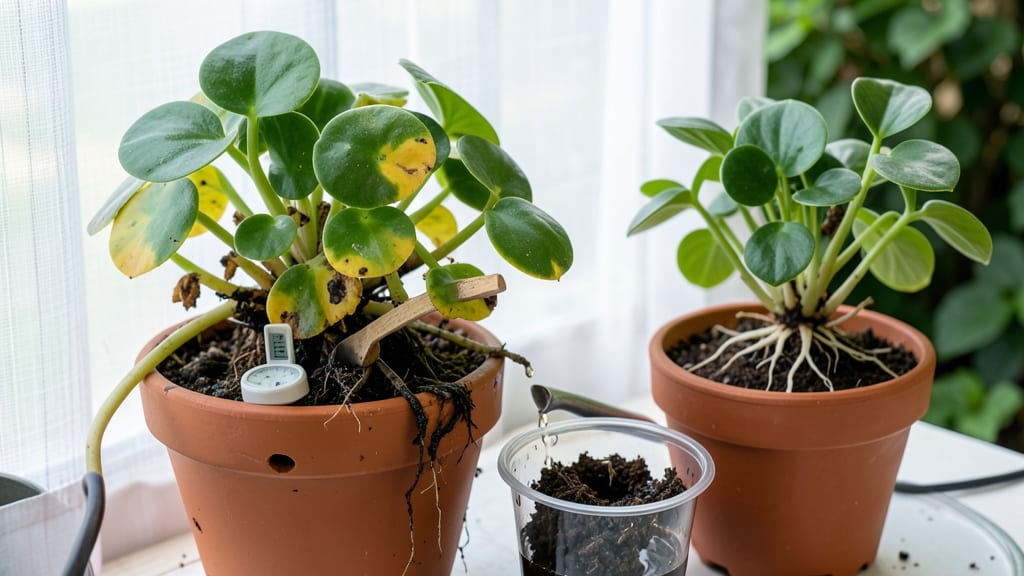
To know if a plant is overwatered, look for yellowing leaves, soft stems, or foul-smelling soil. Test moisture by checking if the top 1-2 inches of soil are dry or inspect roots for gray/black rot. Let soil dry completely between waterings to avoid suffocating roots.
Overwatering creates a suffocating environment for roots, cutting off oxygen and inviting harmful bacteria. 🌱 When roots can't breathe, they turn gray or black and emit a rotten smell—this is your plant's SOS signal.
I've learned that many gardeners mistake wilting from overwatering for thirst, but the key difference is leaf color: overwatered leaves turn yellow while underwatered ones stay crispy brown. The finger test is my go-to method—if soil feels damp more than an inch down, hold off on watering.
Different plants have different needs: succulents and cacti can go weeks between drinks, while tropicals like ferns prefer consistently moist soil. Always check your plant's natural habitat clues—if it grows in sandy desert soil, it's adapted to drought, not soggy conditions.
Adjusting your watering routine based on these signs can save your plants from permanent damage.
💡 In This Article
- Yellow Flag Signs of Overwatered Plants
- Root and Soil Tests for Overwatering Diagnosis
Yellow flag signs of overwatered plants
When plants struggle from too much water, their roots suffocate because oxygen gets displaced by excess moisture. This creates an anaerobic environment where harmful bacteria thrive, producing toxins that block nutrient uptake.
You'll often see leaves turn a pale yellow as chlorophyll breaks down—this is different from the crispy brown edges of underwatered plants, which indicate dehydration rather than rot.
The classic mushy stems appear when cell walls break down from waterlogged conditions.
Gently squeeze the stem—if it feels soft or squishy instead of firm, that’s your plant’s distress signal. 🌱 Another telltale sign is yellowing leaves with green veins, a classic symptom of overwatering because the veins stay green longer as they still receive some nutrients.
Compare this to underwatered plants, where leaves often brown uniformly from the edges inward.
Foul-smelling soil is a red flag because it indicates bacterial or fungal growth from prolonged moisture. Stick your finger in the soil—if it smells like rotten eggs or mildew, your plant is drowning. This odor comes from sulfur compounds released by anaerobic bacteria, which thrive when roots can’t access oxygen.
The longer soil stays soggy, the worse the smell and the more damage occurs to the root system.
Overwatering also causes nutrient leaching, where essential minerals like nitrogen and potassium wash away with excess water. You might notice stunted growth or leaves developing brown spots between veins, even if the plant looks hydrated.
This happens because roots can’t absorb nutrients efficiently when they’re waterlogged, leading to deficiencies despite the moisture.
One of my biggest lessons came from overwatering a fiddle-leaf fig. The leaves started drooping, but I assumed it was thirsty—until I noticed the soil smelled like wet socks. 🌿 By then, the roots were gray and mushy, and the plant was beyond saving.
The key is to act fast when you spot these yellow flags, because once roots rot, the plant can’t recover. Always check soil moisture before watering again.
Different plant types show signs at different stages. Succulents, for example, may develop translucent, glassy leaves from overwatering, while tropical plants like peace lilies might drop leaves entirely. Pay attention to how your specific plant reacts—some are more forgiving, while others (like orchids) are extremely sensitive to moisture levels.