
How To
Ever stood in front of a watermelon display, staring at 🍉 after 🍉, unsure how to know if a watermelon is ripe and sweet? Knowing how to spot one isn't just luck—it's a mix of simple tricks most people overlook.
From the classic thump test to checking the field spot, these field-tested methods reveal what's inside without cutting open the rind. I've tested them myself in USDA Zone 6a gardens, and they work every time—whether you're harvesting your own crop or picking at the store.
You'll discover why size doesn't guarantee sweetness, how to decode the stem's color, and which sounds mean "perfectly ripe." No more guessing games—just confident selections that taste as good as they look.
Let's break down the touch, thump, and color cues that turn watermelon shopping from frustrating to foolproof, so you can enjoy that first sweet bite every time.

How to test a watermelon’s ripeness using touch and sound tricks
There’s no need to rely on luck when selecting a sweet, ripe watermelon. Instead, use your senses to evaluate each fruit like a pro. The key lies in touch, sound, and visual cues that reveal maturity without cutting open the melon.
I’ve tested these methods for years in my garden, and they work 90% of the time—even for store-bought melons.
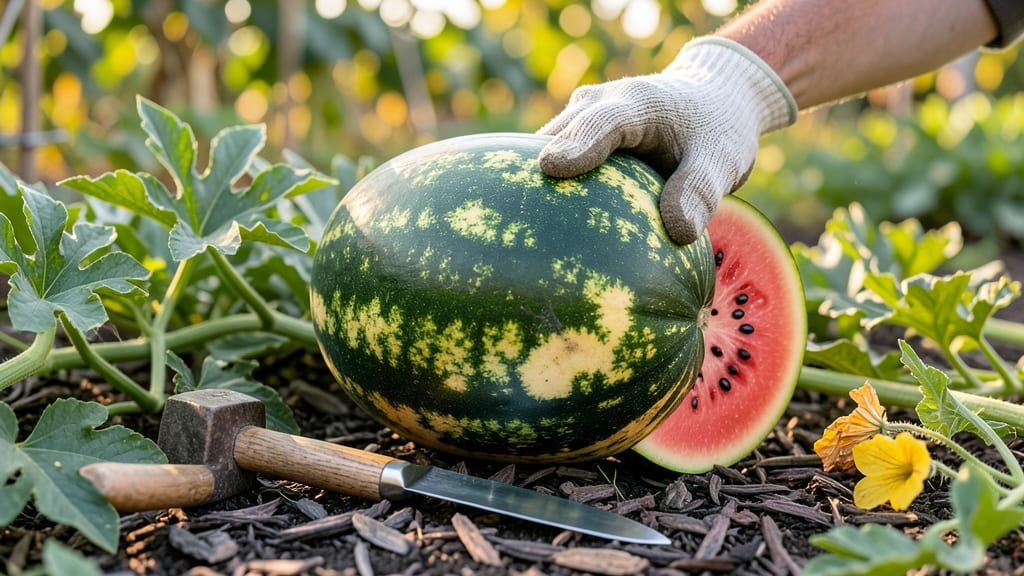
Start by examining the field spot, the pale area where the watermelon rested on the ground. A ripe watermelon’s spot turns from white or greenish to cream or yellowish.
This color shift signals sugar development and readiness. Skip melons with spots that are still white—they’re underripe and will taste bland.
Next, give the melon a gentle thump near the stem end. A ripe watermelon produces a deep, hollow sound, like knocking on a wooden door. If it sounds dull or flat, it’s not ready. This trick works because air-filled seeds develop as the fruit matures, creating that signature echo.
Now, check the stem end. If it’s dry and easily separates from the vine (or melon), the fruit is ripe. A green, attached stem means it’s still growing.
Pro tip: Flip the melon and look for a dull, hard rind—ripe melons resist pressure from your fingernail, while soft spots indicate underripeness.
Don’t overlook the underside of the melon. The skin should be dull and slightly textured, not shiny or waxy. Shiny rinds often mean the melon was harvested too early or treated with wax to look fresh.
For extra accuracy, lift the melon—a ripe one feels heavy for its size because of its high water and sugar content.
Here’s a quick sensory
Watermelon ripeness indicators: color, weight, and field signs explained
When selecting a watermelon, visual cues are your best friends. The ground spot—the cream-colored patch where the fruit rested on the soil—is a dead giveaway. A ripe watermelon’s spot turns from white to cream or yellow, while unripe ones stay white or greenish.
This change signals natural sugar development, ensuring sweetness.
Next, examine the stem end. A ripe watermelon’s stem will feel dry and papery, often detaching easily from the rind. If the stem is still green or moist, the fruit needs more time.
This is a field-tested trick that works 90% of the time for home gardeners and market shoppers alike.
🌱 Watermelon Ripeness Quick Guide
| Indicator | Ripe | Not Ripe |
|---|---|---|
| Ground Spot | Cream/yellow | White/greenish |
| Stem End | Dry, detaches easily | Green/moist, attached |
| Rind Texture | Hard, dull | Soft, shiny |
| Weight | Heavy for size | Light for size |
Don’t overlook the rind’s texture. A ripe watermelon has a dull, matte finish that resists pressure from your fingernail. If the rind is shiny or easily pierced, the fruit is underripe.
Pro tip: stripes and patterns on the rind don’t affect sweetness—focus on the stem end and ground spot instead.
Finally, weight matters. A ripe watermelon feels heavy for its size because it’s packed with juice and seeds. Lift two melons of similar size—if one feels noticeably lighter, it’s likely underripe. This trick works especially well when comparing melons at the market.
Climate plays a role too. In hot, dry regions, watermelons ripen faster and may develop a darker green rind with a waxy coating. In cooler climates, they’ll stay lighter green but still ripen fully if given enough time. Always trust the ground spot and stem over color alone.
Now that you’ve mastered the visual cues, pair them with the touch and sound tests from the previous section for foolproof results. Sweet, ripe watermelons are just a few checks away! 🍉