
How To
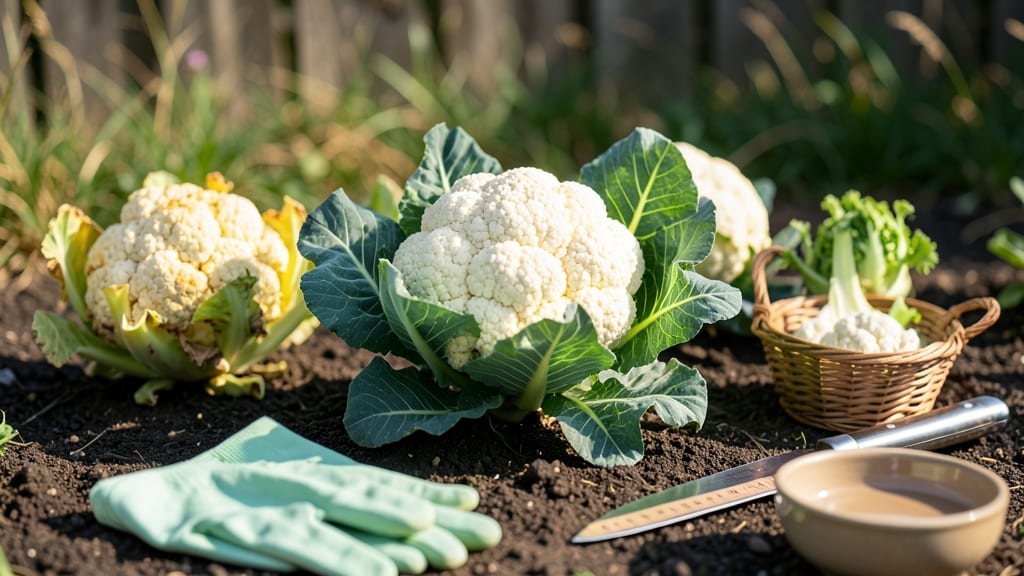
How to know when to pick cauliflower can turn your garden harvest from a culinary win to a missed opportunity. That perfect moment—when the head is firm, compact, and bursting with flavor—is easier to spot than you think, and skipping it means ending up with tough, bitter curds instead of tender, delicious ones.
Picture this: you’re standing in your garden in June or July, running your fingers over a 🥬 cauliflower head, wondering if it’s ready.
The key lies in three simple but often overlooked clues: the size of the curd, its color, and how the stem feels when you give it a gentle twist. Get these wrong, and you might harvest too early (small, underdeveloped) or too late (loose, woody).
I’ve made that mistake more times than I’d like to admit—once, I waited too long, and my once-promising head turned into a sad, open floret mess. But here’s the good news: once you know what to look for, picking cauliflower becomes second nature. You’ll never second-guess your timing again.
Let’s break down the visual and tactile cues that’ll have you harvesting like a pro, plus how to adjust for different varieties and seasonal quirks. Ready to master the perfect pick?


3 Key signs your cauliflower is ready for harvest (curd size, color & stem twist)
Timing your cauliflower harvest is all about reading the plant’s visual cues and physical signals. The perfect moment arrives when the curd reaches ideal size, the color deepens, and the stem responds to gentle pressure.
Missing these signs means risking a head that’s either too small or bitter from overmaturity.
First, focus on the curd diameter. Most varieties like Snowball or Romanesco should measure between 6 to 8 inches across. Smaller heads (under 5 inches) may still need time, while oversized curds (over 10 inches) often signal delayed harvesting. Use a tape measure if you’re unsure—precision matters!
Next, examine the color consistency. A ready-to-harvest head will have a uniform hue, whether that’s pure white, pale green, or purple. Uneven coloring or pale spots mean the plant needs more time. For example, Purple cauliflower should show deep, vibrant purple without fading near the center.
Here’s where many gardeners miss the mark: the stem twist test. Gently grasp the stem near the base of the curd and twist slightly. If it snaps cleanly with minimal resistance, the head is ready. A stem that bends without breaking means it’s too early—wait another 2-3 days.
🌱 3 Non-Negotiable Signs Your Cauliflower Is Ready
- 📏 Curd Size: 6–8 inches in diameter (varies by variety). ✅
- 🎨 Color: Deep, uniform (no pale or fading areas). ✅
- ✂️ Stem Test: Snaps cleanly when twisted near the base. ✅
Pro Tip: Check these signs in the morning when curds are firmest after dew evaporation.
Don’t overlook the leaves surrounding the head. Healthy cauliflower will show slight yellowing at the base of the outer leaves, a sign the plant is redirecting energy to the curd. However, if the entire plant turns yellow or wilts, it may be stressed—harvest immediately to salvage the head.
Seasonal timing also plays a role. In cool climates (USDA Zones 3-6), cauliflower typically matures between 75–100 days after transplanting, aligning with late spring to early summer.
Warmer zones (Zones 7+) may see harvests stretching into fall, but avoid picking during heatwaves, as temperatures above 85°F can cause curds to split or bolt prematurely.
One common misconception is that larger heads are always better. In reality, oversized cauliflower often develops a woody core and loose florets, ruining texture.
For example, Romanesco varieties should be harvested when the fractal patterns are fully formed but still tight—waiting too long turns the head into a sad, open mess.
For heirloom or specialty varieties, like Cheese cauliflower or Orange cauliflower, the color cues become even more critical. These types may have distinct hues (cheese-like or golden orange) that signal readiness. Always cross-reference the seed packet’s maturity days with your observations for the most accurate timing.
Finally, trust your touch. A perfectly ripe cauliflower head should feel firm yet slightly yielding, like a ripe avocado. If it feels squishy, it’s overripe; if it’s rock-hard, it’s underripe. This tactile check is your last line of defense against a poor harvest.
Mastering these three signs—size, color, and stem firmness—will ensure your cauliflower is harvested at its peak. Once you’ve confirmed readiness, grab your sharp knife and cut the stem 1–2 inches below the curd to avoid damaging the plant for future harvests.
3 Key signs your cauliflower is ready for harvest (curd size, color & stem twist)
Timing your cauliflower harvest is all about reading three critical visual and tactile cues: the curd size, its color maturity, and the stem twist test.
When these signs align, you’ll harvest a head that’s perfectly tender and flavorful. Let’s break down each clue so you never miss the window.
First, focus on the curd diameter. Most varieties reach ideal size between 6 to 8 inches across. Smaller heads (under 5 inches) may lack flavor, while oversized ones (over 10 inches) often become woody and bitter.
Check your variety’s guidelines—some dwarf types mature at 4 inches, while larger heirlooms can reach 12 inches.
🥬 6-8 inches for most varieties; 4-5 inches for dwarf types. Measure across the widest part.
🎨 Deep, uniform hue (green, purple, or white). Pale or mottled colors mean it’s not ready.
✂️ Gently twist the stem—it should snap cleanly with minimal resistance. If it bends or pulls apart, wait 2-3 days.
The color consistency is your second clue. A perfectly ripe cauliflower head will have a deep, uniform color—whether that’s creamy white, pale green, or deep purple.
If the curd looks pale or has uneven patches, it’s not ready. For example, Romanesco varieties should display their signature fractal pattern fully before picking.
Don’t overlook the stem twist test, a tactile trick that reveals the head’s firmness. Gently grasp the stem near the base and twist it slightly. If it snaps cleanly with little effort, the head is at peak ripeness.
Resistance or a bendy stem means it needs more time. This test works best in the morning when the plant is hydrated.
Pro tip: Check for yellowing leaves around the base of the head. This is nature’s way of signaling maturity. If the outer leaves turn yellow but the inner ones stay green, your cauliflower is ready. Ignore this cue, and you risk a head that’s either too small or overly mature.
Finally, pay attention to the weather forecast. If a heatwave is coming, harvest early—cauliflower heads can bolt (flower prematurely) in temperatures above 85°F. Similarly, a sudden cold snap below 50°F can stunt growth. Adjust your timeline based on local conditions.
When all three signs align—ideal size, vibrant color, and a clean stem twist—grab your pruners and harvest within 24 hours. Waiting too long turns your cauliflower into a tough, bitter disappointment.