
How To
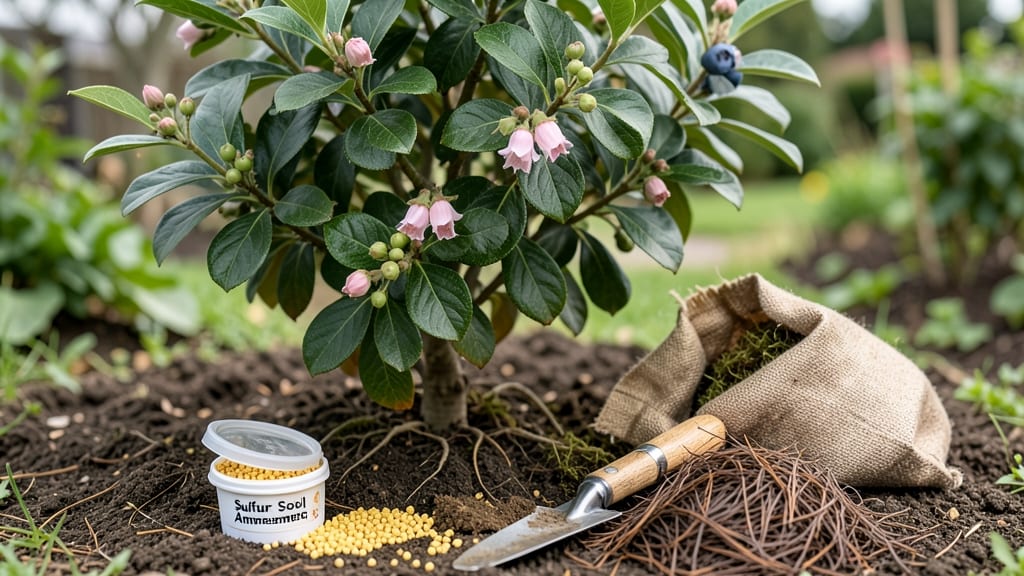
Your blueberries are begging for how to make this potting soil more acidic—that bright yellow foliage is a dead giveaway. Classic sign your soil's too alkaline. The fix is simpler than you think—just a few amendments that lower pH naturally, without harsh chemicals.
I've turned my own struggling blueberry pots into thriving bushes by using elemental sulfur and pine needles—both slow-release acidifiers that won't burn roots. The key is patience: sulfur takes 2-3 months to fully acidify, while pine needles work faster but need regular top-dressing.
You'll see new growth within weeks, with darker green leaves and (eventually) those prized blueberries. The soil stays acidic for months, so you won't need to repeat this often—just monitor with a simple pH test kit. Works for azaleas, hydrangeas, and other acid-lovers too.
Here's exactly how to do it without overdoing it."
📚 In This Guide
- What you need
- Instructions
- Tips and common mistakes
- Wrapping up and next steps
What you need
- ● Elemental sulfur: 1-2 pounds (90% purity or higher; granular or powdered form works best). ⚠️ Safety note: Wear gloves and a mask when handling.
- ● Pine needles (fresh or dried): 1-2 cups (collected from pine trees like Pinus species; avoid chemically treated needles).
- ○ Peat moss or sphagnum peat: 1-2 cups (optional but recommended for extra acidity and moisture retention).
- ● Garden trowel or small shovel: For mixing materials into the soil.
- ● Gloves and dust mask: Essential for handling sulfur and organic matter.
- ● pH testing kit: Digital or liquid test kit (e.g., Luster Leaf or LaMotte brands) to monitor soil acidity (target: pH 4.5–5.5 for blueberries).
- ● Watering can or hose: For hydrating the soil after amendments.
- ● Container or wheelbarrow: To mix soil amendments evenly.
- ● Cottonseed meal: ½–1 cup (adds nitrogen and slight acidity).
- ● Coffee grounds: ½ cup (composted; adds minor acidity and nutrients).
- ● Aluminum sulfate: ¼–½ cup (fast-acting but use sparingly; follow package instructions).
- ● Wood ash (for balancing pH): Only if soil is too acidic—never use with sulfur!
- ● Compost or well-rotted manure: 1–2 cups (improves soil structure and fertility).
Step-by-Step guide to acidifying potting soil for acid-loving plants
Here's how I adjust soil pH for blueberries, azaleas, and other acid-loving plants—without guesswork.
Test Your Current Soil pH
Before adding amendments, use a soil pH test kit or digital meter to measure your current pH. Most potting mixes start around 6.0-7.0, which is too neutral for acid-loving plants. Aim for a target of 4.5-5.5 for optimal growth. I like to test in multiple spots since pH can vary even within a single container.
Moisten the soil slightly if using a test kit, as dry soil gives inaccurate readings. Follow the kit instructions precisely—usually you'll mix a small sample with distilled water, wait 5-10 minutes, then compare the color to the provided chart. If your pH reads 5.5 or higher, you'll need to acidify significantly.
Incorporate Elemental Sulfur for Long-Term Acidification
Elemental sulfur is the gold standard for lowering pH because it works slowly and safely. For a 5-gallon container, mix 1-2 tablespoons of powdered sulfur evenly into the top 6 inches of soil. Use a garden trowel to work it in thoroughly—this ensures even distribution and prevents localized hot spots that could damage roots.
Water the soil lightly after mixing to activate the sulfur. It takes 4-6 weeks to fully acidify the soil, so plan ahead if you're preparing beds for spring planting. I like to add sulfur 2-3 months before planting acid-loving species to give it time to work. Avoid overdoing it—too much sulfur can harm plants and beneficial microbes.
Add Organic Amendments for Immediate and Sustained Acidification
For faster results and better soil structure, blend in 1 cup of finely ground pine needles per 5 gallons of soil. Pine needles release tannins that lower pH naturally over time. I prefer using needles from white pine or spruce, as they're more acidic than those from red pine. Spread them evenly over the soil surface, then mix in with a hand fork to avoid clumping.
Composted sphagnum peat moss (not regular peat) is another excellent amendment. Work in 1-2 cups per 5 gallons—it holds moisture while slowly acidifying the soil. The combination of pine needles and peat moss creates a slow-release acidifying effect that keeps pH stable for months. Avoid using fresh pine bark, as it can tie up nitrogen and harm plant growth.
Water with Acidified Water for Maintenance
Once your soil is properly acidified, maintain the pH by watering with slightly acidic water. Mix 1 teaspoon of white vinegar into 1 gallon of water (this lowers pH by about 0.5-1.0 points). Use this solution every 2-4 weeks during the growing season. I like to apply it in the early morning to prevent leaf burn from evaporation.
Monitor your plants' health—yellowing leaves or poor growth can signal pH drift. If this happens, retest the soil and add more sulfur or pine needles as needed. Over-acidification (pH below 4.0) is rare but possible, especially in containers. In that case, mix in 1 tablespoon of garden lime per gallon of soil to raise the pH gradually.
Monitor and Adjust Seasonally
Acid-loving plants like blueberries and hydrangeas thrive when their soil stays within the 4.5-5.5 pH range. Test your soil every 3-4 months during the growing season, as pH can shift with watering and organic matter breakdown. In fall, add a light top dressing of 1 tablespoon sulfur per 5 gallons to prepare for spring growth.
I also recommend mulching with pine bark fines (not chunks) to maintain acidity naturally. Spread a 1-inch layer over the soil surface, keeping it 2 inches away from plant stems to prevent rot. This mulch slowly breaks down, releasing tannins that keep the pH in check while suppressing weeds. Adjust your approach based on your plants' needs—some, like blueberries, need consistent acidity, while others, like gardenias, tolerate a slightly wider range.
Tips & tricks for perfectly acidic potting soil
These insights will help you achieve the ideal pH balance for your acid-loving plants without common pitfalls.
Testing Accuracy: When testing your soil pH in Step 1, take multiple readings from different areas of the pot—especially if it's larger than 5 gallons. I've found that pH can vary by up to 0.5 points between the center and edges. For containers bigger than 10 gallons, consider dividing the soil into sections and testing each separately. This prevents over- or under-acidification in different zones of the same pot.
Sulfur Application Technique: In Step 2, don't be tempted to bury the elemental sulfur more than 1 inch deep. The oxidation process that lowers pH requires direct contact with both air and moisture at the soil surface. I like to use a small hand rake to create shallow furrows where I place the sulfur, then gently cover with just enough soil to hide it from view. This maximizes the surface area for the chemical reaction.
Organic Acidifier Selection: For Step 3, pine needles are my top recommendation because their tannins provide a steady acidification over time. If you're using oak leaves, crush them slightly before mixing into the soil—they'll break down faster and release their acidifying compounds more quickly. When working with peat moss, avoid the compressed bricks sold for gardening; these contain lime additives that can neutralize the acidification effect.
Long-Term Monitoring Strategy: The 4-6 week timeline in Step 4 is a guideline, but environmental factors can significantly alter this. In particularly warm climates (above 80°F), the sulfur will work faster—you might see results in as little as 3 weeks. Conversely, in cooler conditions (below 65°F), extend your monitoring to 8-10 weeks. I keep a small notebook by my potting bench to record not just pH readings but also temperature and humidity during each testing period.
Pro Tips for Make Potting Soil More Acidic
- These insights will help you achieve the ideal pH balance for your acid-loving plants without common pitfalls.
- Testing Accuracy: When testing your soil pH in Step 1, take multiple readings from different areas of the pot—especially if it's larger than 5 gallons.
- Sulfur Application Technique: In Step 2, don't be tempted to bury the elemental sulfur more than 1 inch deep.
Frequently asked questions
Got questions about lowering your potting soil’s pH? You’re not alone!
Here are some of the most common concerns—and straightforward answers—to help you acidify your soil like a pro.
How quickly will my potting soil become more acidic after adding amendments?
Patience is key! While sulfur can take weeks to months to fully lower pH (depending on moisture and temperature), pine needles or peat moss work faster—often within a few weeks. Test your soil every 2–4 weeks to monitor progress. Pro tip: Warm, moist soil speeds up the process!
Can I over-acidify my potting soil? What are the signs?
Yes, but it’s rare with most plants. Signs of too much acidity (pH < 4.5) include yellowing leaves, stunted growth, or nutrient deficiencies (like magnesium). If you suspect over-acidification, amend with lime or wood ash to raise pH gradually. Test first!
Are there any plants that don’t need acidic soil?
Plants like tomatoes, peppers, lavender, and most vegetables thrive in neutral to slightly acidic soil (pH 6.0–7.0). Avoid acidifying amendments for these—stick to compost or balanced fertilizers. Know your plants!
What’s the easiest way to test pH at home without lab equipment?
Grab a digital pH meter (under $20) or pH test strips from a garden store. For a DIY hack, mix 1 part soil with 2 parts water, stir, and use cabbage juice (red = acidic, green = neutral). Calibrate meters regularly for accuracy!
Can I use coffee grounds or vinegar to acidify potting soil?
While coffee grounds (slightly acidic) can help, they’re not as effective as sulfur or pine needles. Vinegar is a bad idea—it burns roots and disrupts soil microbes. Stick to proven amendments for safe, long-term results. Skip the shortcuts!
Wrapping up and next steps
Transforming your potting soil into an acidic haven for acid-loving plants like blueberries is simpler than you think!
By adding elemental sulfur, pine needles, or peat moss, you’re giving your plants the perfect growing conditions—just like nature intended. 🌱✨ Now that you’re equipped with the know-how, grab your gloves and get ready to watch your garden thrive!
Next step? Test your soil’s pH after a few weeks to ensure it’s hitting that sweet spot—then sit back and enjoy the lush, happy plants you’ve cultivated! 📊💚