
Flowers
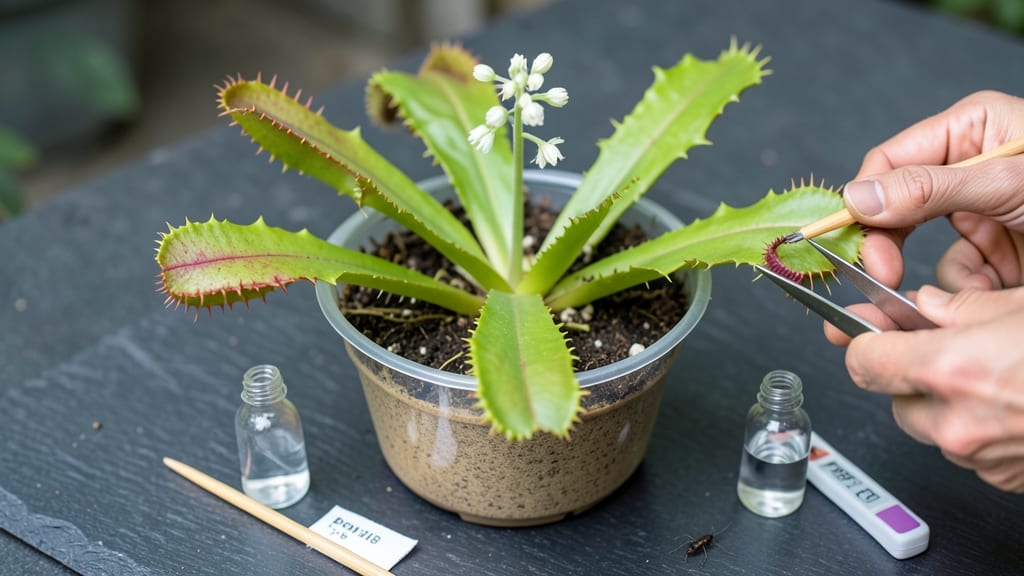
Waking up a Venus fly trap’s dormant traps takes patience—but these tricks work fast. 🌱 I’ve learned the hard way that forcing them open too roughly can damage the delicate hinges, so here’s how to do it gently while keeping your plant happy.
The secret lies in mimicking what triggers them naturally: a live insect or the right touch.
You’ll need a clean cotton swab, a tiny bit of raw meat (like a crumbled piece of chicken), and a spray bottle with distilled water—no tap water here, or you’ll risk mineral buildup that burns the traps.
Start by lightly brushing the trigger hairs inside a closed trap with your swab. If that doesn’t work, place a tiny meat scrap on the trap’s edges—within 10-20 minutes, it should snap open. Avoid prying with fingers or tools, even if you’re in a hurry.
Once open, keep the soil moist (not soggy) and place your plant in bright, indirect light. Over time, you’ll see new traps forming, proving your gentle approach worked. The key is consistency—these plants reward patience with vibrant, hungry traps.
📚 In This Guide
- What you need
- Instructions
- Tips and common mistakes
- Wrapping up and next steps
What you need
- ● Live Venus flytrap plant – Ensure it’s healthy (no mushy leaves or rot).
- ● Distilled or rainwater – Never tap water (it contains minerals that harm the plant). 1–2 cups for hydration.
- ● Soft-bristle paintbrush or cotton swab – For gentle stimulation (avoid metal or abrasive tools).
- ○ Tweezers (optional but helpful) – For precise trigger manipulation.
- ● Small insect (live or fake) – A tiny fly, gnat, or even a dried fruit fly (for testing).
- ● Magnifying glass – To inspect traps up close (especially useful for tiny triggers).
- ● Spray bottle (with distilled water) – For misting if the soil feels dry.
- ● Humidity dome or plastic wrap – Creates a tropical environment to encourage activity.
- ● Food-safe lubricant (like coconut oil) – Lightly coat tweezers to reduce friction (use sparingly!).
- ● Journal & pen – Track trap responses over time (fun science!).
Step-by-Step instructions for opening a Venus fly trap
Here’s how to wake up dormant traps safely—no harsh tricks needed.
🌱 Step 1: Check for Dormancy Signs
First, confirm your Venus fly trap is dormant. Healthy dormant traps look shriveled and brownish, with closed traps that won’t snap open. Gently press a trap—if it feels stiff and won’t budge, it’s still asleep. Dormancy usually kicks in after 6-8 weeks of cold or dry conditions, but some varieties need it even after summer growth.
If the plant is still green with some movement, it’s just resting and needs patience. Only force-open traps that are completely limp and brown. This ensures you don’t damage active growth or trigger stress responses.
☀️ Step 2: Mimic Spring Conditions
Place the dormant trap in a bright, indirect light spot—like a north-facing window or under a grow light. Venus fly traps need 10-12 hours of light daily to wake up, but direct sun can scorch newly opened leaves. I like to start with 4-6 hours of morning light and gradually increase exposure over 3-5 days.
Keep the soil moist but not soggy. Stick your finger ½ inch deep—if it feels dry, water gently until moisture reaches the bottom. Overwatering now can rot the roots before they’re ready to grow. A humidity dome (like a plastic bag with holes) helps speed up the process by keeping the air around the plant consistently damp.
💧 Step 3: Gently Coax Traps Open
After 3-5 days of bright, moist conditions, the traps should start stirring. If they’re still closed, use a cotton swab dipped in lukewarm water to lightly trace the edges of each trap. This mimics natural dew and signals the plant to wake up. Never force them open—just a few gentle touches along the hinges is enough.
Watch for the first tiny gap at the hinge. Once you see even a ¼-inch opening, stop touching them. The traps will do the rest on their own. If a trap resists after a week, it might need a little more time—some varieties take up to 10 days to fully wake up, especially if they’ve been dormant for months.
⏰ Step 4: Monitor for New Growth
Within 7-10 days, you’ll see new pink or red buds forming at the base of the plant. These are your signal that the fly trap is actively growing again. Keep the soil consistently moist but avoid letting it sit in water—root rot is the #1 killer of revived traps.
Once the new growth reaches 1-2 inches tall, you can gradually introduce more direct light. Start with 2 hours of afternoon sun and work up to full exposure over 2 weeks. This prevents sunburn on tender new leaves. Avoid fertilizers or insect bait until the plant has at least 3-4 fully open traps—it’s still recovering from dormancy.
✂️ Step 5: Encourage Future Activity
Now that your Venus fly trap is awake, keep it in a spot with bright, indirect light and water it whenever the top ½ inch of soil feels dry. Feed it only when traps snap shut naturally—never force-feed. A few small gnats or fruit flies every 4-6 weeks keeps it happy without overloading it.
If traps close but don’t digest prey, they’re just practicing. This is normal! The first few cycles after dormancy might be slower, but your plant will regain its appetite within 2-3 months. Avoid moving it around too much—Venus fly traps are sensitive to location changes and may go dormant again if stressed.
Tips & tricks for reviving dormant Venus fly traps
Here’s what nobody tells you about waking up your carnivorous plant without stressing it out.
Patience Pays Off: In Step 1, when checking for dormancy, don’t rush—some varieties need up to 10 days to show signs of stirring, especially if they’ve been dormant for months. I’ve seen traps that looked completely dead still wake up after two weeks of consistent care. The key is to trust the process and avoid forcing anything.
Light Gradation Matters: The 4-6 hours of morning light in Step 2 is your safety net. Starting slow prevents sunburn on delicate new growth. I’ve ruined traps by moving them straight to full sun—always increase exposure gradually over those 3-5 days. Think of it like sunbathing after winter: you wouldn’t jump into a tanning bed on day one!
Humidity Hack: That humidity dome in Step 2 is your secret weapon. A clear plastic bag with holes creates a mini greenhouse effect that mimics the moist conditions Venus fly traps love. I’ve seen traps wake up 3-5 days faster with this simple trick. Just remember to remove it once new growth appears to prevent mold.
Water Wisdom: The ½-inch soil check in Step 2 and Step 5 is crucial—too much water now will drown your plant before it’s ready to grow. I use a spray bottle for the first week to keep the air moist without oversaturating the soil. This helps the roots wake up gently without the shock of deep watering.
Pro Tips for Open A Venus Fly Trap
- Here’s what nobody tells you about waking up your carnivorous plant without stressing it out.
- Patience Pays Off: In Step 1, when checking for dormancy, don’t rush—some varieties need up to 10 days to show signs of stirring, especially if they’ve been dormant for months.
- Light Gradation Matters: The 4-6 hours of morning light in Step 2 is your safety net.
Frequently asked questions
Got questions about waking up your Venus flytrap? You’re not alone! Here are some of the most common concerns—and answers—to help you master the art of triggering those hungry jaws without harming your carnivorous plant.
How do I know if my Venus flytrap is truly dormant?
A dormant Venus flytrap will have closed traps (not just tired ones) and may look shriveled or brown. Dormancy usually kicks in during winter (November–March in most climates). If your plant is still green but sluggish, it might just need a gentle nudge—try a light touch or a drop of water near the trigger hairs.
Can I force my Venus flytrap to open if it’s not dormant?
Yes, but gently! Avoid prying open traps with tools—this can damage the delicate mechanism. Instead, use a damp cotton swab or your fingertip to lightly stroke the trigger hairs 2–3 times. If traps stay shut after 24 hours, they’re likely resting. Patience is key!
What happens if I open a trap too often?
Overstimulating traps can weaken your plant. Traps need time to reset (usually 1–2 weeks). If you’re testing for dormancy, limit triggers to once every 2–3 days. Think of it like a carnivorous plant’s workout—too much too soon, and it’ll get tired (or worse, stop working).
Why won’t my Venus flytrap eat flies anymore?
Common culprits: old age (traps last ~3–5 years), dormancy, or poor health (like root rot or nutrient deficiency). Check for green, plump traps—if they’re brown or mushy, your plant may need repotting or a break. Try a fresh, live insect (like a gnat) to test responsiveness.
Does temperature affect how I open a Venus flytrap?
Traps are less responsive in cold weather (below 50°F/10°C). If your plant is dormant, wait until spring to revive it. For active plants, warm conditions (70–90°F/21–32°C) make triggers more effective. A sunny windowsill or grow light can help if your home runs chilly.
Wrapping up and next steps
Opening a Venus flytrap is all about patience, the right touch, and a little curiosity! Remember, these fascinating plants need gentle stimulation—whether through tapping, misting, or even a light tug—to wake up their traps.
With the right techniques, you’ll see those jaws spring to life in no time, ready to snap at unsuspecting insects (or your playful fingers!).
Now that you’re armed with the know-how, why not watch your plant’s reactions? Try experimenting with different triggers or even setting up a fun "trap challenge" to see what works best. Happy trapping—and enjoy the thrill of bringing your carnivorous companion to life! 🌿✨