
Picking
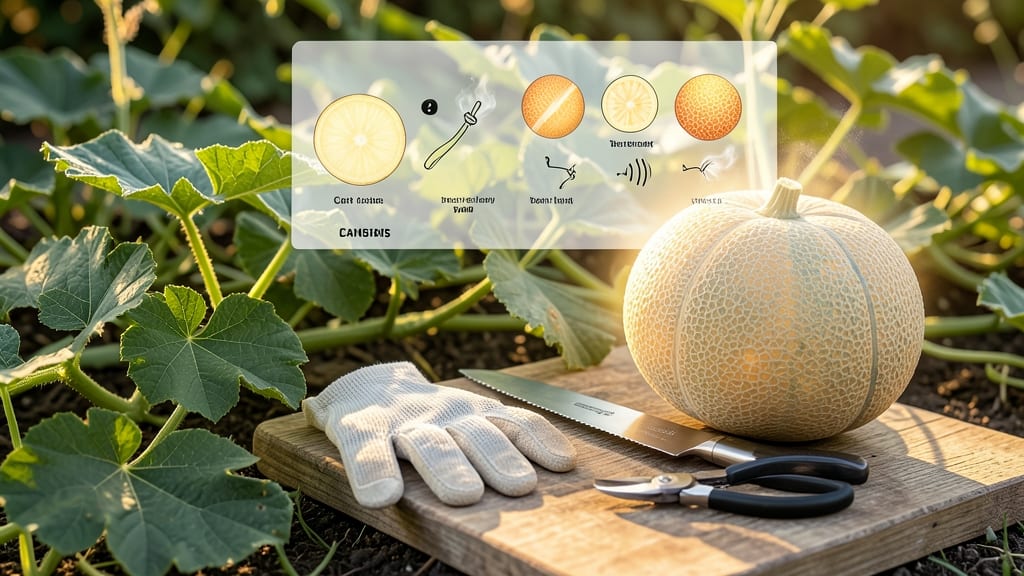
That first cantaloupe of summer can be picked perfectly with how to pick a cantaloupe chart—and these three foolproof visual cues guarantee sweetness every time. No guesswork, no disappointment.
The net should be creamy gold, not green, and the stem end should give slightly when pressed—like a ripe avocado. Flip it over: the underside should have a golden halo where it sat on the vine.
These signs mean sugar levels are peaking, usually by late summer when days stay warm.
Once you master these checks, you’ll never buy store-bought again. The flavor? Shockingly sweet, with that perfect balance of honey and tartness. Store them at room temp until fully ripe, then refrigerate to slow sugar breakdown.
Here’s the game-changer: this method works whether you’re harvesting from your garden or picking at the farmers’ market. No more bitter surprises—just perfect melons every season.
📚 In This Guide
- What you need
- Instructions
- Tips and common mistakes
- Wrapping up and next steps
What you need
- ● 1 fresh cantaloupe – Choose one that’s firm but not rock-hard (avoid bruised or overly soft spots).
- ● 1 small knife or peeler – For checking the stem end (a sharp paring knife works best!).
- ○ 1 pair of gloves (optional but recommended) – Protects your hands from sticky melon residue.
- ● 1 clean cutting board or plate – For testing the fruit’s readiness.
- ○ 1 spray bottle with water (optional) – Helps highlight the stem’s natural color.
- ○ 1 flashlight or bright light source (optional) – For better visibility when inspecting the stem.
- ● 1 color chart or reference guide – Print or save our cantaloupe ripeness chart (we’ll link it below!).
- ○ 1 ruler or measuring tape (optional) – To check stem length if needed.
- ○ 1 magnifying glass (optional) – For a closer look at the stem’s color shifts.
- ● Basic knowledge of cantaloupe anatomy (stem end, netting, and blossom end).
- ● Access to a well-lit area (natural light or bright indoor lighting).
- ● Patience! 😉 – Ripe cantaloupes take a little detective work.
Step-by-Step guide to identifying perfect cantaloupe ripeness
Master these three foolproof visual cues and you'll never buy a cantaloupe that's too early or past its prime.
Examine the Stem for Natural Detachment
The most reliable indicator of ripeness is the stem's behavior. A perfectly ripe cantaloupe will have a stem that pulls away cleanly with just a gentle twist—this happens because the fruit's natural sugars trigger the separation. If the stem refuses to budge, the melon needs more time on the vine. Conversely, if it comes off with no resistance at all, the cantaloupe has overripened and will be mealy.
Here's the thing—don't rely solely on this test if you're shopping at a grocery store where melons are often harvested early. In that case, combine this cue with the other two for absolute confidence. The stem should feel slightly dry and papery at the base when ready; if it's still green and moist, walk away from that melon.
Check the Blossom End for Color and Texture Changes
The blossom end (the flat side where the stem attaches) transforms dramatically as the cantaloupe ripens. Look for a creamy yellow color that extends about 1 inch in diameter from the stem. This yellowing occurs because the fruit's natural pigments break down as sugars concentrate. A fully ripe melon will also have a slightly soft texture at this end—press gently with your thumb. It should yield slightly, like pressing your thumb into a ripe avocado.
Watch out for green spots or a hard, unyielding surface; these indicate underripeness. If the entire blossom end is uniformly yellow but the fruit feels rock-hard when shaken, it's likely been harvested too early and won't develop proper flavor. The perfect balance is that creamy yellow circle with just a hint of give when pressed.
Evaluate the Netting and Overall Shape
Mature cantaloupes develop a distinctive diamond-shaped pattern of netting that covers most of the surface. This netting should be well-defined and cover at least 75% of the fruit. If the netting is faint or only covers the top half, the melon isn't ready. The fruit should also be heavy for its size—pick one up and compare it to others. A ripe cantaloupe feels surprisingly dense because of its concentrated sugars and water content.
Shape matters too: look for one that's symmetrical with a slightly bulbous bottom. Asymmetrical melons often indicate uneven growth or poor pollination. Give the melon a gentle shake—you should hear the seeds rattling inside. If it sounds hollow, it's past its prime. The combination of heavy weight, defined netting, and that seed rattle is your final confirmation that you've found the perfect specimen.
Test the Scent at the Stem
This is the sensory cue that separates the truly ripe from the merely acceptable. Hold the cantaloupe near your nose at the stem end and take a deep sniff. A perfectly ripe cantaloupe will have an intoxicating, musky sweetness that's unmistakable—almost like a mix of honey and tropical flowers. If you catch only a faint vegetable aroma, the melon needs more time.
Here's where people often make mistakes: don't confuse the scent of the rind with the flesh. Some cantaloupes develop an overpowering sweetness at the blossom end, but that doesn't necessarily mean the fruit inside is perfect. The stem end is where you'll get the most accurate reading of the fruit's overall ripeness. If you're still unsure after all these tests, bring it home and let it ripen at room temperature for another day or two—the scent will become more pronounced as it reaches peak flavor.
Tips & tricks for perfect cantaloupe selection
The secret to choosing cantaloupe that bursts with flavor lies in these often-overlooked details that separate the good from the extraordinary. Here's what nobody tells you—
Stem Test Nuance: When checking for stem detachment in Step 1, focus on the base where it meets the fruit. The stem should feel slightly dry and papery—not sticky or wet. This dryness indicates proper ripening, while moisture suggests the melon was harvested too early. Pro tip: If the stem comes off easily but leaves a green, moist ring, that cantaloupe won't develop full sweetness.
Blossom End Precision: In Step 2, the creamy yellow circle should be exactly 1 inch in diameter from the stem—no more, no less. Anything larger often means the melon overripened, while smaller means underripe. Press firmly: if it feels like pressing a ripe avocado (yielding but not mushy), you've got it right. The texture test is where most people fail—don't just look, feel it!
Weight and Netting Correlation: The netting in Step 3 isn't just about coverage—it's about definition. Run your fingers over the netting pattern: it should feel raised and textured, not flat or faded. This texture correlates directly with the fruit's density. Pair this with the weight test: a ripe cantaloupe should feel heavy for its size, like it's packed with juice. If it feels light, it's not ready.
Scent Evolution: The stem-end aroma in Step 4 should develop progressively. Start with a faint sweetness, then watch it intensify to that honey-tropical blend. If you detect fermented or overly alcoholic notes, the melon has overripened. Here's the game-changer: bring two melons home—one with strong stem scent and one with faint—and compare after 24 hours. The one that develops the most complex aroma wins every time.
Pro Tips for Pick A Cantaloupe Chart
- The secret to choosing cantaloupe that bursts with flavor lies in these often-overlooked details that separate the good from the extraordinary.
- Stem Test Nuance: When checking for stem detachment in Step 1, focus on the base where it meets the fruit.
- Blossom End Precision: In Step 2, the creamy yellow circle should be exactly 1 inch in diameter from the stem—no more, no less.
Frequently asked questions
about picking the perfect cantaloupe can save you time and frustration. Here are some common queries—and their answers—to help you master the art of selecting ripe fruit every time!What if my cantaloupe doesn’t have a stem?
A stemless cantaloupe can still be ripe, but it’s harder to judge. Look for yellowish-beige skin with a sweet, musky aroma near the blossom end. Gently press the fruit—if it yields slightly, it’s likely ready! Avoid overly hard or green-skinned melons, as they’re underripe.
How long can I store a ripe cantaloupe before it spoils?
Once ripe, store your cantaloupe in the fridge (not the door) for 3–5 days to slow ripening. For longer storage, opt for unripe cantaloupes and let them ripen at room temperature (1–3 days). Overripe melons develop soft spots, fermented smells, or mold—so check regularly!
Can I use a cantaloupe chart if I’m picking from a farm stand?
Farm stands often sell cantaloupes at peak ripeness, but the chart helps verify quality. Prioritize melons with three key traits: a creamy yellow hue, a fragrant blossom end, and a slight give when pressed. Ask vendors about harvest dates—freshly picked fruit ripens faster!
What’s the best way to test ripeness if I can’t smell the cantaloupe?
If aroma is faint (e.g., in a sealed package), rely on visual and touch cues:
- Skin texture: Smooth, slightly waxy, and matte (not shiny).
- Blossom end: Yellow-orange with a soft, spongy feel.
- Weight: Heavy for its size (indicates juiciness).
Are there alternative ways to pick a cantaloupe if I don’t have a chart?
No chart? No problem! Use these quick tricks:
Method
What to Look For
Aroma Test
Sweet, floral scent at the blossom end (like honeydew + citrus).
Thumb Press
Gentle pressure near the stem should yield slightly (like a ripe peach).
Net Check
Avoid melons with deep grooves in the net—these dry out faster.
Wrapping up and next steps
Picking the perfect cantaloupe doesn’t have to be a guessing game—just remember three key visual cues: the stem, the aroma, and the color. With this simple chart and a little practice, you’ll master the art of selecting sweet, ripe fruit every time! 🍈✨
Now that you’re armed with the knowledge, head to your local market or garden and put your new skills to the test. Share your cantaloupe-haul with friends or try a recipe with your prize—because nothing beats the satisfaction of a perfectly picked fruit!