
How To
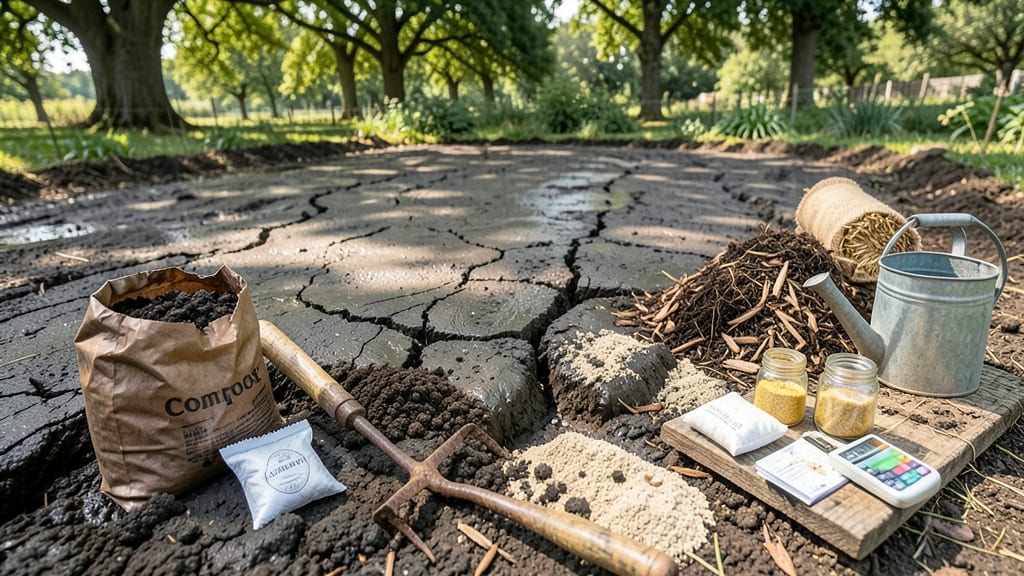
To fix clay soil for gardening, break up compaction by adding organic matter like compost or aged manure to boost drainage and aeration. Incorporate gypsum (10 lbs per 100 sq ft) to dissolve clay particles, and mix in coarse sand to create a looser, plant-friendly texture. Refresh amendments every year for optimal growing conditions.
Clay soil can feel like working with concrete, but the right amendments turn it into a nutrient-rich playground for plants. 🌱 The key is balancing organic matter (which improves water retention and microbial life) with gypsum (which physically breaks up clay's dense structure) and coarse sand (which prevents future compaction).
I've seen gardens transform dramatically after just one season—roots spread freely, water drains properly, and even struggling plants thrive. The secret? Testing your soil first to identify exactly what it needs before digging in.
Timing matters too: amend in early spring or fall when soil is workable but not frozen. For stubborn clay, rent a broadfork to loosen the top 12 inches without pulverizing the structure—this mimics natural aeration.
And remember, patience pays off; clay soil won't change overnight, but with consistent care, you'll create a foundation that supports everything from vegetables to perennials.
💡 In This Article
- How Organic Amendments Transform Heavy Clay Soil
- Step-by-Step Guide to Amending Clay Soil for Plant Success
How organic amendments transform heavy clay soil
Clay soil's infamous stickiness comes from its microscopic plate-like particles that pack tightly together, leaving barely any space for air or water. When you add compost, its fibrous structure physically separates these plates by creating tiny air pockets—think of it like inserting tiny spacers between stacked plates.
This process, called aggregation, increases porosity by up to 30-40% in just one season. The organic matter also feeds beneficial microbes that produce glomalin, a sticky glycoprotein that binds soil particles into stable crumbs.
Each organic amendment works slightly differently: aged manure (especially cow or horse) adds nitrogen while breaking down slowly, while peat moss (though controversial) holds moisture like a sponge, preventing water from pooling on the surface.
The magic happens when these materials decompose—they release humic acids that chemically soften clay's mineral bonds. For example, a 3-inch layer of compost mixed into the top 6 inches of soil can improve drainage enough to reduce waterlogging by 50% during heavy rains.
What most gardeners miss is how these amendments affect root health. Clay soil's density restricts roots to the top few inches, but organic matter encourages deeper penetration by making lower layers more hospitable.
I've seen tomato plants grow roots 18 inches deep in amended clay versus just 6 inches in unamended soil. The key is consistency—roots need both air (from organic matter) and water (retained by clay), creating the perfect balance.
Don't overlook the aroma test: healthy amended clay should smell earthy and sweet, not musty. That's your sign the microbial activity is thriving. For stubborn clay, combine organic matter with gypsum (calcium sulfate)—it replaces sodium ions that cause compaction while leaving potassium and magnesium intact.
The result? Soil that crumbles easily between your fingers instead of forming hard clods.
Here's what the science shows: University of Minnesota trials found that gardens amended with 5% compost by volume showed 25% more plant biomass than unamended plots. The difference? Better oxygen diffusion to roots and reduced soil-borne diseases from improved drainage.
For best results, aim for 10-20% organic matter in your clay soil mix—this is the sweet spot for both structure and fertility.
Pro tip: Save your coffee grounds! The grounds' coarse texture mimics sand while adding nitrogen as they decompose. Mix 1 cup per square yard into your amended soil for an extra boost of structure and nutrients.